Small-kitchen cottage owners
Owners or managers who want separate space for bread rolls but have only an under-counter gap or a small utility-room area. The measured space and door-opening path will shape their choice.


For a modest reserve of bread rolls and other frozen food, start by checking whether a freestanding under-counter freezer fits the cottage and holds the stock needed between visits. A chest or tall upright freezer makes more sense when larger batches exceed that space; whichever format you consider, check the installation clearances, door opening, defrost method and suitability for the intended room.
Owners or managers who want separate space for bread rolls but have only an under-counter gap or a small utility-room area. The measured space and door-opening path will shape their choice.
Hosts replenishing rolls and other frozen supplies between stays may value storage that makes it easy to see what remains and keep batches separate. Defrosting work also matters when time between guests is limited.
People storing larger batches for group stays or longer intervals between shops should calculate how much freezer space they need before deciding whether an under-counter unit is enough.
Start with the available space, then work out how many bags of rolls and other foods must fit at once. Compare upkeep and energy information on the exact models that meet those requirements.
| Concern | What to check | Who this matters to |
|---|---|---|
| Installation fit | Measure the gap and delivery route; check full dimensions, ventilation requirements and door swing for the exact model. | If the kitchen has one possible appliance space, I need the freezer to fit without blocking access. Around 42% of consumers would put installation fit first. |
| Capacity and organisation | Estimate the largest stock of rolls and other food held at once, then compare usable capacity and drawer or basket layout. | When I stock up between group stays, I need enough room to keep bags separate and rotate them. For around 33% of consumers, capacity and organisation would be the primary concern. |
| Upkeep and energy information | Check the defrost method, the exact model’s energy label and annual consumption, and its permitted operating location. | If the freezer stays on between visits, I want to understand its energy use and the work involved in maintaining it. Upkeep and energy information would come first for around 25% of consumers. |
Models described as under-counter can have different widths and installation requirements. Bosch lists its GTV15NWEBG at 85 × 56 cm, while Joybuy describes the CHiQ JKR90DWE as 55 cm wide; neither measurement establishes the clearance needed around the appliance.
Measure the full space, door-opening path and delivery route, then compare them with the exact model’s installation instructions.
A capacity figure alone does not show how easily bags of rolls can be separated from other food or checked between guest stays.
Plan for the largest number of bags you expect to store together, and inspect the drawer or basket layout before choosing a format.
Beko says selected Freezer Guard models can operate in environments as cold as −15°C. That claim does not establish the operating range of every Beko freezer or any other model.
For a garage, shed or cold utility room, check the exact appliance’s stated ambient-temperature range and location conditions.
An energy class does not, on its own, tell you how two freezers of different capacities compare in annual energy use.
Read each model’s energy label and product information alongside its usable capacity and defrost method.
A reference point for compact under-counter freezers when a cottage has limited floor space.
Offers under-counter, integrated and taller formats to compare against the cottage’s available space.
The JKR90DWE provides a specific compact freestanding model to assess for an under-counter space.
The H-Freezer 300 HONUQ2L58EWHK illustrates a drawer-led under-counter layout rather than a current purchase choice.
These choices include freestanding under-counter freezers, a built-under model and a taller integrated model. Check which installation type fits the cottage before comparing their storage and defrost arrangements.
 No image available
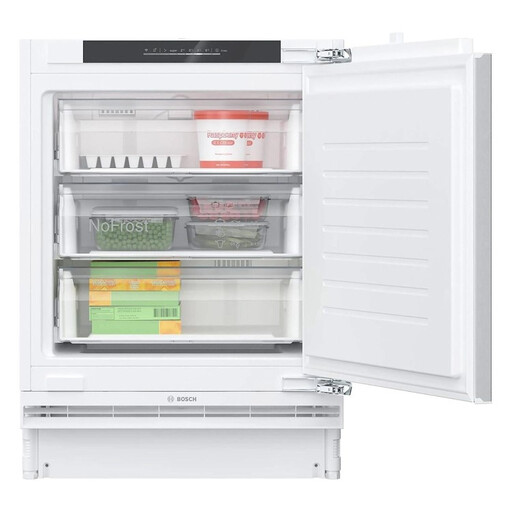
Consider this model where the cottage has a suitable built-under cabinet space rather than a freestanding appliance gap.
The product name specifies No Frost and an E energy class. Check the cabinet fit, plinth ventilation requirements and energy label before ordering.
 No image available
A freestanding option to consider for a modest supply of rolls where kitchen width is limited.
Joybuy describes this model as having a reversible door and manual defrost. Check the full dimensions, ventilation clearance and door swing against the available space.
 No image available
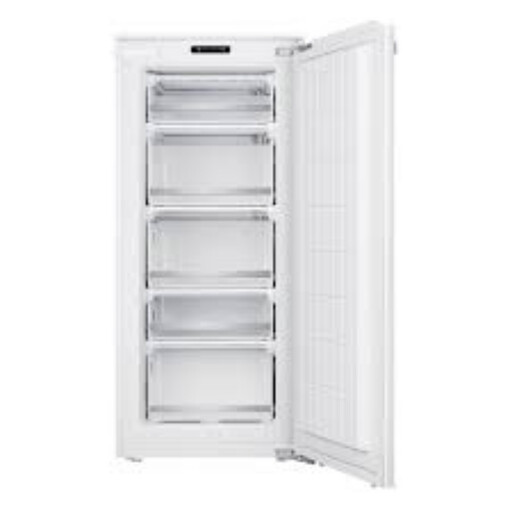
Consider this integrated format only if the cottage has compatible cabinetry and needs more than a compact under-counter arrangement.
Confirm the cabinet dimensions, installation clearances, defrost method and energy information for the exact model.
 No image available
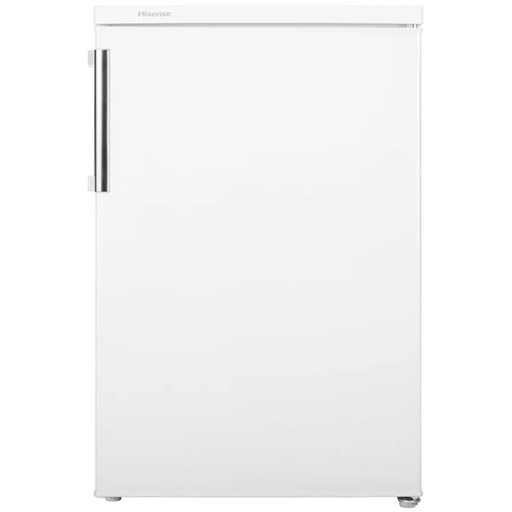
This freestanding format is worth considering when the cottage has an under-counter gap.
Confirm its capacity and defrost method against the exact model information before relying on either: the supplied product details conflict on both. Check full installation clearances as well as the stated width.
 No image available
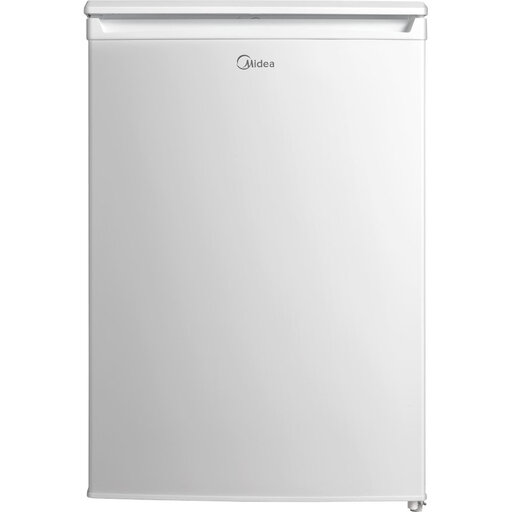
Consider this model for a freestanding under-counter space if its storage layout suits the rolls and other food you plan to keep.
Allow for manual defrosting. Confirm usable capacity for the exact model before comparing it with other freezers, as the supplied capacity figures differ, and check the installation clearances.
Probably not if the cottage only needs a modest reserve and a suitable under-counter freezer holds the rolls alongside other frozen food. Consider a chest freezer when the largest batch you need to store exceeds the compact unit’s usable space, and plan how you will keep smaller bags visible.
Follow the appliance instructions and check its temperature rather than relying on a setting name alone. Which? says food needs to be kept below −16°C to preserve it; also follow the storage instructions on the bread-roll packaging.
Frost-free is worth considering if reducing defrosting work between stays matters to you. Bosch describes its No Frost system as preventing ice build-up, but the feature is model-specific, so check the exact freezer rather than assuming every under-counter model has it.
Check the exact freezer’s energy label and annual consumption before comparing models. UK guidance from the Department for Energy Security and Net Zero and the Office for Product Safety and Standards says in-scope products must have an accurate printed energy label and display the label at the point of sale, including on a website.