Owners with cold storage spaces
If the freezer will stand in an unheated utility room, garage or similar space, check its exact permitted ambient-temperature range before comparing capacity.


A compact under-counter upright suits labelled portions of cooled lentil stew when cottage space is tight; a tall upright offers more room for repeated batches, while a chest freezer suits bulk storage where floor space and lid access allow. Before choosing, check the exact model’s permitted ambient temperature against the cottage’s coldest location, as well as its dimensions and installation clearances.
If the freezer will stand in an unheated utility room, garage or similar space, check its exact permitted ambient-temperature range before comparing capacity.
If you freeze labelled portions of cooled stew in a small kitchen, an under-counter footprint, drawer access and door clearance matter.
If several containers need freezing between guest stays, compare usable volume, stated freezing capacity and access to bulky containers.
Choose when: labelled portions need drawer storage in a small cottage kitchen or utility area.
Trade-off: a compact cabinet leaves less room for large containers.
Choose when: regular group stays mean several batches need organised storage.
Trade-off: allow more height and floor space than for an under-counter model.
Choose when: bulk storage takes priority and a suitable floor location is available.
Trade-off: containers at the bottom can be harder to reach; leave room to open the lid.
| Concern | What to check | Who this matters to |
|---|---|---|
| Cold-location suitability | Compare the exact model’s permitted ambient-temperature range with the cottage’s lowest expected temperature; check its installation instructions. | If my freezer will stand in an unheated room, I need to know it is specified for that room’s lowest temperature; roughly 45% of consumers would put cold-location suitability first. |
| Portion storage | Measure the appliance and door-opening space; check whether your usual containers fit its drawers. | When kitchen space is limited, I want to find and remove a labelled stew portion without shifting larger containers. Around 33% of consumers would make organised portion storage their primary concern. |
| Batch capacity | Check usable volume, container fit and stated freezing capacity if adding a large batch at once. | For repeated group stays, I need space for several batches and practical access to their containers; about 22% of consumers would prioritise batch capacity. |
Ambient-temperature limits depend on the model. Liebherr explains that climate class describes the temperatures in which an appliance is intended to operate optimally.
Find the cottage location’s likely lowest temperature and check it against the exact model’s documentation before ordering.
Capacity alone will not tell you whether a freezer can pass through the delivery route or whether its door or lid can open in place.
Measure the route, installation footprint and opening space, then follow the manufacturer’s ventilation-clearance instructions.
GOV.UK food-hygiene guidance advises cooling cooked dishes, dividing food into smaller portions and labelling frozen food.
Cool the stew safely, divide it into freezer-suitable containers with room for expansion, and label the portions before freezing.
Electrical Safety First advises placing fridges and freezers close to a wall socket rather than using an extension lead.
Check socket placement before choosing the location and keep the appliance’s ventilation openings unobstructed.
Its UFF4584 illustrates an under-counter option for a potentially cold cottage location.
Its GSN29VWEVG is a tall upright reference for storing larger batches in drawers.
Its TG 14Ve04 is an under-counter reference for compact placement.
These choices cover chest freezers for batch storage and an under-counter upright for portion storage. Match the format to your containers and available space, then check the exact model’s installation conditions for the cottage location.
 No image available
Consider this chest format when several batches need storage and you have room to open the lid. Its stated capacity is 297 L; allow for manual defrosting, and check the exact model’s ambient-temperature range and installation clearances against the intended location.
 No image available
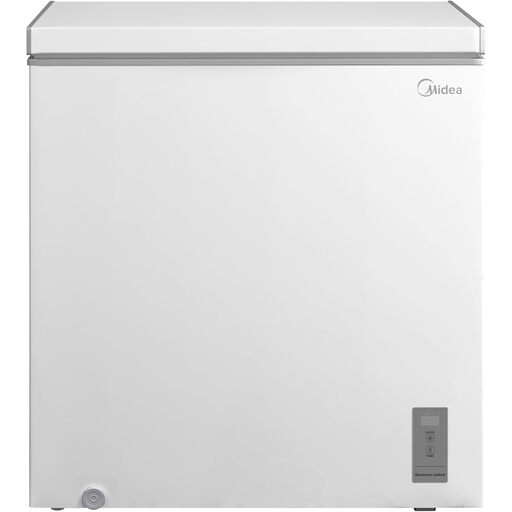
Consider this chest format for batches when its footprint and lid-opening space fit the cottage. Its stated capacity is 198 L; check the exact model’s permitted ambient temperature, installation clearances and defrost requirements before choosing it.
 No image available
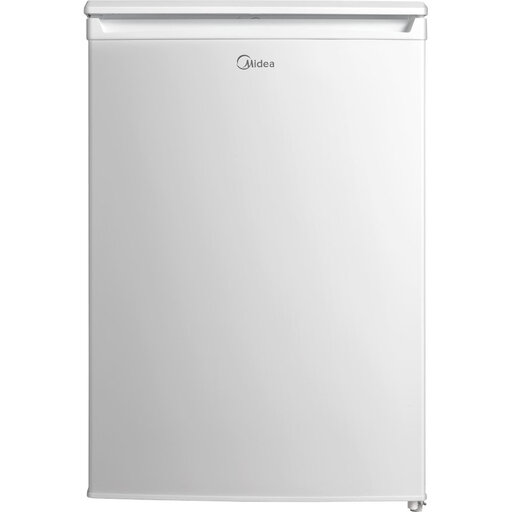
Consider this upright for separating labelled stew portions in a smaller kitchen. Confirm the capacity for the exact model, as the stated figures differ, and check door clearance, manual-defrost needs and permitted ambient temperature before installing it.
 No image available
Consider this smaller chest format for a modest number of portions if top-opening access works for your space. It is described as a 95 L convertible model with a removable basket; check its freezer setting, permitted ambient temperature, defrost requirements and installation clearances.
Cool the cooked stew, divide it into smaller portions and label what you freeze. These steps reflect GOV.UK food-hygiene guidance for businesses and are practical for portioning stew at home; the business rules should not be treated as domestic legal requirements.
No: check the exact freezer model’s permitted ambient-temperature range against the garage’s lowest expected temperature. A general description such as freestanding does not establish cold-location suitability.
Electrical Safety First advises installing a fridge or freezer close to a wall socket and not using an extension lead. Check that the chosen position also leaves the ventilation space required by the appliance instructions.