Owners storing leftovers during short stays
If sealed containers of cooked vegetables are the main load, prioritise usable chilled space over a freezer compartment you rarely need.


Choose an under-counter larder fridge if containers of cooked vegetables need most of the space and freezing is available elsewhere or unnecessary. Choose a model with a four-star freezer compartment if you need to freeze a few portions, accepting less chilled room. Whichever route suits the cottage, check container clearance, installation requirements and temperature control; GOV.UK advises food businesses to set fridges to 5°C or below.
If sealed containers of cooked vegetables are the main load, prioritise usable chilled space over a freezer compartment you rarely need.
Consider whether containers fit on the shelves and whether the door opens far enough to inspect and clean the fridge between stays.
A compact fridge with a four-star freezer compartment offers space for limited frozen portions, but leaves less room for chilled containers.
Decide whether the cottage needs freezing in the same appliance before comparing chilled capacity, container layout and the space available for installation.
Choose when: Chilled containers take priority and separate freezing is available or unnecessary.
Trade-off: There is no freezer compartment for surplus portions.
Choose when: Freezing a few portions in the cottage matters more than maximising chilled space.
Trade-off: The freezer compartment takes space that could otherwise hold chilled food.
| Concern | What to check | Who this matters to |
|---|---|---|
| Chilling cooked food | Check the temperature controls and plan how the fridge temperature will be monitored. GOV.UK advises food businesses to set fridges to 5°C or below. | If cooked dishes will be stored between visits or served to guests, I need a clear routine for keeping them chilled. Around 40% of consumers put safe chilled storage first. |
| Container space | Compare chilled-compartment litres and measure shelf clearance against the containers you use. | When several covered portions need room at once, I care about fitting the containers, not just the capacity on the label. For around 30% of consumers, usable chilled space is the main concern. |
| Small-batch freezing | Check for a four-star freezer compartment and compare chilled and frozen volumes separately. | If I want to freeze a few labelled portions and have no separate freezer, I can accept less chilled space. Freezing is the primary need for around 20% of consumers. |
| Fit and electricity use | Check the exact model’s dimensions, ventilation and door clearance; compare its energy label and annual kWh figure. | With a tight kitchen opening, I need the door to open and the appliance to ventilate properly before other features matter. Around 10% of consumers chiefly prioritise fit and declared electricity use. |
A freezer compartment changes how much room remains for cooked-food containers. Beko lists 101 litres of fresh-food space and a 13-litre freezer compartment for the UR4584, while Bosch lists 134 litres of chilled space for the freezer-free KTR15NWEAG; these are specifications for different models, not a performance comparison.
Compare the chilled volume and shelf layout of the exact models you are considering. Choose a freezer compartment because you will use it, not because it is included.
A fridge that fits the opening may still lack the clearance needed for ventilation or a fully opening door. Built-under models also need a compatible cabinet and hinge arrangement.
Measure the opening, check nearby doors and obstacles, then follow the installation instructions for the exact appliance.
Fridge capacity and freezer features do not replace appropriate chilling and decisions about when stored food should be discarded. GOV.UK identifies cooked dishes as foods that need chilling and advises food businesses to set fridges to 5°C or below.
Store portions covered, label them and establish a checking, discarding and cleaning routine between stays.
Beko’s under-counter range includes larder fridges and compact models with freezer compartments, giving owners two layouts to compare.
The Bosch KTR15NWEAG is a freestanding under-counter larder-fridge option for owners who do not need a freezer in the same appliance.
Hotpoint has compact under-counter models to consider when comparing chilled-only storage with a small-freezer layout.
These under-counter choices cover chilled-only storage and built-under models with iceboxes. An icebox should not be treated as a four-star freezer compartment without confirmation for the exact model.
 No image available
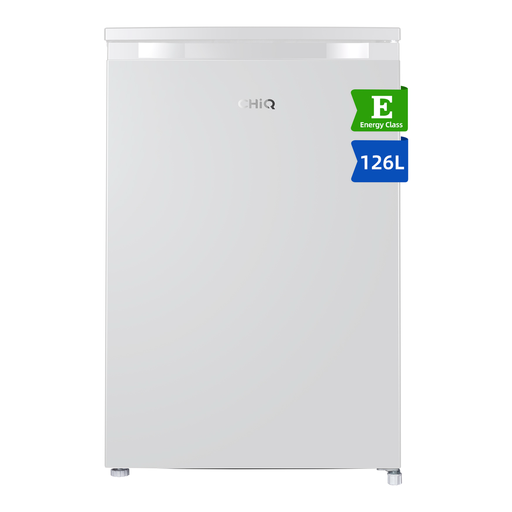
Consider this larder layout when chilled containers matter more than freezing in the same appliance.
The product name states 126 L capacity and 55 cm width. Check the shelf space for your containers, along with the temperature settings and installation clearances.
 No image available
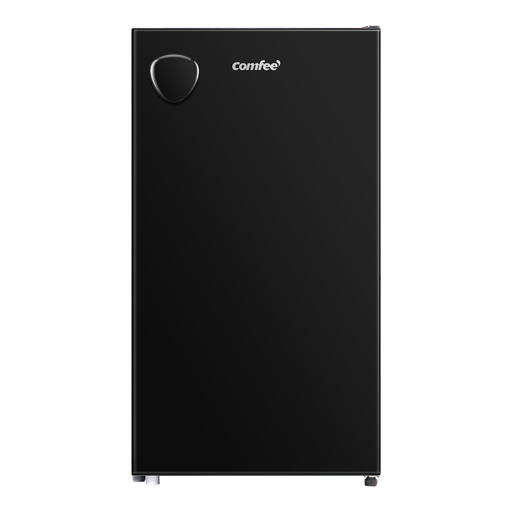
Consider this compact fridge for a small chilled-food load, after checking that your containers fit.
The product name lists removable glass shelves, an adjustable thermostat and a reversible door. Its cooler zone is described for short-term cooling only; do not use that zone to store cooked vegetables. Check the temperature range and installation clearances.
 No image available
Consider this built-under format only if the cottage has compatible cabinetry and a small chilled-food load.
The product name specifies a sliding hinge and an icebox, but does not establish that the icebox is a four-star freezer compartment. Check cabinet compatibility, usable container space and temperature control.
 No image available
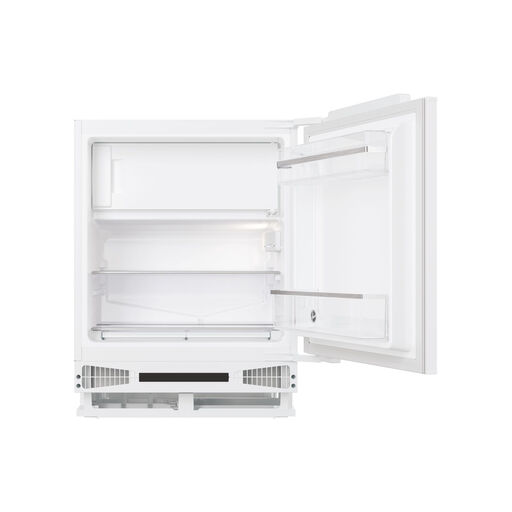
Consider this integrated layout where the cottage cabinet can accommodate it and chilled storage is the main requirement.
The product name identifies an icebox, not a confirmed four-star freezer compartment. Check container clearance, cabinet and hinge compatibility, ventilation and temperature controls.
 No image available
Consider this chilled-only format if freezing is available elsewhere and its fixed shelf spacing suits your containers.
The product name states a 55 cm width. Confirm the exact model’s chilled capacity before choosing it for a particular number of containers, and check its temperature controls and installation requirements.
For a cottage operated as a food business, GOV.UK advises setting the fridge to 5°C or below. Check the appliance temperature in use rather than assuming a thermostat setting alone keeps cooked dishes cold enough.
It is worth considering if you need to freeze a few portions and have no separate freezer. Compare its stated frozen and chilled volumes with the containers you expect to store; a larder fridge leaves its storage devoted to chilled food.
Measure the opening’s height, width and depth, then check the chosen model’s ventilation requirements and whether its door can open fully. For a built-under appliance, check the cabinet and hinge arrangement against its installation instructions too.
Compare the energy information for the exact models, including their declared annual kWh figures, alongside the chilled capacity you need. GOV.UK’s energy-labelling guidance requires an accurate printed label for products within its scope; an energy class alone does not describe how much container space a fridge provides.
The checks depend on how the cottage is operated and where it is located. GOV.UK provides guidance for self-catering holiday homes in England and separate chilling guidance for food businesses; check which requirements apply to your property and whether you provide or prepare food for guests.