For a holiday cottage where guests make a few drinks at a time, a 1.5–1.7L electric kettle is the simpler choice. Consider a manual-fill urn when groups regularly need many drinks together; reserve an autofill boiler for a dedicated drinks station where installation and maintenance can be planned. Whichever appliance guests use, check its electrical suitability, safety features and placement before putting it into service.
Who is each option for?
Hosts of standard self-catering cottages
If guests usually make a few teas or coffees at a time, a familiar kettle fits an ordinary kitchen without setting aside a separate serving area. Look for straightforward controls and suitable protection for an appliance used by changing guest groups.
Hosts serving large groups at once
Breakfasts, arrivals and gatherings can make repeated kettle refills inconvenient. A manual-fill urn provides a larger reserve and a dispensing tap, provided there is a stable, suitable place for guests to use it.
Hosts creating a dedicated drinks station
Where hot-water demand is sustained, an autofill boiler may suit a permanent serving point. The decision also involves water supply, installation, cleaning and ongoing maintenance rather than capacity alone.
What matters when choosing?
Choose for the number of drinks guests need at the same time, then assess how the appliance will be placed, used and maintained.
Electric kettle
Choose when: Guests make drinks in small batches in a standard cottage kitchen.
Allow for: Another boil when several people want drinks together.
Manual-fill urn
Choose when: A larger group regularly needs hot water ready at one serving point.
Allow for: More worktop space, a greater volume of hot water and a safe self-service layout.
Autofill boiler
Choose when: A dedicated drinks station has sustained demand and can accommodate an installed appliance.
Allow for: Installation, water connection where required and planned maintenance.
| Concern |
What to check |
Who this matters to |
| Serving a group |
Compare usable fill capacity with the number of drinks needed together; check the tap and serving position for an urn. |
If breakfast brings everyone to the drinks point at once, I want fewer interruptions for refilling and boiling. Around 29% of consumers put group serving first. |
| Guest use and safety |
Check the UK plug and fuse, automatic shut-off or boil-dry protection, and a stable position with a safely routed cable. |
When guests are unfamiliar with the appliance, I need controls they can understand and a setup that avoids obvious hazards. For around 36% of consumers, guest use and safety are the primary concern. |
| Everyday kitchen fit |
Check the kettle’s maximum fill line and available worktop space; consider whether its filter can be cleaned. |
If most stays involve only a few drinks at once, I would rather keep the kitchen simple than make room for catering equipment. Compact everyday use comes first for around 21% of consumers. |
| Sustained hot-water demand |
For an autofill boiler, confirm installation space, electrical and water requirements, and filter maintenance. |
At a dedicated drinks station, I need hot water available throughout a busy serving period and can plan for a permanent installation. Around 14% of consumers prioritise that sustained service. |
Common buying mistakes
-
Choosing an urn for capacity alone
An 8–10L urn holds substantially more hot water than the kettles considered here, but it also needs a stable serving location and a cleaning routine.
Choose one when simultaneous demand justifies the larger reserve, and decide whether guests or only the host will operate the tap.
-
Treating a PAT label as the entire safety plan
The Health and Safety Executive says electrical maintenance should reflect the equipment and its environment; the Electricity at Work Regulations 1989 do not prescribe annual portable appliance testing.
Inspect the appliance, cable, plug and socket, remove damaged equipment from use, and seek competent testing when the risk assessment calls for it.
-
Assuming an autofill boiler replaces a kettle directly
Autofill models can involve a fixed mounting position, water connection and filter maintenance. Those requirements change how a cottage drinks station must be planned.
Check the chosen model’s installation instructions and the property’s space, electrical and water arrangements before buying.
-
Overlooking condition checks between stays
Protection features do not make a damaged appliance suitable for guest use. Electrical Safety First advises stopping use if a kettle is damaged, smells unusual, sparks or trips a circuit.
Register the appliance for recall information where offered, keep its instructions available and include condition checks in the changeover routine.
Brands to consider for these appliance types
These examples illustrate different kettle, urn and boiler formats; check the specifications and instructions for the particular model you are considering.
Dualit
Domestic kettles for cottages serving drinks in smaller batches.
- Dualit lists the Studio Kettle at 1.5L with a washable limescale filter and the Classic at 1.7L with automatic switch-off; it states boil-dry protection for both.
- Neither kettle provides the large hot-water reserve of a catering urn. Check actual servings against guests’ mug sizes rather than relying on stated cup counts alone.
Swan
Manual-fill tea urns for a larger shared serving point.
- Swan lists its SWU8L with an 8L capacity, a keep-hot function, dispensing tap and drip tray; its claim of up to 40 cups depends on serving size.
- Plan space, cleaning and a safe position for a larger volume of hot water before making it available to guests.
Igenix
A catering-urn option where guests need a shared source of hot water.
- Igenix lists a locking lid, cool-touch handles, boil-dry cut-off and non-drip tap for the IG4008.
- Check the supplied manual and the proposed serving position before placing the urn where guests can use it.
Burco
Manual-fill and installed autofill boilers for different group-serving arrangements.
- Burco describes the 10L MFCT10ST as portable and manual-fill, without a need for mains plumbing or hardwiring. Its 10L AFF10WM is a wall-mounted, filtered autofill model.
- The wall-mounted model calls for installation and filter planning; it is not a direct substitute for a plug-in kettle.
Buffalo
Commercial autofill equipment for a dedicated, higher-demand hot-water station.
- Buffalo Appliances specifies a 10L capacity and stated 30L-per-hour output for the CN535, under its stated operating specifications.
- Confirm installation suitability, space and guest access for this commercial-style appliance rather than treating its output figure as a reason to replace an ordinary cottage kettle.
Joybuy kettles for smaller batches
These 1.7L kettles suit the small-batch side of the cottage decision. If guests regularly need many drinks at once, assess a suitable urn or installed drinks station separately.
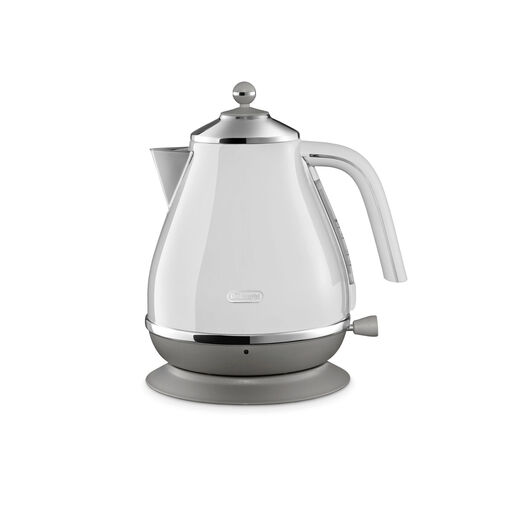 Image unavailable
De’Longhi Icona Capitals KBOC3001.W 1.7L, Sydney White
Consider this kettle when cottage guests usually make several drinks in one batch rather than serving a large group at once.
The named variant has a 1.7L capacity and stainless steel construction.
Before providing it for guest use, confirm the UK plug and fuse, check its protection features and follow the cleaning instructions.
View on Joybuy
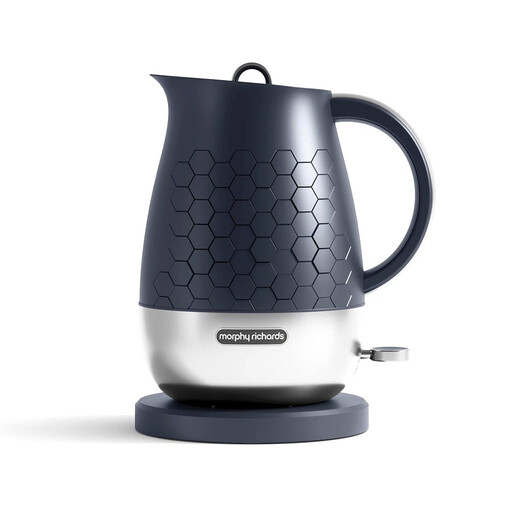 Image unavailable
Morphy Richards Cassini 103021 1.7L, Outer Space Navy Blue
This jug kettle is another small-batch option for a cottage where repeated boils are acceptable during busier stays.
The named variant has a 1.7L capacity, textured finish and cord storage.
Confirm its UK plug and fuse and protection features before guest use. Check the cleaning instructions if a removable limescale filter matters to you.
View on Joybuy
Frequently asked questions
Does a holiday cottage kettle or urn need an annual PAT test?
An annual portable appliance test is not automatically required by the Electricity at Work Regulations 1989, according to the Health and Safety Executive. Electrical equipment that could cause injury must be maintained in a safe condition; decide on inspection and any testing according to the appliance and its environment, and seek competent advice if you cannot assess the risks.
What should I check before guests use an electric kettle?
Check that it has a suitable UK 3-pin plug and fuse and automatic shut-off or boil-dry protection, as advised by Electrical Safety First. Place it securely, keep the cable out of the way, inspect the plug and socket, and stop using the kettle if it is damaged, sparks, smells unusual or trips a circuit.
How should I deal with limescale in a cottage kettle or urn?
Follow the manufacturer’s cleaning instructions for the particular appliance. Electrical Safety First advises using only products specifically designed for descaling inside a kettle; if a model has a removable filter, check its instructions for washing it, and do not treat the filter as a replacement for descaling.


