What matters when choosing?
Start with the footage that matters most on your trip; then decide what you will carry and which power and storage arrangements the camera requires.
Compact camera
Choose it when: You want a dedicated camera without packing interchangeable lenses.
Trade-off: Its fixed lens limits the framing choices available from a mirrorless lens system.
Mirrorless camera
Choose it when: Changing lenses or selecting a lens for particular subjects justifies taking a kit.
Trade-off: The lens determines much of the kit’s reach and packed size, not just the camera body.
Action camera
Choose it when: Mounted, moving or water-oriented video is the main reason to take a camera.
Trade-off: Check the specific waterproof conditions and mounts rather than treating it as a substitute for a zoom or interchangeable-lens stills camera.
| Concern |
What to check |
Who this matters to |
| Carrying and phone-upgrade value |
Compare ready-to-shoot size and weight, then check whether the controls offer adjustments you want beyond your phone. |
If I will leave a bulky camera behind, a lighter one with useful shooting controls matters more to me; around 33% of consumers put carrying and phone-upgrade value first. |
| Lens choice and photography |
Check the body and lens together, including the lens’s focal range and whether it covers your planned subjects. |
For a trip built around portraits, evening scenes or distant details, I want a lens suited to those subjects and can accept a larger kit. Lens choice is the primary need for around 25% of consumers. |
| Moving and water-oriented footage |
Check the exact model’s mounting options and waterproof depth, including conditions for using it with or without a case. |
When I plan to film while moving or near water, I need handling suited to the activity rather than a conventional camera setup; roughly 25% of consumers prioritise this kind of capture. |
| Power, storage and flight packing |
Confirm compatible batteries and memory cards; for flights, check the airline’s rules for carrying protected spare batteries. |
If long recording days or a flight could interrupt my plans, I want power and storage sorted before departure. Around 17% of consumers put recording continuity and travel packing first. |
Holiday camera choices on Joybuy
These choices span action cameras for activity-led footage, a compact camera for fixed-lens shooting, a pocket gimbal camera for video and a mirrorless kit for travellers who want lens choice. Compare each one with the equipment you would actually carry.
 No image available
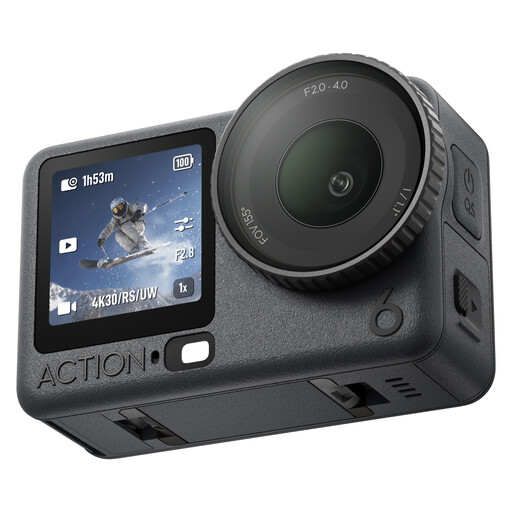
DJI Osmo Action 6 Standard Combo
Consider this action camera when recording activities matters more than changing lenses. The product name specifies a 1/1.1-inch sensor, variable aperture and 4K video; check its stated conditions before planning water use.
View on Joybuy
 No image available
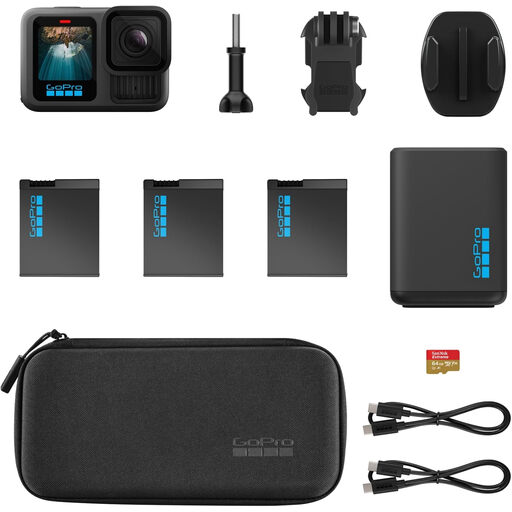
GoPro HERO13 Black Extended Power Bundle
This action-camera bundle is worth considering if backup power is part of your activity-filming plans. GoPro specifies HERO13 Black support for HB-Series lens accessories and magnetic mounting; check which accessories are included and whether any extras fit your plans.
View on Joybuy
 No image available
Sony ZV-1F Compact Vlog Camera, 1-inch sensor
Consider this compact camera if wide-angle self-filming appeals and you do not want to pack interchangeable lenses. Its product name specifies an ultra-wide lens; decide whether that fixed framing suits the other subjects on your trip.
View on Joybuy
 No image available
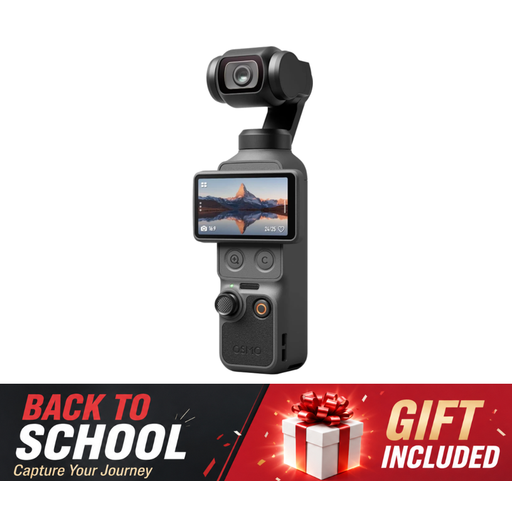
DJI Osmo Pocket 4 Standard Combo, 107 GB storage
This pocket gimbal camera suits travellers prioritising handheld video. Its product name specifies three-axis stabilisation, 4K/240fps recording, 2× lossless zoom and 107 GB of built-in storage; check whether its handling and carrying size suit your plans.
View on Joybuy
 No image available
Sony ZV-E10K with 16–50mm Power Zoom Lens
Choose a mirrorless kit such as this one if lens choice is worth the extra equipment on your trip. It includes a 16–50mm power zoom lens; assess the complete camera-and-lens kit against the subjects you plan to photograph and the load you want to carry.
View on Joybuy
Frequently asked questions
When should I take a compact camera instead of a mirrorless kit?
Take a compact camera when easy carrying and avoiding lens changes matter more than interchangeable-lens flexibility. Which? identifies compact cameras as a less bulky holiday option than higher-end mirrorless models; check that the particular compact’s controls and fixed lens meet your needs.
Can an action camera go into the water without a case?
Only if the exact model’s rating and conditions cover your activity. DJI rates the Osmo Action 5 Pro to 20m without its case and 60m with it, with covers secured, and recommends the case for prolonged underwater use or high water pressure; other models need their own specifications checked.
Do I need a spare battery and memory card for my trip?
Consider them for long recording days or substantial video, then check the camera’s exact battery compatibility and card requirements. GoPro specifies a V30 or UHS-3 microSD rating for the HERO13 Black Creator Edition, while DJI publishes supported-card guidance for the Osmo Action 5 Pro.
Can I take camera equipment in hand luggage from the UK?
Usually, yes: GOV.UK says camera equipment can generally travel in hand or hold luggage. Specialist equipment may face restrictions, so check your airline’s rules and make sure electronic devices can switch on if requested.
Where should spare camera batteries go when flying?
Keep spare batteries protected in cabin baggage, as the UK Civil Aviation Authority directs. Check your airline’s battery restrictions for your particular batteries and journey before departure.


