For occasional shirt-cuff touch-ups in a holiday let, choose a conventional steam iron with a stated precision tip: access to narrow seams matters more to this task than a large water tank. If several shirts or linens need pressing at each turnover, consider a steam generator for its separate, larger tank, accepting the extra base and storage space. Whichever type you choose, plan for limescale care and checks of the appliance’s condition.
Who is the iron for?
Cuff-detail host
If the main job is tidying cuffs, collar edges and areas beside buttons between stays, look for a tip designed to reach narrow seams. Rowenta UK and Tefal UK describe this use for specific precision-tip irons, rather than for steam irons generally.
Fast-turnaround linen manager
When several shirts or broader linen loads need pressing together, tank capacity and sustained steam become more relevant than they are for one cuff. A separate-base generator also needs a suitable place to set up and store.
Low-maintenance property operator
If different people manage turnovers, choose a limescale-cleaning method they can follow consistently. The Health and Safety Executive also advises keeping electrical equipment suitable for its use and in good condition; an automatic shut-off feature does not check the plug or cable.
What matters when choosing?
Conventional steam iron
Choose when: Cuffs are mainly a quick finishing job, or a separate generator base would be awkward to store.
Trade-off: Its onboard tank may mean more refilling during longer pressing sessions; confirm that the exact model has the tip design you need.
Steam generator
Choose when: Pressing several garments at a time is a regular part of the turnover.
Trade-off: The separate tank and base take more room, which may outweigh their value for a single quick touch-up.
| Concern |
What to check |
Who this matters to |
| Access to cuff seams |
Look for a stated precision or profiled tip on the exact model. Check for anti-drip if water marks on linen are a concern. |
If I mainly press cuffs and collar edges, I need the soleplate to reach narrow areas beside seams and buttons. Around 42% of consumers put that detailed access first. |
| Repeated laundry turnaround |
Compare continuous-steam figures and tank capacity for the models under consideration, then allow for their storage and setup. |
When several garments need pressing between stays, I want fewer pauses to refill the tank. For around 25% of consumers, uninterrupted batch pressing is the primary concern. |
| Upkeep and condition |
Check how the model is descaled and whether its cleaning steps fit the turnover routine. Inspect the plug, cable and casing as part of ongoing use. |
If I manage an iron used at the property, I need maintenance I can keep up with and equipment in good condition. Ongoing upkeep comes first for around 33% of consumers. |
Purchasing pitfalls
-
Choosing a generator for one quick cuff touch-up
A separate tank can be useful across several garments, but its base takes space and adds setup to a small job. Philips UK states a two-minute heat-up time for its PSG2000/20 generator.
If cuffs are the usual task, consider a conventional iron with a stated precision tip; consider a generator when batch pressing is routine.
-
Assuming every pointed nose is a precision tip
Rowenta UK and Tefal UK describe access to seams and narrow edges for particular models. A similar-looking soleplate on another iron does not establish the same feature.
Check the exact model’s description for a precision or profiled tip, and check anti-drip separately if water spotting matters.
-
Overlooking the work behind an anti-scale label
Scale collectors and cleaning systems still require someone to follow the model’s instructions. A feature name alone does not tell you how it fits a property’s turnover routine.
Check the cleaning procedure before choosing an iron and decide who will carry it out.
-
Relying on auto-off instead of checking the appliance
Automatic shut-off cannot identify a damaged plug, cable or casing. The Health and Safety Executive advises keeping electrical equipment suitable for its use and maintained to prevent danger.
Check the appliance’s condition, remove damaged equipment from use and have cable replacement or repairs handled by a competent person.
Brands to consider for specific iron types
Rowenta
Rowenta UK describes the Focus DW5110 as a conventional steam iron with a profiled tip for narrow edges, seams and collars.
- The DW5110 combines that tip with anti-drip and integrated anti-scale features, according to Rowenta UK.
- Its stated 300 ml tank is worth weighing against the amount of laundry pressed in one session; the model’s features should not be assumed across the brand.
Tefal
Tefal UK describes different conventional steam irons for precision work and limescale management, including the FV9853G0 and FV5696G0.
- The FV9853G0 is described with a precision tip, while the FV5696G0 has a removable scale collector.
- Check the exact model’s tip, collector and cleaning method; these details are not common specifications for every Tefal iron.
Philips
Philips UK presents the PSG2000/20 as a separate-base steam generator for longer ironing sessions.
- Philips UK states a 1.4 L tank, 110 g/min continuous steam and Smart Calc Clean for this model.
- The base needs storage space and may be inconvenient when the job is limited to one cuff touch-up.
Joybuy steam irons for this task
These conventional steam irons suit shoppers considering a single appliance rather than a separate-base generator. For cuff-focused use, check the exact soleplate-tip design as well as the model’s upkeep requirements.
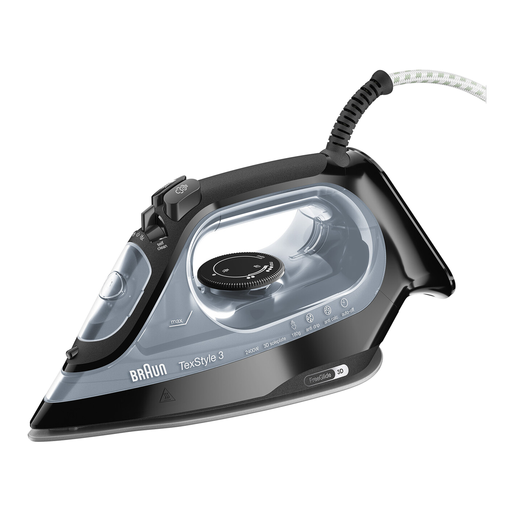 Image unavailable
Braun TexStyle 7 Pro SI7160BL Steam Iron, Blue
Consider this model when narrow cuff and collar areas are the main job: its product name specifies a precision tip. It also lists 2600 W, FreeGlide 3D and an EloxalPlus soleplate. Check the cleaning instructions and available storage space before putting it into a turnover routine.
View on Joybuy
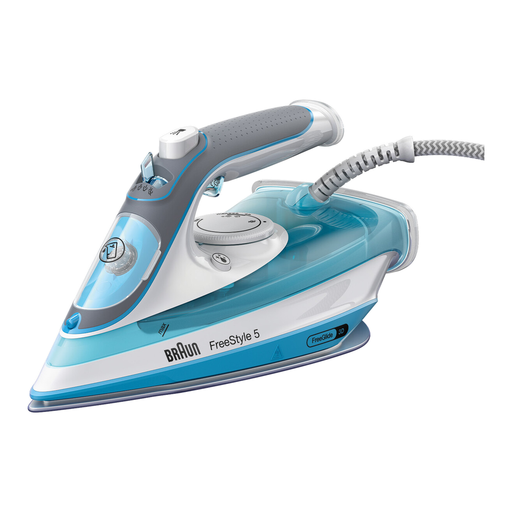 Image unavailable
Braun TexStyle 5 SI5008BL Steam Iron, Blue
This conventional iron is an option if a separate generator base would be inconvenient. Its product name lists 2600 W, FreeGlide 3D, an anti-drip feature and a SuperCeramic soleplate. For cuff work, confirm the tip design; if you regularly press batches, check continuous steam and tank capacity for this exact model.
View on Joybuy
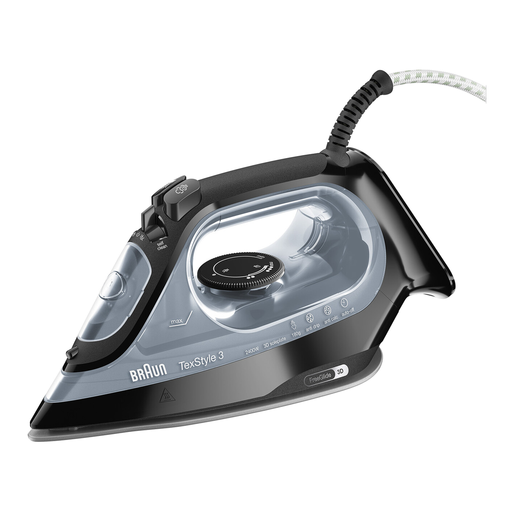 Image unavailable
Braun TexStyle 3 SI3055BK Steam Iron, Black
Consider this conventional format for occasional garment finishing, subject to checking its access around cuff seams. Its product name lists 2400 W, FreeGlide 3D, auto-off and a SuperCeramic soleplate. Auto-off does not replace condition checks; check the model’s tank capacity and descaling procedure if it will be used repeatedly.
View on Joybuy
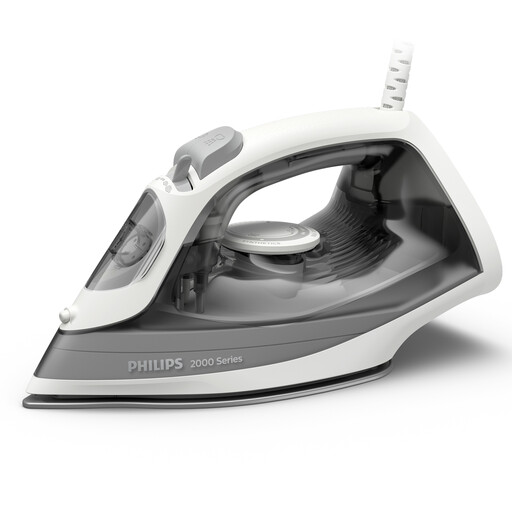 Image unavailable
Philips 2000 Series DST2020/80 Steam Iron, Grey
This is a conventional steam-iron option for garment pressing; its product name lists 2000 W. If access beside cuff buttons is your deciding need, check the DST2020/80 soleplate-tip design before choosing it. Also check its tank and cleaning instructions for the intended turnover routine.
View on Joybuy
Common questions
Which iron feature matters most for shirt cuffs?
Look for a stated precision or profiled tip on the exact iron you are considering. Rowenta UK and Tefal UK describe such designs for reaching narrow edges and seams on specific models; check anti-drip separately if water marks on linen would be a problem.
Is a steam generator worthwhile if I only press cuffs?
A conventional steam iron is generally the more practical starting point for occasional cuff touch-ups because it has no separate generator base to set up or store. Which? distinguishes compact standard irons from separate-tank generators; consider the latter when pressing several garments together becomes routine.
Does an anti-scale feature mean I can skip descaling?
No. Choose a cleaning method that fits the property’s routine, then follow the instructions for that exact model. Tefal describes scale collectors on specific irons, while Philips specifies Smart Calc Clean for its PSG2000/20 generator; neither type of feature removes the need for maintenance.
Is auto-off enough for an iron used in a holiday let?
No. Auto-off is an additional feature, not a way to detect damage. The Health and Safety Executive advises that electrical equipment be maintained to prevent danger and that its suitability and the condition of its plug, cable and casing be checked; account for the property’s location and operating arrangements when setting its safety procedures.


