Households comparing milk types
If you use milk in drinks or cereal but want to reduce fat, compare semi-skimmed with 1% or skimmed milk. NHS guidance points people trying to cut down on fat towards those alternatives.


Choose fresh semi-skimmed milk for a summer holiday if you can keep it chilled and expect to use it within the pack’s instructions. If reducing fat is your main aim, NHS guidance suggests comparing 1% or skimmed milk instead. For storage before opening, consider UHT milk; filtered fresh milk may have a longer stated life, but it still needs refrigeration.
If you use milk in drinks or cereal but want to reduce fat, compare semi-skimmed with 1% or skimmed milk. NHS guidance points people trying to cut down on fat towards those alternatives.
If refrigeration is uncertain before you reach your accommodation, unopened UHT milk offers a storage option. Plan for fridge space after opening and follow the instructions on the pack.
Pack size matters when holiday milk use is unpredictable. Sainsbury’s gives a three-day after-opening instruction for its cited fresh and UHT products, while the cited filtered products from Cravendale and M&S state seven days.
Decide which milk type you want, then match its unopened storage and after-opening instructions to your journey and length of stay.
| Priority | What to check | Your needs |
|---|---|---|
| Milk type and fat | Compare milk type, fat and saturates per 100 ml on the packs. Waitrose & Partners lists 0.4 g fat and 0.1 g saturates per 100 ml for Arla B.O.B; it is skimmed milk, not semi-skimmed. | I want to decide whether familiar semi-skimmed milk meets my preference or whether cutting fat matters more. NHS guidance suggests trying 1% or skimmed milk for the latter aim. |
| Unopened storage | Check whether the pack requires refrigeration or permits cool, dry storage before opening. Filtered fresh milk remains a chilled product; UHT storage instructions change after opening. | Fridge space may be limited on the journey or when I arrive, so I need a format I can store as instructed until I open it. |
| Opened life and size | Read the pack’s after-opening instruction alongside its volume. Sainsbury’s states three days for its cited fresh and UHT products; Tesco’s Cravendale listing and M&S’s cited filtered product state seven days. | A smaller pack may fit a short stay, while a larger one only makes sense if we can refrigerate and use it within its stated period. |
| Pack information | Check the physical pack for ingredients, allergen information, dates and storage instructions rather than relying solely on an online listing. | If someone needs to avoid an ingredient, or our storage arrangements change, I need the instructions for the milk we actually receive. |
Semi-skimmed may not match a purchase driven chiefly by reducing fat. NHS guidance suggests 1% or skimmed milk for people trying to cut down on fat.
Compare the milk type and nutrition information per 100 ml on the exact packs you are considering.
A longer stated life does not remove its chilled-storage requirement. M&S instructs shoppers to keep its cited filtered milk at 0°C to 5°C.
Use UHT milk if you need permitted unopened cupboard storage. Choose filtered fresh milk only if you can keep it refrigerated as its pack instructs.
The after-opening period differs between the cited products, so a large bottle may not fit a short stay or uncertain milk use.
Match the pack volume to the number of people, your fridge space and the exact after-opening instruction.
The information needed for an ingredient, date or storage decision is on the product you receive.
Check its physical label before use, particularly when someone needs to avoid milk or another ingredient.
These product examples show how storage instructions and milk types can differ; check the current pack for the one you buy.
Its cited 2 L filtered fresh semi-skimmed milk is an option for a stay with dependable refrigeration.
Tesco lists the Cravendale filtered semi-skimmed product as one example for comparing stated opened life.
Its cited fresh and long-life semi-skimmed products illustrate the choice between chilled storage and a UHT format.
The cited Asda Arla Farmers semi-skimmed milk is a fresh, refrigerated option.
Its cited filtered fresh semi-skimmed milk offers a stated after-opening period for shoppers with fridge access.
Its Arla B.O.B listing provides an example to compare when reducing fat matters more than buying standard semi-skimmed milk.
These are single- and six-pack formats of UHT skimmed milk for shoppers considering storage before opening. Neither is semi-skimmed milk.
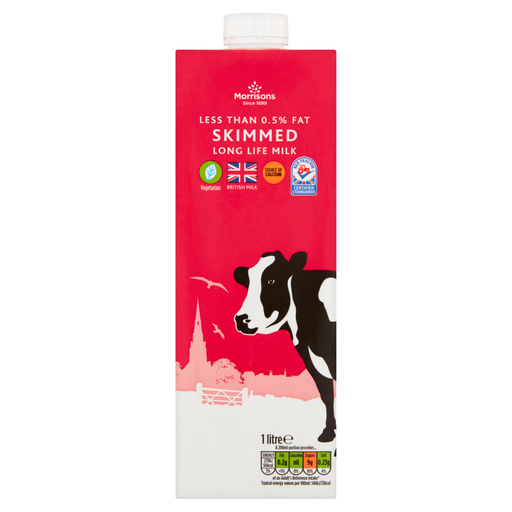 Image unavailable
The single 1-litre pack is an option if you want skimmed rather than semi-skimmed milk and can match one opened pack to your stay. The listing says to refrigerate it after opening and use it within three days. It also advises that the product is unsuitable for children under five; check the physical pack before buying for young children, and confirm its current storage and allergen information.
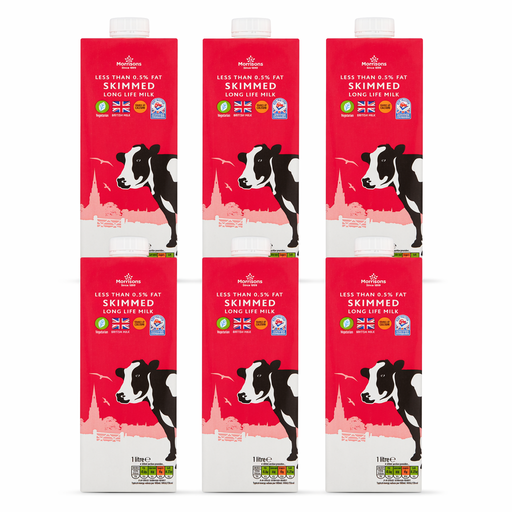 Image unavailable
The six-pack may fit a group or longer stay if you expect to use the quantity. This is skimmed, not semi-skimmed milk; the listing says to refrigerate each pack after opening and use it within three days. It also advises that the product is unsuitable for children under five; check the physical packs before buying for young children, and confirm their current storage and allergen information.
Compare it with 1% and skimmed milk rather than assuming semi-skimmed is the lowest-fat choice. NHS guidance suggests trying 1% or skimmed milk when cutting down on fat is the aim; check the nutrition panels per 100 ml for the products you are considering.
UHT milk is the option to consider when you need unopened cupboard storage, provided the particular pack permits it. Once opened, follow its refrigeration and use instructions; Sainsbury’s says to refrigerate its cited UHT semi-skimmed milk and use it within three days.
Do not treat filtered fresh milk as shelf-stable. M&S instructs shoppers to keep its cited filtered semi-skimmed product at 0°C to 5°C, so plan how you will maintain the pack’s required temperature throughout the journey.
Follow the instruction on your particular pack. Sainsbury’s states three days after opening for its cited fresh and UHT products, while Tesco’s cited Cravendale listing and M&S’s cited filtered product state seven days; neither period applies to every semi-skimmed milk.
Check the ingredients and allergen information on the physical pack before serving it. Do not rely solely on a retailer listing when making an ingredient or allergy decision.