
24/7 Customer Support

Free returns

Same-day & Next-day Delivery

Quality Guaranteed

Unlock Your Welcome Offers: FREE Delivery | Up to 80% OFF | Free 30-day JoyPlus trial
Download the APP
Choosing the right home audio speakers can feel like navigating a minefield of technical jargon and ambitious marketing claims. Your television's built-in speakers are often underwhelming, leaving movie dialogue muffled and music sounding flat. Yet, the leap to a dedicated sound system can be daunting. Many shoppers find themselves disappointed with a purchase that promised the world but failed to deliver, often due to a few common but costly pitfalls.
As a Joybuy Product Recommendation Officer, my role is to help you sidestep these issues. We will look past the hype and focus on what truly matters for great sound in your home. Before you invest in a new audio setup, be aware of these frequent traps:
To make an informed choice, it is crucial to understand a few key parameters that directly impact performance.
The numbers like 2.1 or 5.1.2 describe the speaker configuration. Understanding them is the first step to matching a system to your needs.
How you connect your speaker to your TV is critical for audio quality.
Different speakers are built for different purposes.
Instead of a generic list, we have matched specific products to different user needs, helping you find a suitable fit for your lifestyle.
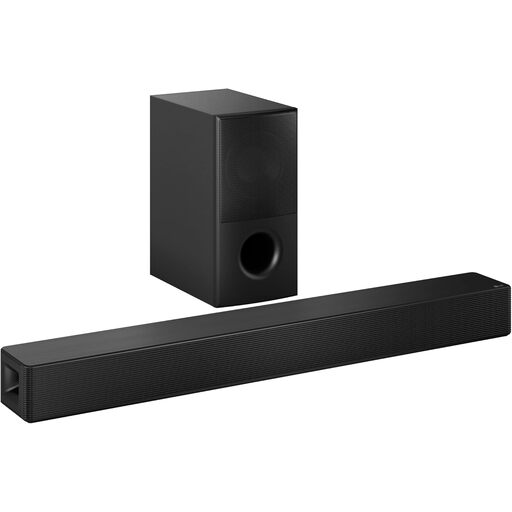
Why This Fits Their Persona: Ideal for anyone taking their first step away from tinny TV speakers. It provides a substantial and immediate improvement for movies and music without the complexity of a full surround system. The wireless subwoofer offers placement flexibility in a typical UK living room.
It avoids the "virtual cinema" trap by being an honest, powerful 2.1 system. Its 320W power rating is clearly distributed (120W bar, 200W sub), providing a realistic expectation of performance, not an inflated single number.
Adaptive Sound Control: Intelligently analyses content to boost dialogue clarity or increase bass for action scenes. HDMI ARC: Simplifies setup and allows you to use your existing TV remote for volume control.
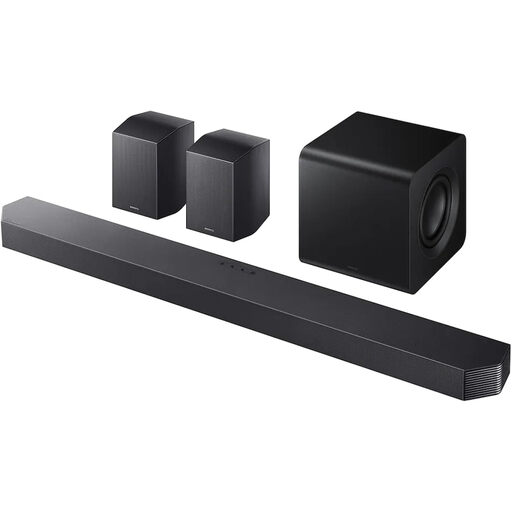
Why This Fits Their Persona: For the user who wants a truly immersive movie and gaming experience at home. This is a complete package that delivers genuine, object-based 3D audio without needing a complex, separate AV receiver and speaker setup.
This system delivers true 9.1.4 channel sound with physical up-firing drivers on both the soundbar and the included rear speakers. This completely sidesteps the "virtual surround" trap by creating a genuine Dolby Atmos sound field.
Wireless Dolby Atmos: Transmits the high-resolution Atmos signal from a compatible TV over Wi-Fi, reducing cable clutter. SpaceFit Sound Pro: Automatically calibrates the audio to your specific room acoustics for optimised performance.
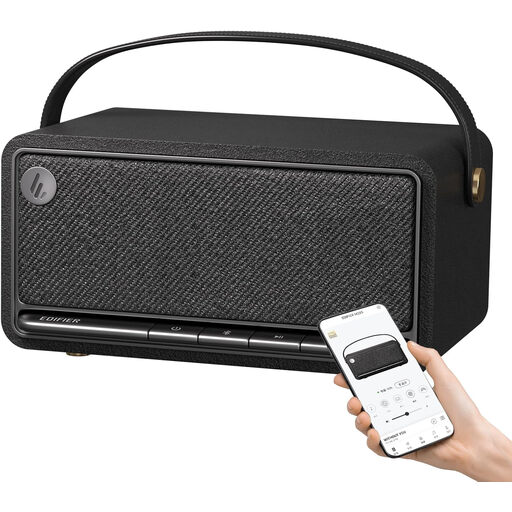
Why This Fits Their Persona: Perfect for the user who values high-quality audio on the move. Whether for a garden party, a picnic or just moving from room to room, this **Edifier speaker** provides excellent sound quality in a compact, stylish and easy-to-carry package.
This speaker avoids the wattage myth by stating a clear 40W RMS power output, a realistic measure of its continuous performance. It focuses on its core strengths—portability and audio fidelity—rather than over-promising a cinematic experience.
Hi-Res Audio Certified: Supports 24bit/96kHz audio processing for superior sound quality over Bluetooth. Long Battery Life: Offers up to 19 hours of playback on a single charge, making it reliable for all-day use.
We have compiled a complete, real-time list of products that fully satisfy these strict selection criteria and UK safety regulations.
For most people, the answer is a definite yes. A soundbar on its own is limited by its small size and cannot effectively reproduce the deep, low-frequency sounds that create impact in movies and richness in music. A dedicated subwoofer handles this low-end audio (often called the LFE channel), freeing up the soundbar to focus on mid-range and high-frequency sounds like dialogue and effects. The result is a much fuller, more dynamic and more engaging listening experience.
No, in almost all cases you do not. Modern soundbars are "active" systems, meaning they have their own built-in amplifiers. They are designed to be a self-contained solution that connects directly to your television, usually via a single HDMI cable. This greatly simplifies the setup process compared to a traditional home cinema system that requires a separate, bulky AV receiver to power passive speakers.
The lifespan of a speaker system depends heavily on its build quality, usage and environment. A well-made system from a reputable brand, used at reasonable volumes, can easily last for 10 years or more. The most common points of failure are electronic components rather than the speaker drivers themselves. To maximise longevity in the UK climate, it is advisable to ensure good ventilation around the equipment and avoid placing it in areas prone to dampness or extreme temperature fluctuations.