
24/7 Customer Support

Free returns

Same-day & Next-day Delivery

Quality Guaranteed

Unlock Your Welcome Offers: FREE Delivery | Up to 80% OFF | Free 30-day JoyPlus trial
Download the APP
As a Joybuy Product Recommendation Officer, my role is to help you navigate the crowded market of coffee gadgets. The dream of crafting café-quality coffee at home is more attainable than ever, but it's easy to make costly missteps. Many find themselves with expensive machines that gather dust or accessories that simply don't perform.
This guide cuts through the marketing clutter. We'll focus on the practical considerations for selecting the right home barista equipment, ensuring your investment enhances your daily coffee ritual rather than complicating it.
Before looking at what to buy, it's crucial to understand what to avoid. UK households often fall into these common traps:
To avoid the pitfalls, focus on these non-negotiable technical aspects. They are the foundation of consistent, high-quality coffee.
For true espresso, two factors are paramount. First is pump pressure. Look for a machine that can deliver 15-bar pressure. While the ideal extraction happens at around 9 bars, a 15-bar pump ensures consistent and powerful pressure delivery, which is essential for extracting rich oils and creating a stable crema.
Equally important is temperature control. Coffee is sensitive to temperature fluctuations. A good manual espresso machine or bean to cup coffee machine will have a heating system, like a thermoblock or thermocoil, designed to keep the water at a precise, stable temperature (typically 90-96°C) throughout the extraction. Machines from brands like the De'Longhi espresso machine or a Sage coffee machine often highlight their specific heating technologies for this reason.
Your accessories are tools, not afterthoughts. For any item that holds your coffee or milk, from a milk frothing jug to an insulated coffee mug, the material matters.
Your choice of equipment should match your desired involvement in the coffee-making process.
Based on these practical criteria, here are some equipment choices matched to different home barista profiles.
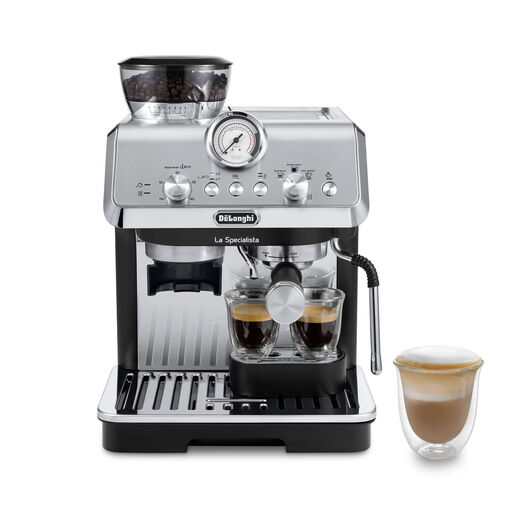
Why This Fits Their Persona: Perfect for the UK coffee enthusiast who wants to master the craft. It provides hands-on control over the entire process—grinding, tamping and steaming—to replicate the authentic café workflow at home.
It avoids the "ignoring accessories" pitfall by including a complete professional barista kit (tamper, dosing funnel, milk jug), providing everything needed to start right away.
Features an integrated burr grinder with 8 settings and 3 infusion temperature profiles, offering precise control that is usually found in more expensive, separate units.
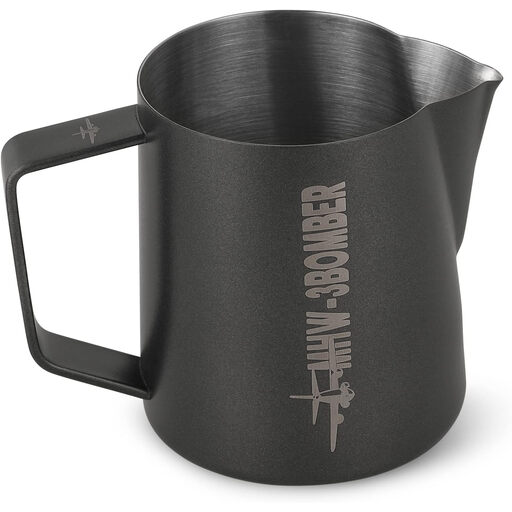
Why This Fits Their Persona: For the home user dedicated to perfecting milk-based drinks. This isn't just a jug; it's a specialised tool designed for the precise pouring required for creating detailed latte art.
Directly counters the "poor accessories" problem. Its patented spout design provides the flow control that generic, bundled pitchers lack, preventing frustrating, messy pours.
Made from a single piece of food-grade 304 stainless steel with no internal welds, ensuring durability and making it exceptionally easy to clean, with no milk residue buildup.
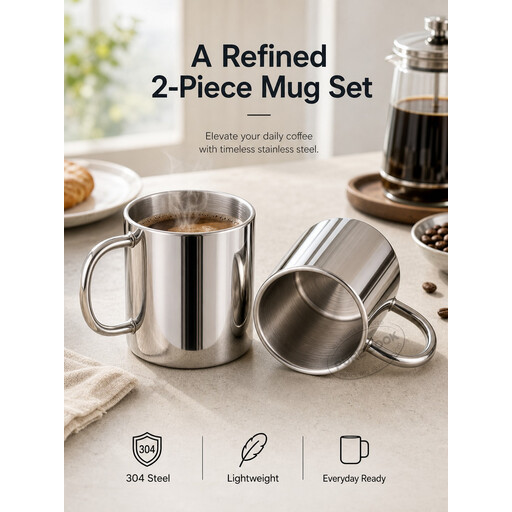
Why This Fits Their Persona: For the practical individual who has perfected their brew and wants to enjoy it properly. Ideal for home, office or even camping, it ensures the coffee stays at the right temperature from the first sip to the last.
It avoids the "compromising on materials" trap. Unlike fragile glass or ceramic, these 304 stainless steel mugs are shatterproof, and the double-wall design prevents rapid heat loss.
The double-walled vacuum structure provides excellent insulation, keeping drinks hot without burning your hands and preventing condensation with cold drinks. The mirror-polished interior resists stains.
We have compiled a complete, real-time list of products that fully satisfy these strict selection criteria and UK safety regulations.
For many, yes. While the initial investment is higher than for a pod machine, the long-term running cost is significantly lower as you are buying whole beans. If you drink coffee daily and value both convenience and the freshness of grinding your own beans, a bean to cup coffee machine often provides a strong return on investment in terms of both cost and quality.
With proper care and regular maintenance (like descaling), a well-made home espresso machine from a reputable brand should last for 5 to 10 years. Longevity is heavily influenced by the build quality, particularly the use of metal components over plastic in key areas and the user's commitment to cleaning.
A quality burr grinder. If your machine does not have one integrated, a separate burr grinder is the single most impactful investment you can make. It produces a consistent grind size, which is fundamental for a balanced and repeatable espresso extraction. Blade grinders, by contrast, produce an inconsistent mix of fine dust and coarse chunks, leading to a poor-tasting coffee.