Dark-room documentary viewers
You mainly watch in a light-controlled home cinema and care about shadow detail and natural-looking colour in night, ocean and forest footage.


Choose a projector for nature documentaries by checking that its throw range suits your screen and room, then decide whether dark-scene detail or visibility with some room light matters more. In a darkened cinema, assess contrast and HDR handling for the exact model; with a constrained mounting position, lens adjustments become especially important. A brightness figure alone cannot settle how dark footage will look.
You mainly watch in a light-controlled home cinema and care about shadow detail and natural-looking colour in night, ocean and forest footage.
You need the picture to fit a planned screen from an existing ceiling position, an off-centre shelf or a limited projection distance.
You sometimes watch with ambient light in the room, so image visibility matters alongside your plans for 4K and HDR content.
Plan the screen size and projector position before comparing picture specifications. ProjectorCentral identifies throw distance, screen size and brightness needs as linked parts of a home-theatre purchase.
| Concern | What to check | Who this matters to |
|---|---|---|
| Dark scenes and colour | Check the exact model's resolution, HDR support and colour claims, alongside how well you can darken the room. | When I watch night wildlife or shaded forest footage, I want detail and colour that suit a darkened screen. Around 31% of consumers put dark-scene and colour fidelity first. |
| Screen and placement fit | Measure the lens-to-screen distance and intended image size; check the model's throw range, zoom and lens-shift limits. | If my ceiling position or shelf is fixed, the projector must fill the screen from that spot. Placement is the primary concern for around 31% of consumers. |
| Visibility with room light | Consider the intended screen and remaining ambient light when checking stated light output and picture modes. | For daytime family viewing, I need a picture I can see without fully darkening the shared room. Around 23% of consumers prioritise visibility with residual light. |
| Connections and ownership | Confirm the exact model's connections, power arrangement and support terms against your existing setup. | If I use external sound or connected features, I want the projector to fit my system and be straightforward to maintain. These ownership needs come first for around 15% of consumers. |
Room light, the screen and picture settings also affect how dark documentary footage looks; a lumen figure does not describe the whole image.
Decide whether you will mainly watch in darkness or with some lights on, then assess the exact projector and screen together.
The available mounting point may not produce your intended image size, even if a projector has zoom or image correction.
Measure the room and consult the exact model's projection calculator or manual, including its lens-position limits.
A mismatch may call for a different mount, shelf or cable arrangement, or a change to the planned screen size.
Specifications for different models may describe different settings or measurement conditions, so the figures alone do not establish which picture you would prefer.
If black level or colour accuracy will decide your purchase, seek model-specific independent measurements or a demonstration under relevant viewing conditions.
An imported version can complicate checks around its power arrangement, documentation or support.
Confirm the exact model and intended market with the seller, then check its plug, power information, warranty terms and relevant marking documentation. Ask which requirements apply if the product is intended for Northern Ireland rather than Great Britain.
These examples describe named projector models, not every model made by each brand.
The DLA-NZ500 is a model to examine for a dedicated, light-controlled cinema.
The EH-LS12000B is worth examining when the projector position calls for adjustable optics.
The W5800 and W2720i offer different model-specific features to examine when colour and room setup matter.
These projectors offer native 1080p images with stated support for 4K video input. Consider them if native 1080p suits your screen plan; check installation fit separately, particularly if shadow detail or viewing with room light will drive your decision.
 No image available
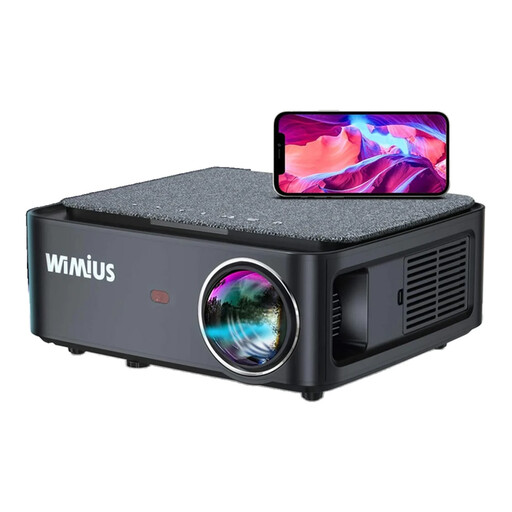
Consider this model for a home-cinema setup if native 1080p projection meets your needs; its stated 4K support does not mean native 4K resolution.
The product title states 1,200 ANSI lumens and lists vertical and horizontal keystone correction. Check the throw range and screen fit for your intended position.
 No image available
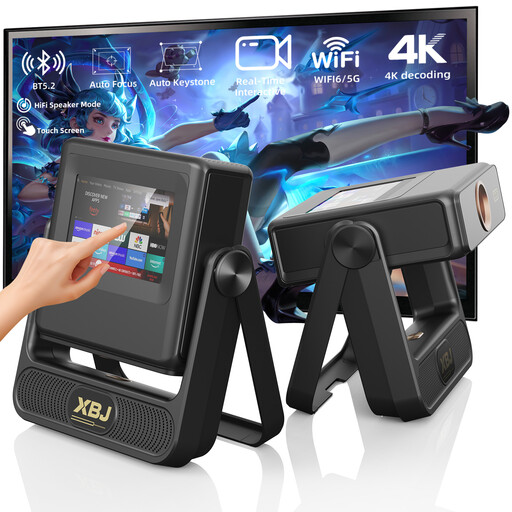
Consider this model if automatic setup adjustments matter and native 1080p projection suits your screen; stated 4K support is not native 4K projection.
The product title lists auto focus, auto keystone correction and an Android system. Confirm the ANSI-lumen rating for this variant if you will watch with room light, and check its throw range against your screen plan.
Yes: decide on the intended image size and position before selecting a model. ProjectorCentral advises considering screen size, throw distance and brightness needs together, so check that the exact projector can produce your planned image from the available mounting point.
No: stated light output matters when room light remains, but it does not replace light control when dark-scene depth is your priority. Consider the figure alongside the intended screen, room conditions and picture mode.
Check the exact model's throw range, zoom and vertical and horizontal lens-shift limits before ordering. Epson lists powered zoom and lens shift for the EH-LS12000B, while BenQ lists motorised lens shift and 1.6x zoom for the W5800; neither specification guarantees a fit without your room measurements.
Yes, if you intend to use its network or software features. Check the manufacturer's support commitment for the exact model rather than assuming a policy stated for one projector applies to another.