
24/7 Customer Support

Free returns

Same-day & Next-day Delivery

Quality Guaranteed

Unlock Your Welcome Offers: FREE Delivery | Up to 80% OFF | Free 30-day JoyPlus trial
Download the APP
Bringing the rich aroma and complex flavours of a café-quality coffee into your own kitchen is a daily ritual many of us aspire to. Yet, with a vast market of machines, choosing the right home espresso machine can feel overwhelming. The goal is to find a model that fits your skill level, kitchen space and coffee preferences without the marketing noise.
As a Joybuy Product Recommendation Officer, my role is to help you navigate these choices. This guide cuts through the jargon to highlight key features and presents a curated selection of machines, helping you find the perfect partner for your morning coffee ritual.
Before diving into specific models, understanding a few key features will empower you to make a more informed decision.
The heart of any espresso coffee machine is its ability to force hot water through finely-ground coffee. The industry standard is a 15 bar espresso machine, which provides ample pressure for a rich extraction and a stable crema. Beyond pressure, the boiler system dictates speed and consistency.
If you enjoy lattes, cappuccinos or flat whites, the milk frothing capability is crucial.
The portafilter (the handle with a basket that holds the coffee grounds) is also a key component. While many home machines use 51-54mm portafilters, a 58mm portafilter espresso machine uses the commercial standard size, which can offer more even extraction for those serious about their craft.
In many UK homes, counter space is a premium. A compact espresso machine can deliver excellent coffee without dominating your kitchen. Consider the machine's dimensions and whether the water tank is easily accessible for refilling.
Here are three distinct models that cater to different needs, from the aspiring beginner to the seasoned home barista.
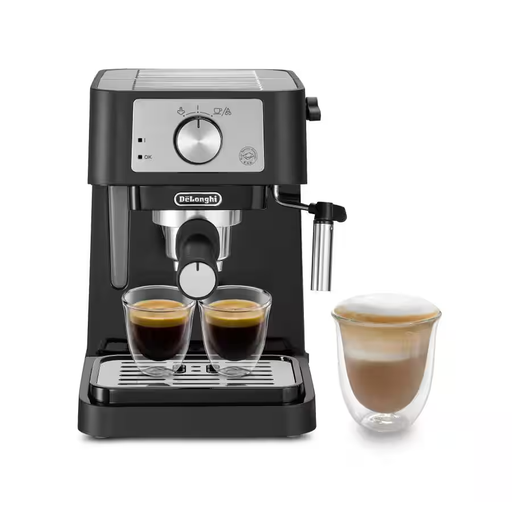
Why It Stands Out: The De’Longhi Stilosa offers a fantastic entry point into the world of espresso. It combines a reliable 15-bar pump and a durable stainless steel boiler within a sleek, compact frame, making it a practical choice for any kitchen.
Pros:
Who is it for? This machine is ideal for beginners, students or anyone with limited counter space who wants to learn the craft of making espresso and milk-based drinks without a significant initial investment.
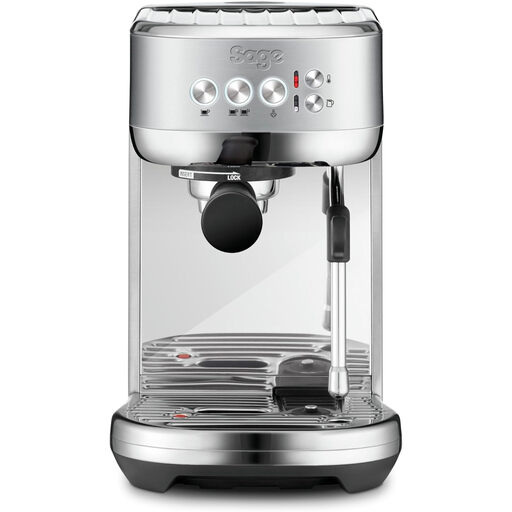
Why It Stands Out: The Sage Bambino Plus bridges the gap between manual control and automated convenience. Its standout feature is the ThermoJet heating system, which is ready for extraction in just 3 seconds, paired with a fully automatic milk frother that textures milk for you.
Pros:
Who is it for? This is an excellent choice for the busy coffee enthusiast who values both quality and convenience. If you want consistently great lattes and espressos without a steep learning curve, the Bambino Plus delivers.
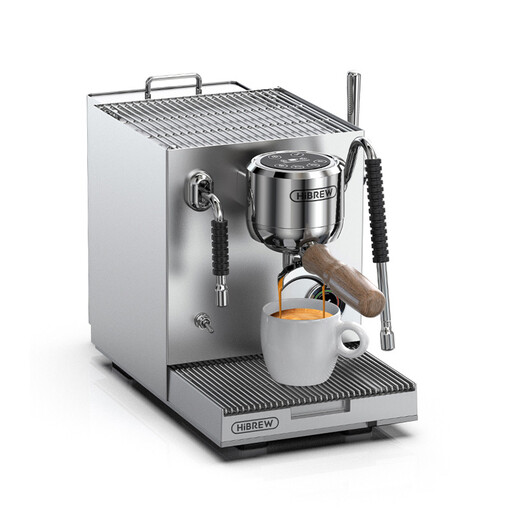
Why It Stands Out: The HiBREW H21 is a true prosumer espresso machine, built for those who want ultimate control over every variable. Its dual boiler, dual pump system allows for simultaneous brewing and steaming, a feature typically reserved for commercial machines.
Pros:
Who is it for? This machine is designed for the serious home barista who loves to experiment and demands precision. If you are passionate about the technical side of coffee making and want to replicate a professional café setup at home, the H21 is a compelling option.
The journey to your perfect cup of coffee is a personal one. If these recommendations aren't quite what you're looking for, there are many other excellent models to consider.
Explore our complete collection of Pump Espresso Machines to find a machine that perfectly suits your home and your taste.
1. What does 15-bar pressure mean on an espresso machine? Bar is a unit of pressure. For espresso, high pressure is needed to force hot water through a tightly packed puck of fine coffee grounds. A 15-bar pump provides more than enough force to achieve the ideal 9 bars of pressure at the brew head, which is widely considered the standard for a proper extraction that produces a rich flavour and a stable crema.
2. Is it difficult to use a home espresso machine with a steam wand? Using a manual espresso maker with steam wand does involve a learning curve, but it's a rewarding skill to master. It typically takes a bit of practice to learn how to introduce air to create foam (stretching) and then heat the milk to a silky, smooth texture (texturing). Many online tutorials can guide you, and after a few attempts, most users begin to feel comfortable with the process.
3. What is the main difference between a single and dual boiler espresso machine? A single boiler machine uses one heating element for both brewing espresso and creating steam. You have to switch modes and wait for the temperature to adjust accordingly. A dual boiler espresso machine has two separate boilers—one kept at the ideal temperature for brewing and the other for steam. This allows you to pull an espresso shot and steam milk at the same time, which is faster and more convenient, especially if you are making multiple milk-based drinks.