
24/7 Customer Support

Free returns

Same-day & Next-day Delivery

Quality Guaranteed

Unlock Your Welcome Offers: FREE Delivery | Up to 80% OFF | Free 30-day JoyPlus trial
Download the APP
Bringing the café experience into your kitchen is an exciting prospect, but choosing your first home espresso machine can be a minefield of confusing specifications and over-hyped features. Many aspiring home baristas in the UK find themselves with a machine that gathers dust after a few months, either because it’s too complicated, doesn't deliver on its promises or simply takes up too much precious counter space.
Before you invest, it’s crucial to understand the common pitfalls that lead to buyer's remorse. By sidestepping these traps, you can find a machine that genuinely suits your needs and helps you create delicious coffee for years to come.
To make a confident choice, focus on the functional specifications that directly impact your daily coffee ritual. Here are the non-negotiable elements to check.
As mentioned, a pump rated for 15 bar is a good starting point. Look for machines with a stainless steel boiler or a thermocoil/thermoblock heating system. These tend to heat up quickly and offer decent temperature stability for shot-after-shot consistency, which is essential for a manual coffee machine.
A good steam wand should be able to pivot, allowing you to position your milk jug at the correct angle. It needs to be powerful enough to create a vortex in the milk, which incorporates air and creates that smooth, paint-like texture for latte art. This is the single most important feature for anyone wanting to move beyond black coffee.
The portafilter is the handle that holds the coffee grounds. Most starter machines come with "pressurised" or dual-wall filter baskets. These are very forgiving for beginners as they help create a consistent crema even if your coffee grind isn't perfect. Some machines also offer compatibility with E.S.E. (Easy Serving Espresso) pods, providing an extra layer of convenience.
We've filtered the options to match different needs and budgets, focusing on models that deliver on the core principles of good home espresso.

Why This Fits Their Persona: Perfect for someone in a flat or with a small kitchen who wants to learn the basics of espresso and milk steaming without a large initial investment. It’s straightforward, reliable and doesn't overwhelm with complex settings.
It features a proper manual stainless steel steam wand, not a simple frother and its very compact design avoids taking over your counter. The 15-bar pump is a reliable standard for this price point.
Compact Footprint: Ideal for small UK kitchens.
Durable Boiler: The stainless steel boiler is built for longevity and consistent performance.
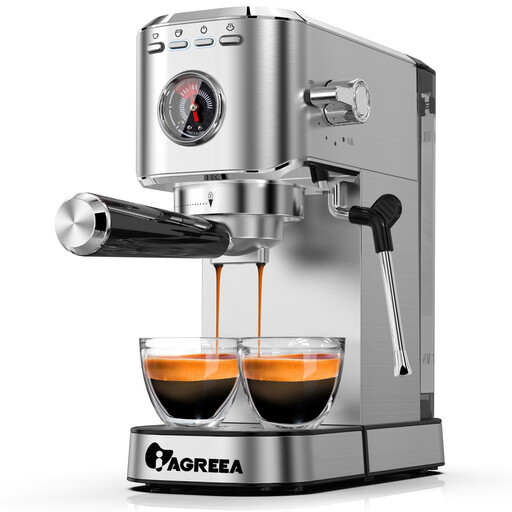
Why This Fits Their Persona: For the beginner who wants to understand the 'why' behind their coffee. The built-in pressure gauge provides real-time feedback, helping them learn how grind size and tamping affect extraction.
The pressure gauge demystifies the "high bar pressure" claim by showing you what's actually happening. It also has a powerful, adjustable steam wand and a slim, space-saving stainless steel body.
Pressure Gauge: Provides valuable visual feedback for improving technique.
Fast Heating: The 1350W system heats up quickly for on-demand coffee.
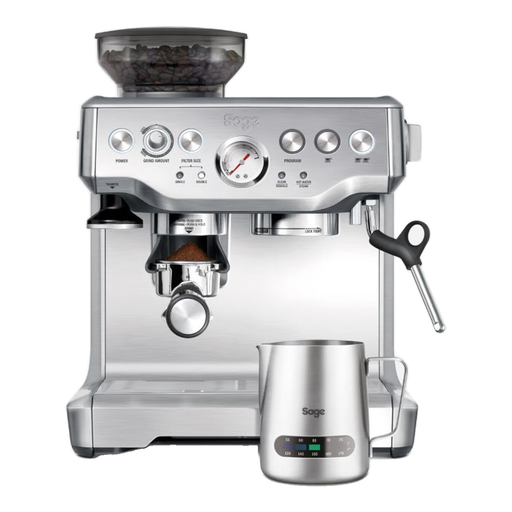
Why This Fits Their Persona: For those serious about the craft and ready to invest in an all-in-one solution. The integrated grinder, precise temperature control and powerful steam wand provide all the tools needed to replicate café-quality coffee at home.
This machine is built around quality, not gimmicks. It focuses on the four key elements of good coffee: dose, temperature, pressure and steam. The powerful steam wand is designed specifically for microfoam.
Integrated Grinder: Saves space and cost compared to buying a separate high-quality grinder.
PID Temperature Control: Ensures water is at the exact temperature for optimal flavour extraction.
Once you've chosen your machine, you'll need the right cups to complete the experience. We have compiled a complete, real-time list of products that satisfy strict selection criteria.
A 15-bar pump is the industry standard and is more than sufficient for excellent espresso. A 20-bar pump isn't necessarily better, as the final pressure is regulated down to around 9 bars at the point of extraction. Focus more on the machine's overall build quality and temperature stability rather than just the highest pressure number.
With proper care and regular descaling (as per the manufacturer's instructions), a good quality entry-level machine should provide reliable service for 3 to 5 years. More premium models can last significantly longer. Consistent cleaning of the steam wand and group head after each use is key to its longevity.
To get started, you will need a few key accessories. A quality burr grinder is the most important investment for fresh, flavourful coffee. You will also need a stainless steel milk pitcher for steaming, a tamper if one isn't included and of course, fresh coffee beans. A knock box for used coffee grounds is also a very useful and tidy addition to your setup.