
24/7 Customer Support

Free returns

Same-day & Next-day Delivery

Quality Guaranteed

Unlock Your Welcome Offers: FREE Delivery | Up to 80% OFF | Free 30-day JoyPlus trial
Download the APP
Finding the right home exercise equipment can feel like a workout in itself. With so many options promising to transform your fitness from the comfort of your living room, it's easy to fall for marketing hype. Many of us, especially those living in flats or homes where every square foot counts, have been tempted by a piece of kit only to find it becomes a permanent, bulky ornament.
As a Joybuy Product Recommendation Officer, my role is to help you navigate these choices objectively. Before you invest, let's look at the common pitfalls that lead to buyer's remorse and how to avoid them.
To make a smart purchase, focus on the core technical details, not just the flashy features. Here are the non-negotiable parameters to check.
Forget the marketing photos. Look for three specific numbers: operational dimensions, folded dimensions and net weight. Ensure the folded measurements will genuinely fit your intended storage space (e.g., under a bed with 15 cm clearance). Crucially, check the net weight and whether the unit has transport wheels. If you can't easily move it on your own, its space-saving design is compromised. This is the key to finding truly practical space-saving gym equipment.
For motorised equipment like a treadmill for home use, the motor is the heart of the machine. Power is often listed in horsepower (HP) or watts (W). A higher rating generally supports faster speeds and a heavier user weight more smoothly.
More importantly, look for a decibel (dB) rating. This is the only objective measure of a quiet treadmill. For home use, a machine that operates at under 50 dB is a good benchmark. This is comparable to the sound of a quiet library or a refrigerator hum, ensuring your workout doesn't become a household disturbance.
Before looking at Bluetooth or app connectivity, assess the machine's primary purpose.
Instead of a one-size-fits-all approach, we've matched specific products to different user needs, ensuring they address the common pitfalls.
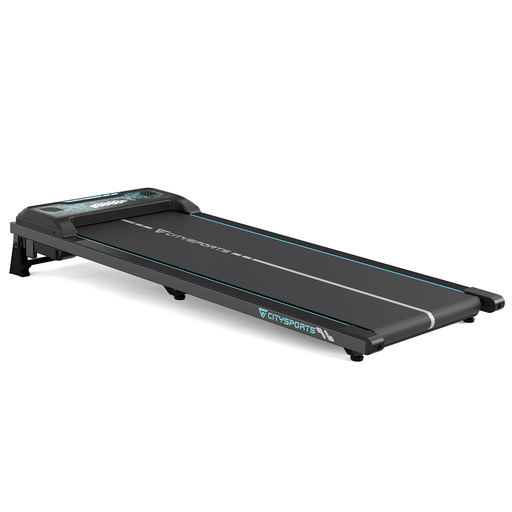
Why This Fits Their Persona: This is designed for those who want to integrate gentle movement into their workday. It slides easily under a standing desk, allowing you to walk at a slow pace (1-6 km/h) while taking calls or typing. It’s a practical way to stay active without dedicating separate time to exercise.
It directly counters the "space-saving illusion" by being genuinely slim and portable with built-in wheels. It also avoids gimmick overload by focusing solely on being an excellent walking pad, with quiet operation suitable for an office environment.
Requires no assembly and is ready to use straight out of the box. The included remote control makes adjusting speed simple without having to bend down.
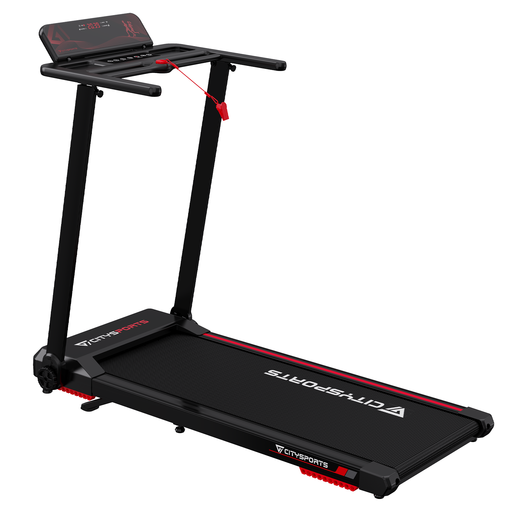
Why This Fits Their Persona: For those in flats who want more than a walk. This folding treadmill offers speeds up to 12 km/h for jogging and running, and its manual incline feature provides a way to seriously increase intensity without taking up more room.
It tackles the "noise nuisance" head-on with a stated operation level below 45 dB. Its compact 26.5 kg net weight and folding design make it genuinely manageable for storage in smaller homes, unlike heavier, clunkier models.
The two manual incline settings (0% and 8%) offer a significant advantage for boosting calorie burn and engaging different muscle groups. The 1400W motor is powerful enough for consistent running.
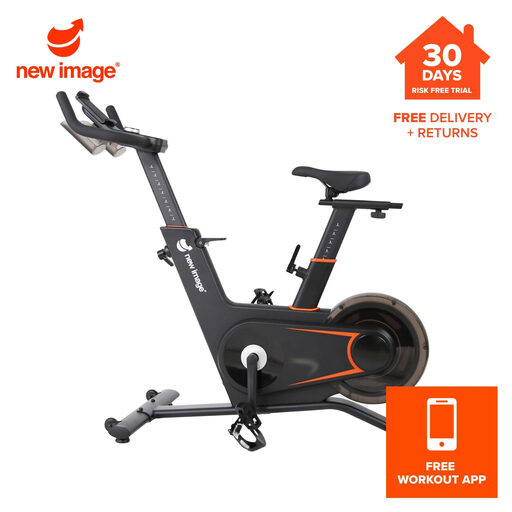
Why This Fits Their Persona: Perfect for anyone seeking a high-intensity cardiovascular workout without the impact on their joints. It mimics a studio cycling class experience and is suitable for all fitness levels, from beginners to seasoned cyclists, thanks to its wide resistance range.
This bike uses a belt-driven flywheel and electromagnetic resistance, a combination that is proven to be exceptionally quiet and low-maintenance. It avoids the trap of noisy, clunky chain-driven bikes and focuses on providing a smooth, stable ride.
Features 16 levels of precise electromagnetic resistance for customised intensity. The fully adjustable seat and handlebars ensure users can find a comfortable and ergonomic riding position.
We have compiled a complete, real-time list of products that fully satisfy these strict selection criteria and UK safety regulations.
The running cost is generally minimal. A typical home treadmill running for one hour will consume between 0.5 and 0.7 kilowatt-hours (kWh) of electricity. Based on current UK energy prices, this usually translates to just a few pence per workout, making it a very cost-effective alternative to a gym membership.
It is highly recommended to place a protective mat under any piece of home exercise equipment. Look for high-density rubber or PVC mats. These not only prevent scratches and indentations on wood, laminate or carpet but also help to absorb vibrations and further reduce noise, which is especially considerate in flats.
The lifespan of a folding treadmill depends on the build quality, motor and frequency of use and maintenance. A well-maintained, good-quality home model used a few times a week can reasonably be expected to last for 7 to 10 years. Regular maintenance, such as cleaning the belt and deck and checking lubrication as per the manufacturer's instructions, is key to maximising its longevity.