
24/7 Customer Support

Free returns

Same-day & Next-day Delivery

Quality Guaranteed

Unlock Your Welcome Offers: FREE Delivery | Up to 80% OFF | Free 30-day JoyPlus trial
Download the APP
Buying home fitness equipment can look straightforward until a resistance band rolls up mid-session, a yoga block compresses too easily or push-up handles slide across the floor. For UK households, the right choice depends less on flashy claims and more on materials, dimensions, storage and the type of movement you actually perform.
As the Joybuy Product Recommendation Officer, I focus on filtering out vague marketing language so you can compare practical features before spending money.
A band described as “heavy” may not feel the same as another heavy band. Resistance depends on material, thickness, width, length and how far the band is stretched. A compact loop for hip exercises behaves differently from a long pull-up assist band.
Check the complete specification rather than relying on a colour code or a single resistance figure. If you are a beginner, a set with several resistance levels may offer more flexibility than one high-tension band.
Soft foam can feel comfortable, but very low-density foam may deform under repeated pressure. This matters when using a yoga block for balance, seated support or deeper stretches. Likewise, fabric hip bands can be comfortable against the skin, but the stitching and grip pattern still need attention.
Look for details such as material type, density, edge design and non-slip construction. These specifications give a clearer indication of intended use than phrases such as “professional quality”.
Push-up bars with narrow feet or poor grip may shift on smooth flooring. Handles that place the wrist in an awkward position can also make floor exercises uncomfortable. Before buying push-up bars, check the base material, handle shape and the surface on which you intend to exercise.
For UK homes with laminate, vinyl or tiled floors, a broad rubber contact area can be more useful than a lightweight design with minimal floor coverage.
For yoga and Pilates accessories, PE foam, EVA foam and fabric each offer different characteristics. A denser foam yoga block can provide firmer support, while softer foam may feel more comfortable for kneeling or seated movements. Bevelled edges can make a block easier to grip and reposition.
For resistance bands, natural latex offers elastic stretch but may not suit people with a latex allergy. Read the material description carefully and stop using any band that shows cracking, thinning or surface damage.
For strength training equipment such as push-up handles, inspect the joining points, grips and base pads. Stainless steel handles, EVA foam grips and TPR rubber feet are clearly defined features that are easier to compare than general durability claims.
Size affects portability and exercise range. A 9-inch by 6-inch by 4-inch yoga block provides several height options when placed on different sides. A long resistance band with a stated circumference can work for assisted pull-ups, stretching and selected strength exercises, but it needs enough clearance around the user.
When comparing glute resistance bands, check whether the set includes light, medium and heavy options. This can help you adjust exercises such as side steps, squats and bridges without immediately purchasing several unrelated products.
A suitable product should include usable warnings and maintenance instructions. Check for:
UK product safety responsibilities vary by product type, so do not treat a marketplace description as a substitute for reading the supplied instructions. If you are returning to exercise after an injury or have a medical condition, seek appropriate professional advice before starting a new routine.
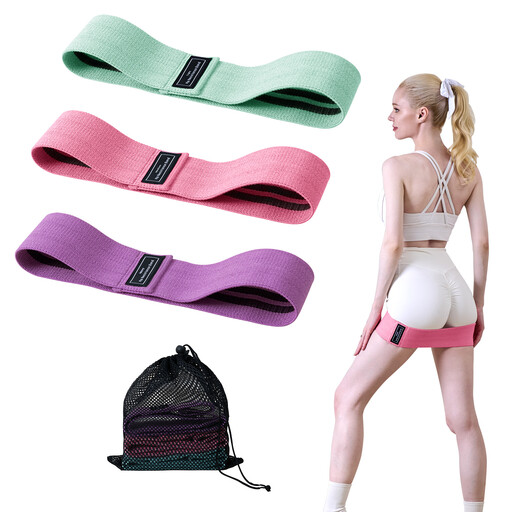
Why This Fits Their Persona: Three resistance levels provide a simple starting point for home users working on squats, bridges, side steps and Pilates movements without buying separate bands.
The fabric construction and non-slip design address the common problem of narrow loops rolling up during lower-body exercises.
Set of three fabric loop bands; includes a storage bag for organisation between sessions.
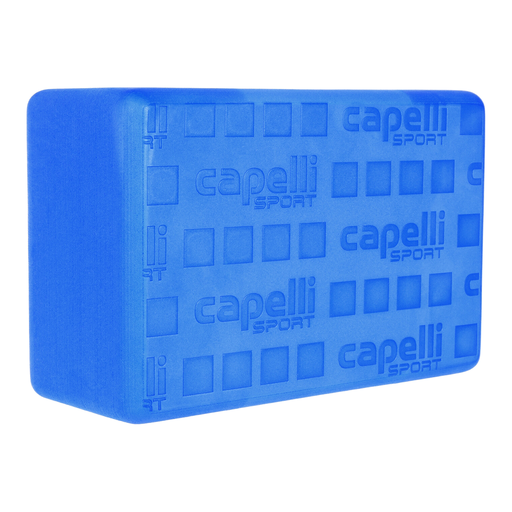
Why This Fits Their Persona: Suitable for yoga, meditation and Pilates users who want a firm prop with several height positions for alignment and stretching.
The specification states PE foam, a denser construction than standard EVA, a non-slip surface and bevelled edges rather than relying only on appearance.
Measures 9 x 6 x 4 inches; bevelled edges support gripping and handling.
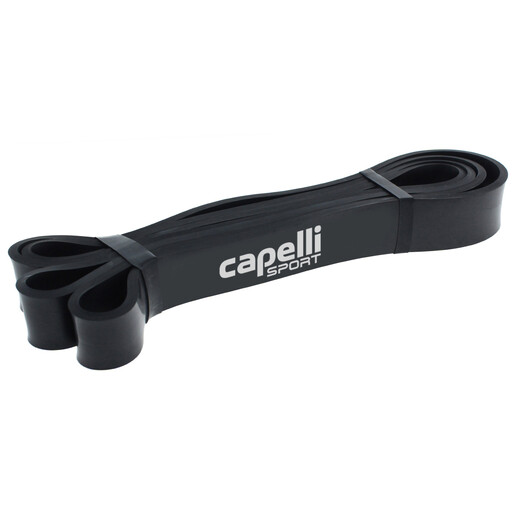
Why This Fits Their Persona: A long band is suited to users combining assisted pull-ups, stretching, warm-ups and muscle-building exercises in a compact home setup.
Its listing specifies natural latex, 2.8 cm width, 208 cm circumference and a 40–50 lb resistance range, making comparison more transparent.
Long loop format; designed for pull-up assistance, stretching and strength training. Contains latex.
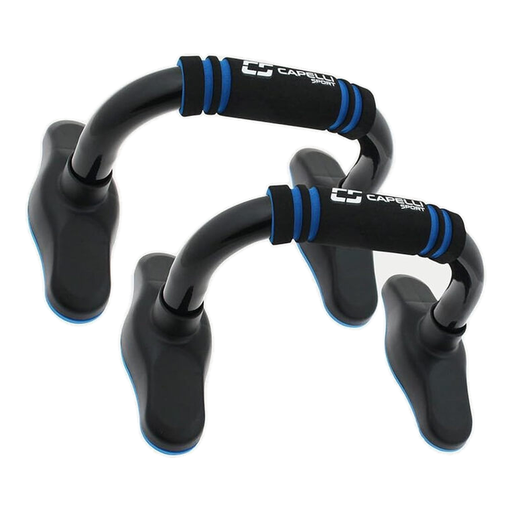
Why This Fits Their Persona: Designed for people prioritising upper-body floor workouts and a portable setup for chest, shoulder and triceps exercises.
The large TPR rubber pads address floor movement, while the raised handles avoid placing the palms flat against the floor.
Stainless steel handles with EVA foam grips; stated weight capacity of 300 lb and no assembly required.
We have compiled a complete, real-time list of products that fully satisfy these strict selection criteria and UK safety regulations.
A compact setup does not need to include every type of fitness accessory. Start with your main activity, then add equipment that solves a clear limitation:
Avoid buying duplicate accessories that perform the same function. A long resistance band, a set of hip bands and push-up bars already cover several upper- and lower-body movements, while a yoga block can support mobility work.
Yes, provided you select manageable resistance and follow the supplied instructions. Beginners should prioritise controlled movement, a stable floor and gradual progression. Start with lighter resistance where possible and stop if you experience pain, dizziness or unusual discomfort.
Lifespan depends on stretching frequency, storage, temperature and exposure to sunlight. Inspect latex bands before every use and replace them if you notice cuts, cracks, thinning or permanent deformation. Keep them away from sharp edges, excessive heat and prolonged direct sunlight.
Most accessories, including yoga blocks, resistance bands and push-up bars, do not require electricity. The main ongoing costs are storage, cleaning and replacement when wear affects safety. This makes small accessories practical for users who want strength training or mobility work without running a powered machine.