
24/7 Customer Support

Free returns

Same-day & Next-day Delivery

Quality Guaranteed

Unlock Your Welcome Offers: FREE Delivery | Up to 80% OFF | Free 30-day JoyPlus trial
Download the APP
Buying home fitness equipment can seem straightforward until a product arrives too small, too unstable, difficult to store or uncomfortable on hard flooring. Many UK shoppers also pay for features they rarely use, while overlooking basic details such as dimensions, material, weight limits and cleaning requirements.
A practical buying decision starts with matching equipment to your actual routine. Whether you need a yoga mat, exercise ball, Pilates ring, rebounder trampoline or broader core workout equipment, the following checks can help you avoid common purchasing mistakes.
Terms such as “professional”, “heavy duty” or “anti-slip” can sound reassuring, but they do not replace measurable specifications. Check the actual material, product dimensions, maximum load and included accessories. For example, an anti-slip surface may improve grip, but it still needs to be used on a clean, level floor.
A product that works well in a studio may be impractical in a flat or spare bedroom. A rebounder needs clear surrounding space and adequate overhead clearance. An exercise ball must fit both your height and, if used as an office chair, the desk setup. A mat should provide enough length for stretching without taking over the room when stored.
Portability depends on more than product weight. Check whether the item rolls, folds, includes a carry strap or needs assembly. A rebounder trampoline has a larger storage footprint than a Pilates ring, while a thicker mat may offer more cushioning but take longer to dry and occupy more cupboard space.
For a non-slip fitness mat, look for a textured surface and clear material information. PVC mats can be practical for regular floor workouts, while TPE mats are often valued for their elasticity and cushioning. Whichever material you choose, inspect it regularly and replace it if the surface starts to split, peel or lose grip.
A Pilates mat or yoga mat measuring around 6 mm can provide a balance between cushioning and portability. A 10 mm mat offers additional padding for knees, hips, elbows and the spine, which may be useful for floor-based Pilates, stretching or bodyweight exercise.
Exercise balls are commonly offered in 55 cm, 65 cm and 75 cm diameters. Selection should take account of your height, the activity and the required sitting position. When using a ball at a desk, compare its inflated height with your desk and chair arrangement rather than relying on diameter alone.
A Pilates ring should be large enough to sit comfortably between the thighs or be held between the hands. A 40 cm ring is compact for travel and storage, making it suitable for targeted resistance exercises without adding bulky equipment.
An anti-burst exercise ball should include a stated maximum load and clear inflation instructions. “Anti-burst” does not mean puncture-proof; it generally refers to construction designed to deflate more gradually if damaged. Keep the ball away from sharp objects, direct sunlight and excessive inflation.
For a rebounder, check the frame material, suspension system, handle adjustment and load capacity. Bungee cords can offer a quieter bouncing experience than some spring systems, but they still need regular inspection for fraying or wear. Always assemble the trampoline according to the supplied instructions.
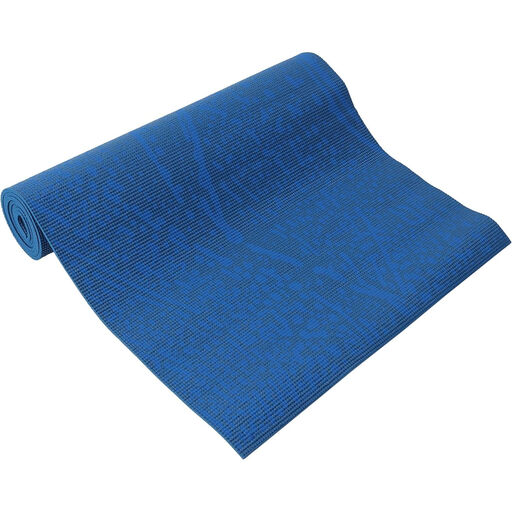
Why This Fits Their Persona: A practical starting point for UK residents building a simple home workout area for yoga, Pilates, stretching and floor exercises.
Its listed 6 mm thickness and 72 x 24 inch dimensions make the cushioning and usable area clear, avoiding vague comfort claims.
Textured PVC surface; suitable for yoga, Pilates and stretching; rolls up for transport and storage.
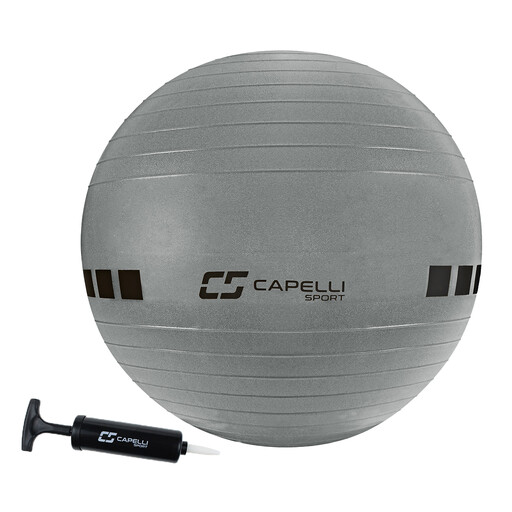
Why This Fits Their Persona: Suitable for shoppers wanting one adaptable item for balance work, Pilates, core routines, stretching and supported sitting.
The product information states its 65 cm size, anti-slip surface, anti-burst construction and maximum load of approximately 150 kg.
Foot pump included; honeycomb-style anti-burst construction; non-slip PVC surface; alternative sizes are listed.
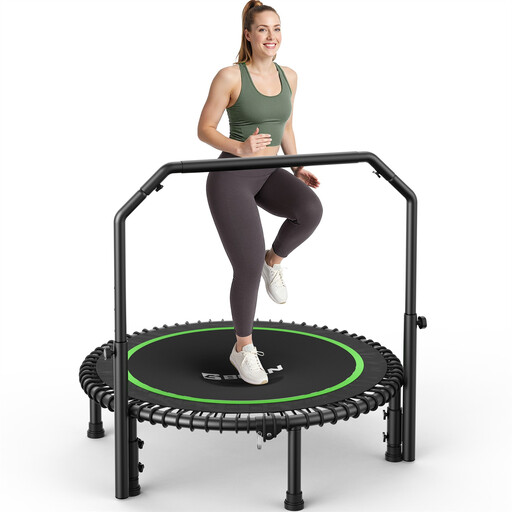
Why This Fits Their Persona: A match for adults seeking low-impact cardio and full-body movement, provided they have enough clear indoor or outdoor space.
The available diameters, load capacities, adjustable handle and bungee suspension system are specified instead of relying only on general performance language.
Steel frame; adjustable handlebar; 102 cm and 122 cm options; bungee-cord suspension.
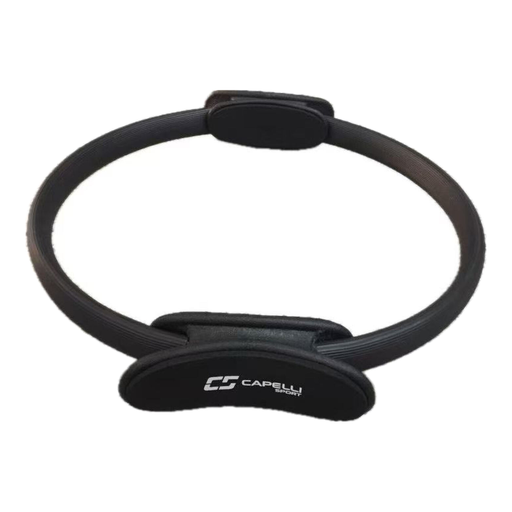
Why This Fits Their Persona: Its compact format suits flat dwellers, office workers and travellers who want targeted resistance without filling a cupboard.
Its listed PP and PE construction and approximately 40–42 cm diameter clarify what resistance and portability mean in practical terms.
Lightweight design; no installation; targets thighs, arms and core; wipes clean with a damp cloth.
We have compiled a complete, real-time list of products that fully satisfy these strict selection criteria and UK safety regulations.
A non-slip fitness mat is a practical starting point because it supports yoga, Pilates, stretching and bodyweight exercises. A Pilates ring or appropriately sized exercise ball can then add resistance, balance work and core-focused movements without requiring a large home gym.
Allow space around the full frame, not just the jumping surface, and check overhead clearance before assembly. Place it on a flat, stable surface and follow the manufacturer’s instructions for the selected size and load capacity.
Lifespan depends on frequency of use, storage and maintenance. Protect PVC and TPE from direct sunlight and sharp objects, keep equipment clean and inspect it regularly. Replace any item showing cracks, damaged seams, severe wear or reduced grip.