
24/7 Customer Support

Free returns

Same-day & Next-day Delivery

Quality Guaranteed

Unlock Your Welcome Offers: FREE Delivery | Up to 80% OFF | Free 30-day JoyPlus trial
Download the APP
Buying home fitness equipment can seem straightforward until you compare product descriptions filled with promises about fat loss, posture, core definition and “professional” performance. For UK households, the practical questions are often more important: will it fit in a spare room, can it be stored in a flat, is it suitable for your current ability and will the materials withstand regular use?
This guide highlights common buying traps, explains the specifications worth checking and matches several products to different home workout needs.
A waist trainer may provide compression and a temporarily altered silhouette while worn, but it should not be treated as a replacement for exercise or a guaranteed fat-loss product. Similarly, an ab roller or ab workout machine can support core training, but visible changes depend on overall activity, nutrition and consistency.
Look for objective details such as adjustable resistance, dimensions, materials and included accessories rather than relying on claims about “burning belly fat” or “boosting metabolism”.
An exercise ball is not a one-size-fits-all purchase. A 55 cm ball may suit some shorter users, while a 65 cm or 75 cm option can be more appropriate for taller users or desk setups. Your knee and hip position should remain comfortable when seated and the ball must have enough clear space around it for movement.
Large equipment can also become difficult to use if it blocks walkways or cannot be stored safely. Measure both the equipment footprint and the available clearance before buying.
Anti-burst PVC is designed to reduce the likelihood of a sudden rupture, but it does not make an exercise ball indestructible. Overinflation, sharp flooring, direct sunlight and gradual material wear can still create hazards.
Check the stated weight capacity, recommended diameter and care instructions. Inspect the ball before each session and use it on a clear, level surface.
For an ab roller wheel, a non-slip wheel and padded handles can make controlled movement easier. The Capelli Sport AB Wheel uses a stainless steel tube core, PP and EVA foam handles, plus a TPR-covered wheel. Its 17 cm wheel diameter and 4.2 cm width are useful details when comparing stability and portability.
Exercise balls generally use PVC. A textured, anti-slip surface can help reduce unwanted movement, but it should not replace a stable floor. Keep balls away from radiators, sharp furniture edges and rough outdoor surfaces.
For a yoga ball, exercise ball or pregnancy exercise ball, compare:
People who are pregnant or undertaking rehabilitation should obtain suitable guidance from a qualified healthcare professional before using a ball for exercise. Product descriptions alone cannot confirm that an item is appropriate for an individual condition.
Foldable designs can be more practical for UK flats, bedrooms and home offices. A Pilates reformer board or folding ab machine may offer several exercises without requiring a permanent equipment area.
Check the folded dimensions, assembly requirements and adjustment range. A product with multiple settings is only useful if you can change them safely and understand how each setting affects difficulty.
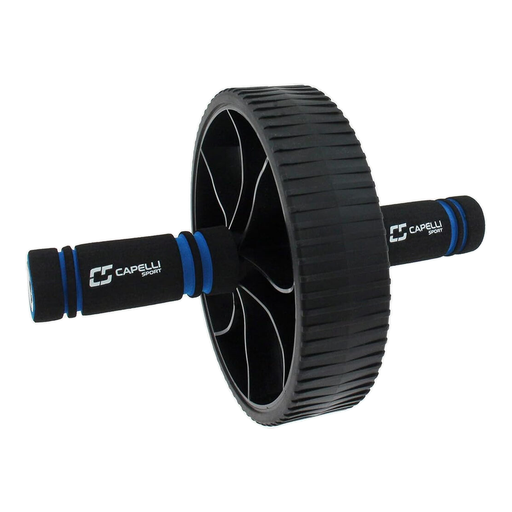
Why This Fits Their Persona: A compact option for beginners building a small home gym, provided they can maintain controlled form and use a non-slip surface.
The wide TPR-covered wheel and foam handles provide clearly stated grip features rather than relying only on vague core-training promises.
Stainless steel tube core, non-slip TPR wheel and compact 17 cm diameter.
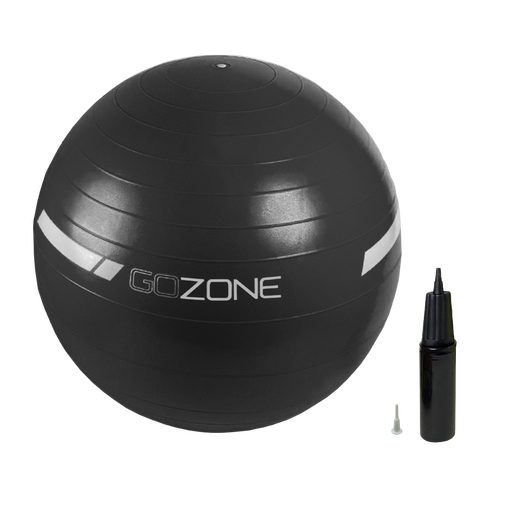
Why This Fits Their Persona: Suitable for users who want one larger piece of home fitness equipment for balance work, stretching, core exercises and occasional desk seating.
It specifies anti-slip PVC, a stated 330 lb capacity and three size choices. Anti-burst construction still requires correct inflation and regular inspection.
Foot pump included; available in 55 cm, 65 cm and 75 cm sizes; textured surface.
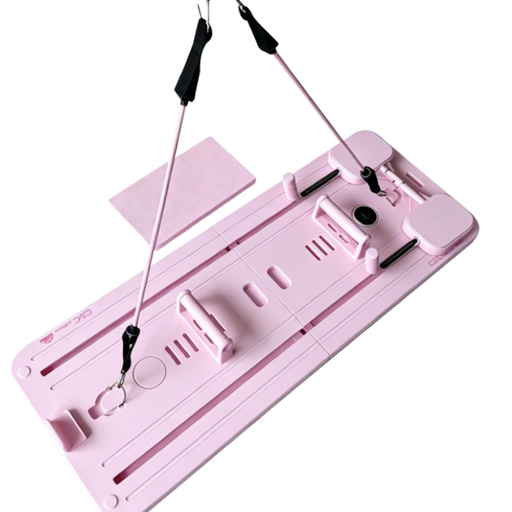
Why This Fits Their Persona: A space-conscious choice for people combining Pilates-style resistance work with home strength sessions.
Its stated foldable format and adjustable resistance are more useful buying information than broad promises about achieving a particular body shape.
42 x 16 x 1.5 inch format; resistance bands, timer and phone holder listed.
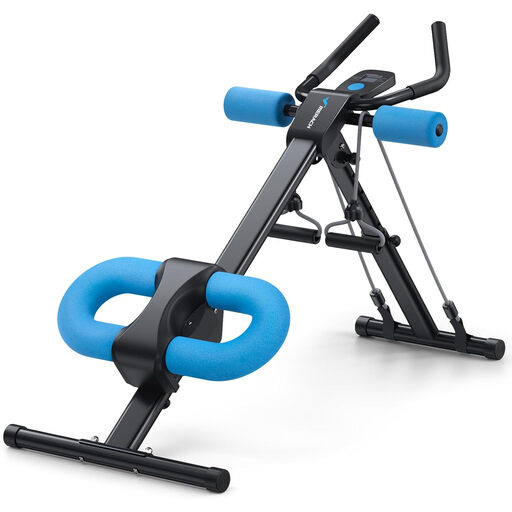
Why This Fits Their Persona: Designed for regular users who want adjustable ab workout equipment rather than a basic handheld tool.
Two incline settings and five height adjustments let users alter the setup instead of being locked into one difficulty level.
Foldable design, padded knee support and LCD display for counts, time and calories.
We have compiled a complete, real-time list of products that fully satisfy these strict selection criteria and UK safety regulations.
Before using any fitness equipment for home, clear the floor and check that the surface is stable. Assemble products according to the supplied instructions, tighten adjustable parts and keep fingers away from moving components.
For balls, inflate gradually and check for damage. For ab rollers and machines, begin with a manageable range of motion rather than forcing a full extension. Anyone with an injury, medical condition, pregnancy-related concern or rehabilitation programme should seek individual advice before starting.
Allow more than the product’s listed dimensions. You need room to mount, roll, stretch or step safely. A foldable Pilates board or ab machine may suit a smaller room, while a 75 cm exercise ball needs clear space around its full diameter.
Lifespan depends on frequency of use, inflation, storage and exposure to heat or sharp objects. Anti-burst construction does not remove the need for inspections. Replace a ball showing cracking, serious scuffing, deformation or leakage.
Most manual equipment, including an ab roller, Pilates ring, exercise ball and Pilates reformer board, has no ongoing electricity cost. An electronic ab workout machine may use batteries for its display. The main running costs are occasional replacement parts, cleaning supplies and, where applicable, maintenance or storage accessories.