
24/7 Customer Support

Free returns

Same-day & Next-day Delivery

Quality Guaranteed

Unlock Your Welcome Offers: FREE Delivery | Up to 80% OFF | Free 30-day JoyPlus trial
Download the APP
A home workout area can improve daily convenience, but the wrong purchase may quickly become an expensive obstacle. A full-length mirror that is awkward to mount, a weight bench that moves during pressing exercises or a rebounder that is too large for the room can make your carefully planned space difficult to use.
Before buying home fitness equipment and full-length mirror products, look beyond promotional phrases such as “heavy duty”, “premium” or “full body”. These descriptions are only useful when supported by practical specifications.
A large full-length wall mirror may look suitable online but still be too tall for a hallway, bedroom or home gym wall. Check the product dimensions, mounting orientation and the available clearance around it. A 161 x 52 cm mirror, for example, requires a suitable wall area and secure fixing points.
For fitness products, measure both the equipment footprint and the space needed to move safely around it. Remember to account for ceiling height when using a rebounder trampoline for adults.
A listed load capacity is not a target to exceed. For an adjustable weight bench, calculate your body weight plus the weight of dumbbells, barbells or other equipment used during training. The bench should also sit securely on the floor without rocking when adjusted to flat, incline or decline positions.
For a trampoline, check whether the stated capacity varies by size. The user limit for a 102 cm model may differ from that of a 122 cm version.
A bungee cord rebounder can produce less mechanical noise than some spring-based designs, but the cords still need regular inspection for fraying or wear. Similarly, a rust-resistant frame is not a reason to leave equipment permanently exposed to rain.
A mirror with shatterproof film has an added layer intended to help retain broken glass, but it is not unbreakable. Secure installation remains essential, particularly in homes with children or pets.
For a black framed full-length mirror, assess more than colour. Important details include:
Do not rely on adhesive strips alone for a heavy mirror unless the manufacturer specifically confirms that method is suitable for the product and wall surface.
A flat, incline and decline weight bench gives greater exercise variety than a fixed flat bench, but each adjustment point should be secure before use. Look for:
The Pooboo bench listed below specifies a maximum capacity of 1,500 lb. Buyers should still follow the supplied instructions and avoid loading it beyond the stated limit.
An indoor outdoor fitness trampoline should be selected according to the available space, intended intensity and need for balance support. Examine:
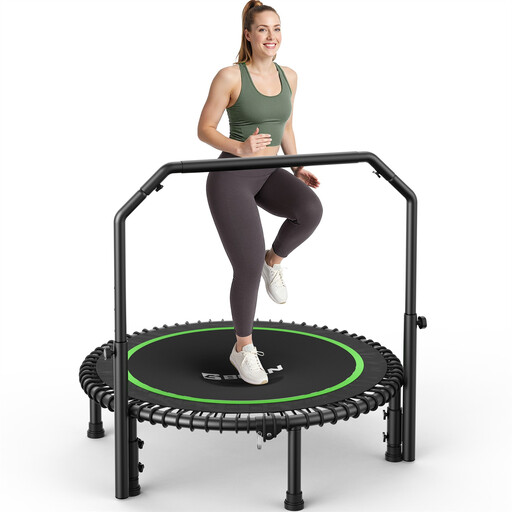
Why This Fits Their Persona: A compact rebounder can suit renters or beginners who want one piece of home gym equipment for indoor cardio, movement and relaxation without dedicating an entire room to a machine.
The listed 102 cm and 122 cm sizes, bungee suspension and stated load capacities make it easier to compare the product with your room and usage needs.
Steel frame, adjustable handle and bungee cord suspension; suitable for indoor or outdoor use when placed on an appropriate surface.
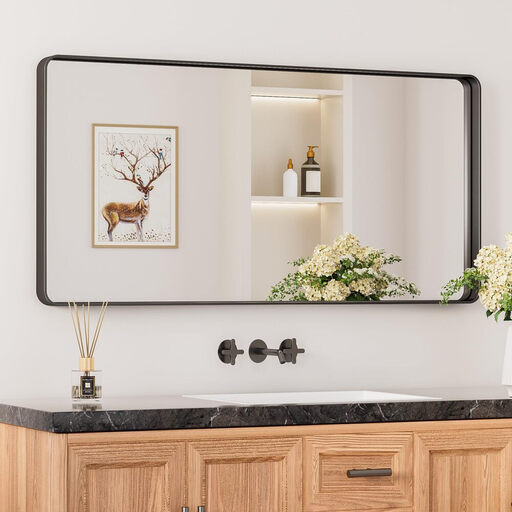
Why This Fits Their Persona: Design-conscious homeowners can use this black framed full-length mirror in a bedroom, hallway, living room or workout space where clear reflection and coordinated finishes matter.
Its stated 161 x 52 cm size, two-way mounting options and included French cleats, levelling tool and screws help address uncertainty around fit and installation.
Premium glass with shatterproof film and a lightweight aluminium alloy frame described as rust-resistant and suitable for humid environments.
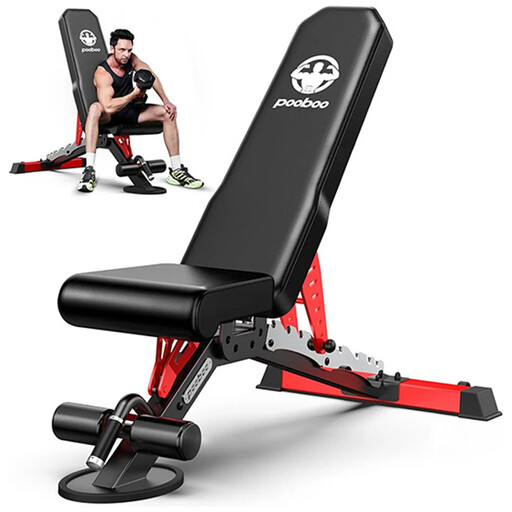
Why This Fits Their Persona: Users focusing on strength training and full-body sessions may value an adjustable bench that supports several exercise angles within a dedicated home gym area.
The product specifies its frame material, 1,500 lb maximum capacity and flat, incline and decline positions rather than relying only on a “heavy-duty” label.
Alloy steel frame, compact home-oriented dimensions and multiple adjustment positions for varied strength exercises.
We have compiled a complete, real-time list of products that fully satisfy these strict selection criteria and UK safety regulations.
Place a weight bench on a level floor and check every adjustment lock before lifting. Keep sufficient clearance at both ends, especially for decline movements. For a rebounder, avoid placing it on a slippery surface, near furniture or directly beneath a low ceiling. Inspect bungee cords and frame joints periodically.
These products generally do not require electricity, so their direct running costs are limited. The more important ongoing considerations are storage, cleaning and replacement parts. Wipe mirrors with a soft damp cloth, avoid abrasive chemicals and clean fitness equipment after use. Outdoor storage may increase wear from moisture and temperature changes.
It can help users view positioning and room layout, while also serving as practical décor in a bedroom or hallway. Mount it securely and leave enough surrounding space to reduce the risk of contact during exercise.
Measure the equipment footprint first, then add clearance for movement, adjustment and safe access. A rebounder needs overhead clearance, while a bench needs room for weights and changing between flat, incline and decline positions.
A bungee cord rebounder is designed to provide a flexible bouncing surface and may feel quieter than some spring-based alternatives. Users should begin at a comfortable intensity, follow the instructions and stay within the stated capacity for the selected model.