
24/7 Customer Support

Free returns

Same-day & Next-day Delivery

Quality Guaranteed

Unlock Your Welcome Offers: FREE Delivery | Up to 80% OFF | Free 30-day JoyPlus trial
Download the APP
Buying home fitness equipment can make regular exercise more convenient, but compact products are not automatically suitable for every room, body type or training style. A low price may look attractive until an item does not fit your doorway, takes up more floor space than expected or becomes difficult to store.
Before choosing equipment, consider how often you will use it, where it will be kept and which movements you actually want to perform. The following guide highlights common buying traps, key specifications and practical options for different UK households.
A portable product may be easy to move but still require a stable installation area. A doorway pull-up bar needs a compatible frame and sufficient clearance for your head, hands and legs. An indoor fitness trampoline requires a level floor, overhead space and room away from furniture.
Always measure the intended area rather than relying on product photographs. Check both the equipment dimensions and the space needed to exercise safely.
A stated load limit is only one part of suitability. For a pull-up bar, the door frame, locking mechanism and installation position also affect stability. For a rebounder trampoline, inspect the frame, mat and spring or elastic-rope system.
Look for clearly listed materials and maintenance instructions. Steel construction can offer a firm structure, while foam grips or polypropylene surfaces may improve comfort and ease of cleaning. These features do not remove the need to inspect equipment before each use.
Some products are marketed for many exercises, but versatility is only useful if you will perform those movements. A pull-up bar suits upper-body and bodyweight training, while a Pilates ring targets resistance-based movements for the arms, legs and core. A mini rebounder trampoline is more relevant to users seeking compact, low-impact cardio equipment.
Choose around your primary activity first. You can then add complementary core and strength training equipment, such as a resistance circle or yoga ring, if it supports your routine.
For an adjustable pull-up bar, measure the internal width of your door frame. The featured bar has an adjustable range of 62–91 cm, with a locking system designed for no-screw installation. This makes the stated range more useful than a vague “fits most doors” description.
Check that the frame is strong enough for the intended activity and follow the supplied instructions. Do not exceed the listed 300-pound load capacity and confirm that the bar is stable before every session. No-screw designs should never be treated as suitable for damaged, weak or unsuitable door frames.
Compact equipment still needs a practical storage plan. The SPORTSOUL trampoline has a stated overall size of approximately 106.8 × 106.8 × 123.4 cm, so it requires considerably more floor area than a Pilates ring. Its net weight is listed as 11.2 kg, which may allow movement between rooms, but it should be stored indoors when not in use.
For small flats, a Pilates ring or adjustable pull-up bar may be easier to store. For larger rooms, a trampoline can provide a dedicated exercise station, provided there is adequate clearance around and above it.
Materials should be assessed alongside the exercise type. The pull-up bar uses metal, foam and plastic components, while the trampoline combines a steel frame, polypropylene jumping mat and steel springs with elastic ropes. The Pilates ring uses PP and PE materials and requires no installation.
Check the relevant product information, including the trampoline’s listed 120 kg maximum user weight and its stated references to EN ISO 20957-1, GB 17498.1-2008 and ASTM F2276-10(2015). These references should be read as product information rather than a substitute for safe setup and correct use.
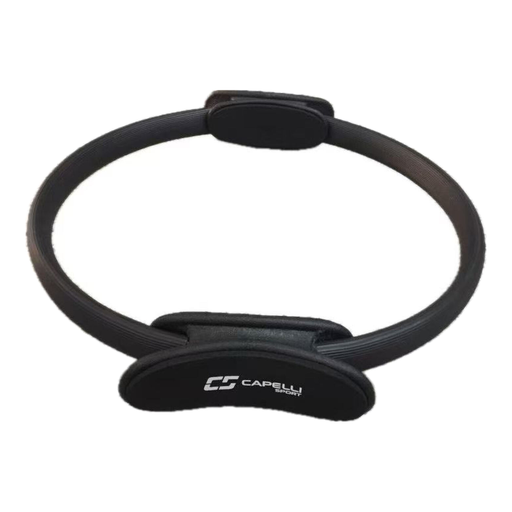
Why This Fits Their Persona: A compact choice for beginners, tenants and busy adults who want resistance work without dedicating floor space to bulky equipment. It can be carried in a bag for home, travel or studio sessions.
Its 40 cm ring format is clearly specified, so shoppers can judge storage and handling before purchase rather than relying on vague portability claims.
Lightweight PP and PE construction; no installation required; wipe-clean maintenance.
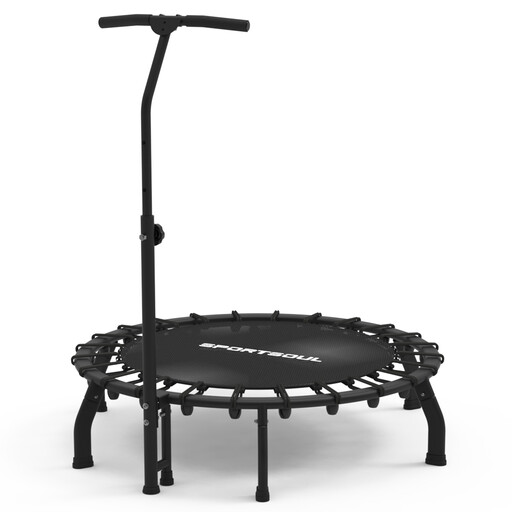
Why This Fits Their Persona: Suitable for households with a dedicated exercise area and users comparing structured indoor cardio equipment with stated dimensions, materials and capacity information.
The 120 kg maximum user weight, 42-inch format and steel/polypropylene construction are stated clearly, helping buyers assess suitability before ordering.
Pre-assembled elastic ropes and jumping mat; steel frame; product information references EN ISO 20957-1, GB 17498.1-2008 and ASTM F2276-10(2015).
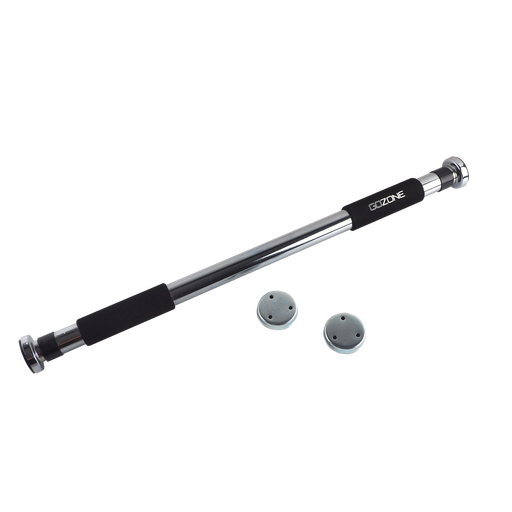
Why This Fits Their Persona: A practical option for users prioritising pull-ups, chin-ups and upper-body bodyweight training in a compatible UK doorway, without drilling into the wall.
The adjustable 62–91 cm range is more useful than a generic doorway claim, while the locking system provides a defined installation feature. The frame must still be checked for strength.
Heavy-duty steel construction; comfort foam grip; listed capacity up to 300 pounds; portable no-screw design.
We have compiled a complete, real-time list of products that fully satisfy these strict selection criteria and UK safety regulations.
Start with one item that supports your main goal. For example:
Allow space to put equipment away safely after use. Wipe foam, plastic and mat surfaces as directed and inspect springs, ropes, grips, frames and locking parts regularly. Replace any item that shows damage or instability.
Yes, compact items such as a Pilates ring or no-screw chin-up bar may suit flats, but suitability depends on storage, floor space, noise and the condition of the doorway or floor. A trampoline needs more clearance and may create impact noise, so check your surroundings and household arrangements before buying.
Check equipment before each use for visible damage, loose parts and signs of wear. Pull-up bars should be checked for secure positioning, while trampolines require inspection of the mat, frame, springs and elastic ropes. Follow the product’s maintenance guidance and stop using damaged equipment.
Most compact equipment listed here is manually operated and does not require mains electricity. A pull-up bar, Pilates ring and mini rebounder trampoline have no stated powered function, so running costs are generally limited to purchase, storage and eventual replacement rather than household energy use.