
24/7 Customer Support

Free returns

Same-day & Next-day Delivery

Quality Guaranteed

Unlock Your Welcome Offers: FREE Delivery | Up to 80% OFF | Free 30-day JoyPlus trial
Download the APP
Creating a home gym can make training more convenient, but buying equipment without checking the details often leads to wasted money, limited exercise options or safety concerns. The right choice depends on your available space, training goals and the amount of weight you plan to use.
Whether you need a pair of dumbbells, a weight bench or a multi-purpose power tower, focus on construction, dimensions and realistic usage rather than attractive marketing language.
Bright colours and padded finishes can make fitness equipment look appealing, but appearance does not confirm durability or suitability. Check the core material, handle dimensions, weight capacity and adjustment system before considering the design.
For example, neoprene dumbbells can provide a comfortable, slip-resistant surface, while hex dumbbells are less likely to roll between sets. However, the coating does not replace a solid internal construction.
A product may list a high static capacity, but that does not necessarily represent the safe working load during exercise. A bench rated for a static load may support more when stationary than it can safely handle during pressing, lifting or repeated movement.
Always check whether the stated figure includes your body weight plus the weights being lifted. For adjustable equipment, also confirm the limit for each position and attachment.
Product dimensions often exclude the space needed to move around the equipment. A power tower may fit against a wall but still require additional clearance for pull-ups, dips and safe mounting.
Measure the ceiling height, floor area, doorways and storage space before ordering. In flats or smaller UK homes, foldable or wheeled equipment can make a practical difference.
Dumbbells should match both your current ability and your progression plan. Lighter pairs, such as 2 x 2.5 kg, can suit beginners, warm-ups and higher-repetition exercises. A pair weighing 2 x 5 kg offers more resistance for rows, presses, squats and loaded lunges.
Look for:
Some cast-iron dumbbells in this range note a possible 3% weight discrepancy, which is worth considering if you need precise loading.
For benches, racks and power towers, the frame is more important than the upholstery colour. Carbon steel, alloy steel and stainless steel frames can offer different combinations of rigidity, finish and weight. Check the base width, frame design, fasteners and whether the product must be assembled.
A stable base should sit on a flat, level floor. Rubber or protective flooring may help reduce movement and protect hard floors, but it should not be used to compensate for an unstable frame.
An adjustable weight bench can support flat, incline and decline movements, while a fixed bench is generally simpler to set up and store. A rack bench with a leg developer and preacher curl pad offers more exercise options, but also requires more space and more assembly checks.
For full-body training, consider whether the equipment supports the exercises you actually intend to perform:
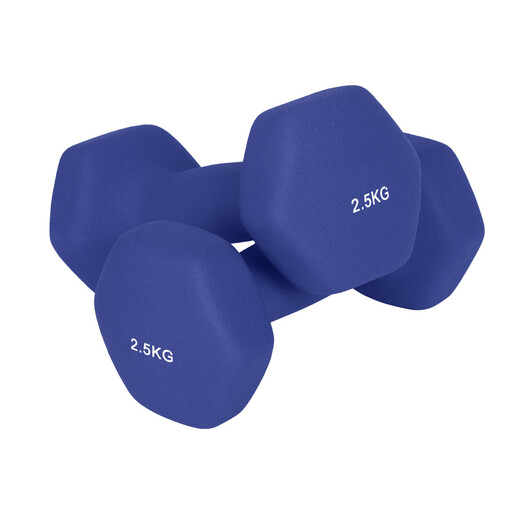
Why This Fits Their Persona: The 2 x 2.5 kg format is suitable for beginners, smaller workout areas and people building a basic home workout equipment collection without committing to larger machines.
Its stated dimensions, weight and neoprene-coated cast-iron construction make the key specifications clear, while the hexagonal ends help prevent rolling during storage.
Compact 18 x 8.5 cm dimensions; ergonomic grip and non-rolling hexagonal design.
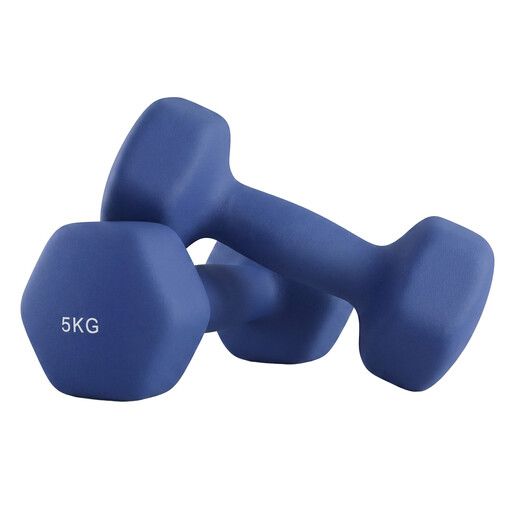
Why This Fits Their Persona: This pair suits regular home training where users want a defined fixed weight for strength and cardio-style sessions, with a finish designed for a secure handhold.
The listing identifies the cast-iron core, neoprene coating, grip size and stated weight, rather than relying only on appearance or general performance language.
Two 5 kg weights; hexagonal ends remain stationary when placed down.
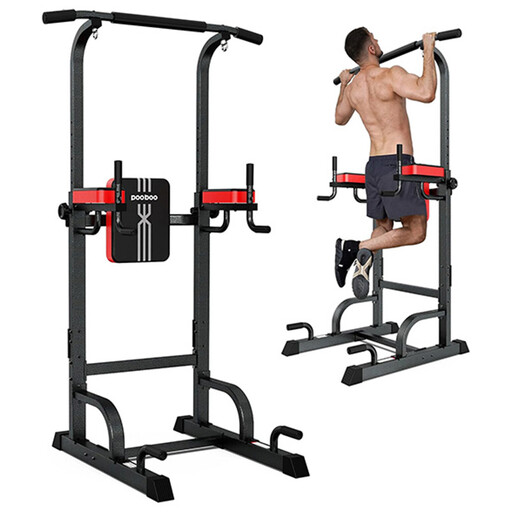
Why This Fits Their Persona: Users focusing on bodyweight strength can combine pull-ups and dips in one upright station, provided they have enough floor and ceiling clearance.
The stated 41.73 x 41.73 x 94-inch footprint, adjustable height and 440-pound maximum capacity make space and load planning more straightforward.
Alloy steel frame; supports pull-ups, dips and adjustable-height training.
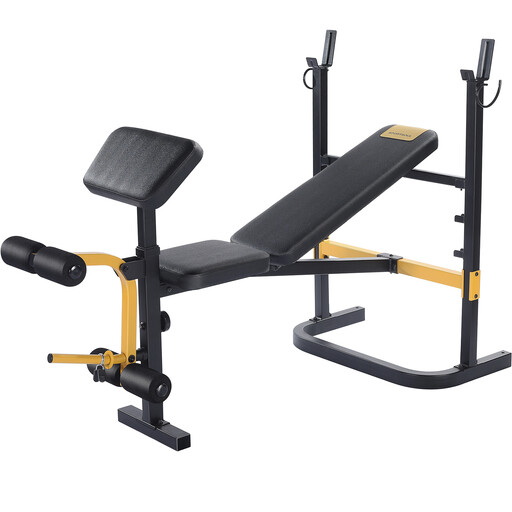
Why This Fits Their Persona: This combination suits users who want barbell and bench-based strength training, including incline, decline, leg and preacher curl movements.
It separates dynamic and static load information: 410 lb dynamic capacity and 1,200 lb static capacity. Safety hooks, adjustment pins and assembly checks remain essential.
Four backrest positions; removable three-level preacher curl pad and leg developer.
We have compiled a complete, real-time list of products that fully satisfy these strict selection criteria and UK safety regulations.
Before using new strength training equipment, assemble it according to the supplied instructions and inspect every bolt, pin and locking mechanism. Place benches and power towers on a firm, level surface, and keep children and pets away during exercise.
For heavy barbell movements, use an appropriate spotter or safety system. Do not exceed the listed capacity, and do not use equipment with missing, loose or damaged parts. Dumbbells should be placed down gently and stored where they cannot fall from a raised position.
A simple home gym setup may include dumbbells, a bench, resistance accessories and a pull-up bar. If you have more space and a higher training load, a power tower, dip station or rack bench can expand the range of full-body exercises.
A pair of suitable dumbbells is a practical starting point because they support presses, rows, curls, squats and lunges without requiring a large footprint. A flat weight bench can be added if you have enough room and want more pressing or supported exercises.
Lifespan depends on construction, frequency of use, storage and maintenance. Steel frames should be checked regularly for loose connections, while upholstery and coated handles should be cleaned with appropriate methods. Keep equipment indoors and dry, and follow the manufacturer’s inspection guidance.
Most strength-focused home workout equipment has no electricity cost. The main expenses are the initial purchase, floor protection, storage and occasional replacement of worn parts. Cardio machines may use electricity, so check their power requirements before buying if running costs are important.