
24/7 Customer Support

Free returns

Same-day & Next-day Delivery

Quality Guaranteed

Unlock Your Welcome Offers: FREE Delivery | Up to 80% OFF | Free 30-day JoyPlus trial
Download the APP
Setting up a space to exercise at home is a practical way to stay on top of your fitness goals. However, the market for home gym equipment is filled with options that can be overwhelming. Many promising gadgets end up as expensive clothes racks, gathering dust in a corner. Before you invest, it's crucial to understand the common pitfalls that lead to buyer's remorse.
As a Joybuy Product Recommendation Officer, my role is to help you see past the marketing hype. We'll focus on the practical details that determine whether a piece of equipment will become a cornerstone of your routine or a costly mistake. Here are the key traps to avoid.
The "All-in-One" Illusion: Many large, multi-function machines promise a complete full body workout machine in a single package. The reality is often disappointing. Flimsy construction, poor ergonomics that limit your range of motion and unstable frames are common complaints. A machine that does ten things poorly is less useful than a few items that do one thing exceptionally well.
Ignoring Material and Stability: A low price can be tempting, but it often comes at the cost of safety and durability. For strength training equipment, this is a serious concern. Thin steel, weak welds and inadequate non-slip feet can make equipment like a pull up bar for home wobbly and dangerous. What looks like a bargain can quickly become a liability.
Overlooking Your Actual Space: In many UK homes, space is a valuable commodity. It's easy to be impressed by a piece of equipment online, only to find it dominates your living room or spare bedroom. Failing to measure your available area—and account for the space needed to actually use the equipment—is a frequent and frustrating oversight. This is where portable fitness equipment often proves to be a smarter choice.
To make a sound investment, shift your focus from flashy features to these non-negotiable fundamentals.
Build Quality & Weight Capacity: For any equipment that will bear your weight, such as a power tower or pull-up bar, the maximum user weight capacity is a critical safety metric. Look for products made from heavy-duty steel. The stability of the frame, especially the width and material of the base, will determine how secure it feels during use.
Functional Footprint: Before clicking "buy," get out a tape measure. Check the product's assembled dimensions (Length x Width x Height) and mark out that space on your floor. Will you have enough room around it to perform exercises correctly? For items like an exercise mat for floor, consider not just the mat's size but the clearance you need for stretches and movements.
Grip, Padding and Surface Contact: The points where you or the equipment touch the floor are crucial. For handles, look for dense foam or rubber that provides a secure grip without causing blisters. For the equipment's feet, TPR (Thermoplastic Rubber) pads offer far better stability and floor protection than cheap plastic or thin foam. For mats, a material like 7mm memory foam provides a good balance of joint cushioning and a firm, non-slip surface.
Instead of a one-size-fits-all approach, the right equipment depends on your goals, space and fitness level. Here are our recommendations matched to different user profiles.
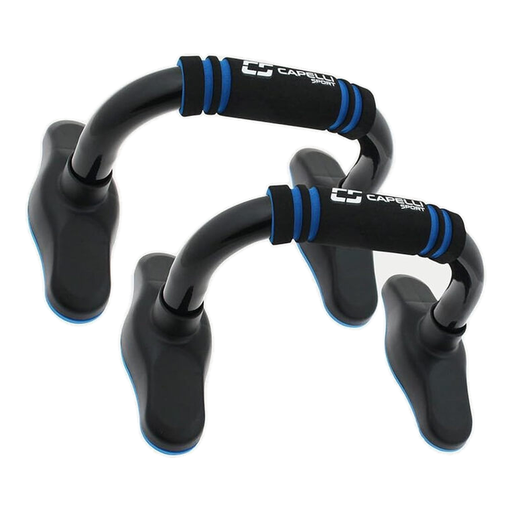
Why This Fits Their Persona: Ideal for those in flats or with limited storage. This is effective, focused and highly portable fitness equipment that can be stored in a drawer or cupboard, making it perfect for building foundational upper body strength without cluttering a small living space.
It sidesteps the "bulky machine" trap by being compact and purpose-built. It also addresses the stability pitfall with a large TPR rubber pad on the base, ensuring it stays put on various floor types.
The foam grip reduces wrist strain compared to floor push-ups and the stainless steel construction is durable. No assembly is required.
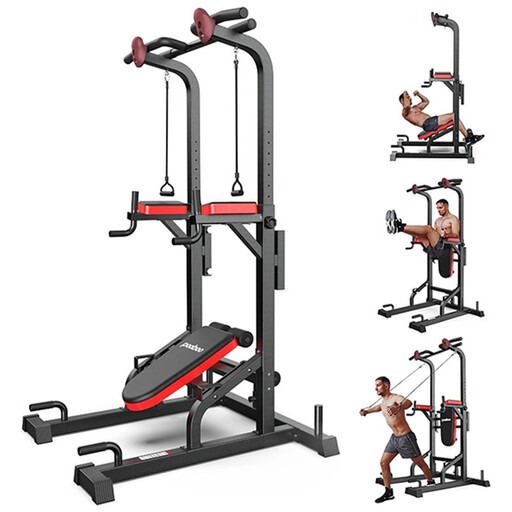
Why This Fits Their Persona: For those with a dedicated space like a garage or spare room, this tower provides a solid foundation for a serious home gym. It combines a pull-up bar, dip station and bench, enabling a true full-body strength routine.
This is a functional "all-in-one" that avoids the flimsy trap. Its heavy-duty steel frame and high weight-bearing capacity of 480 lbs (approx. 217 kg) provide the stability needed for intense strength training.
Truly multifunctional, allowing for pull-ups, dips, leg raises and bench exercises. The adjustable height caters to different users and exercises.
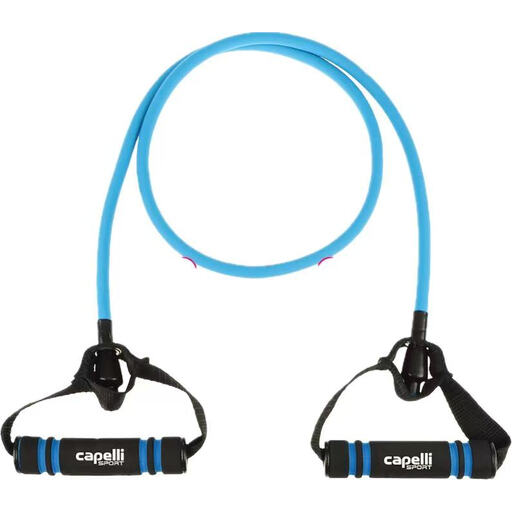
Why This Fits Their Persona: Perfect for those who mix strength training with Pilates, rehabilitation or toning. This is the ultimate piece of portable fitness equipment, offering variable resistance for a huge range of movements without needing any dedicated floor space.
This is the antidote to the expensive, single-use equipment trap. It is low-cost, incredibly versatile and can be stored anywhere. It proves that effective home workout gear does not need to be large or complex.
The foam sure-grip handles provide comfort and control during exercises like bicep curls and tricep kickbacks. The natural latex material offers consistent medium resistance.
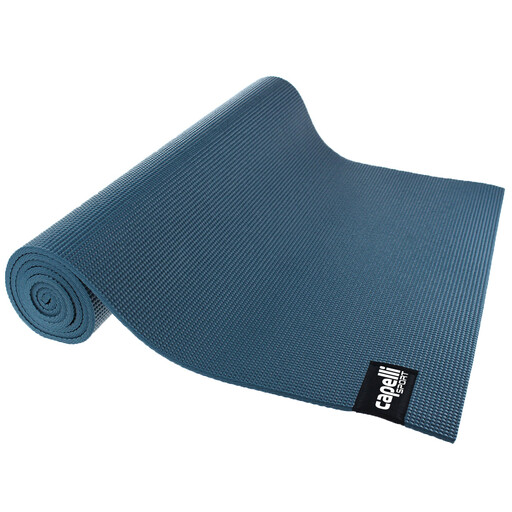
Why This Fits Their Persona: For anyone whose routine is centred on yoga, Pilates or bodyweight floor exercises, a quality mat is non-negotiable. This provides the necessary cushioning for joints on hard floors and a stable base for standing or stretching poses.
It directly counters the pitfall of unstable surfaces. A cheap, thin mat that slips on the floor is a common but avoidable problem. The non-slip coating and substantial thickness prevent this, ensuring a safe workout.
The 7mm thick memory foam offers excellent joint cushioning, which is a noticeable improvement over standard thin mats. The dry-grip surface provides a stronger hold during poses.
We have compiled a complete, real-time list of products that fully satisfy these strict selection criteria and UK safety regulations.
1. How much space do I really need for a home gym? This depends entirely on your chosen equipment. For workouts using resistance bands with handles and an exercise mat for floor, an area of about 2 by 1 metres is sufficient. For larger strength training equipment like a power tower, you will need to account for its footprint (e.g., 1.5 x 1 metres) plus clearance for movement and ceiling height, typically at least 2.5 metres. Always measure your space before you buy.
2. Is more expensive home gym equipment always better? Not necessarily. A higher price can sometimes reflect complex electronics or brand marketing rather than superior build quality. It is more effective to focus on the core parameters: heavy-duty materials, a high weight capacity and a stable design. A simple, well-constructed piece of equipment will serve you better than a feature-rich but flimsy alternative.
3. Can I get a full body workout with just portable equipment? Yes, a comprehensive full-body workout is achievable with a few key pieces of portable fitness equipment. A combination of items like a doorway pull up bar for home, push-up bars and a set of resistance bands with handles can effectively target every major muscle group, offering a versatile and space-efficient solution.