
24/7 Customer Support

Free returns

Same-day & Next-day Delivery

Quality Guaranteed

Unlock Your Welcome Offers: FREE Delivery | Up to 80% OFF | Free 30-day JoyPlus trial
Download the APP
Choosing home gym equipment can seem straightforward until product descriptions start competing with claims about silent motors, professional resistance and effortless storage. The wrong choice may leave you with a machine that is too large for your room, unsuitable for your routine or expensive to maintain.
This guide focuses on the specifications that affect everyday use, from an under-desk treadmill for home-office walking to resistance bands and a foldable elliptical cross trainer for compact cardio. The aim is to help UK households compare products more realistically and avoid paying for features they will rarely use.
A product may look small in photographs but require additional clearance for safe operation, folding or movement. Check the full dimensions, not only the folded size. For a treadmill, also allow space around the belt and consider whether it can be stored upright or slid beneath furniture.
For small flats, space-saving fitness equipment should be assessed against your actual storage area. Measure doorways, floor space and ceiling clearance before ordering.
A stated maximum user weight is important, but it does not tell you whether the equipment suits your height, stride, balance or intended intensity. A walking treadmill designed for light cardio has a different use case from a running machine intended for faster training.
Look for practical details such as belt dimensions, stride length, pedal size, frame stability and resistance adjustment. Always follow the manual and do not exceed the stated capacity.
Descriptions often highlight terms such as “quiet”, “professional” or “high performance” without explaining what they mean in practice. Where a measurable figure is provided, such as 16 resistance levels, a 38 cm stride length or a 130 kg maximum capacity, it gives you more useful information for comparison.
For electrical products, check the supplied instructions, plug requirements and applicable UK product safety information. Look for clear assembly, maintenance and safety guidance rather than relying solely on promotional wording.
Measure the equipment both in use and when folded. An under-desk treadmill may fit beneath a standing desk, but the desk height must still allow a natural walking posture. Leave enough room to step on and off safely, and place the machine on a flat, stable surface.
For an elliptical, folding mechanisms and transport wheels can make moving the equipment easier, but they do not remove the need for a stable operating area. Confirm the assembled dimensions before purchase.
A weight limit should be treated as a firm maximum, not a suggested target. If several people will use the equipment, select a product that accommodates the heaviest user without exceeding its stated limit.
Height compatibility also matters. Elliptical stride length affects comfort, while treadmill belt dimensions influence how naturally you can walk. If you are buying for a taller user, compare the stated stride length and machine geometry rather than assuming one size suits everyone.
Different forms of home workout equipment serve different routines:
Resistance should be adjustable enough for your current ability and future progression. With elastic bands, a set offering light, medium and heavy levels can be more adaptable than a single resistance loop.
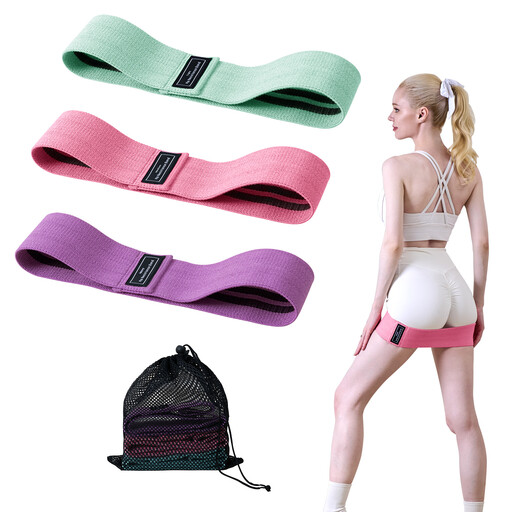
Why This Fits Their Persona: These fabric loop bands are a practical starting point for people who want affordable, portable home fitness equipment for Pilates, yoga, leg exercises or glute-focused routines. They require no assembly and can be stored in a supplied bag.
The three resistance levels make the set more adaptable than a single loop, while the non-slip fabric construction is designed to reduce rolling during use. Inspect the bands before each session.
Set of three fabric loops; 350 g item weight; storage bag included; no installation required.
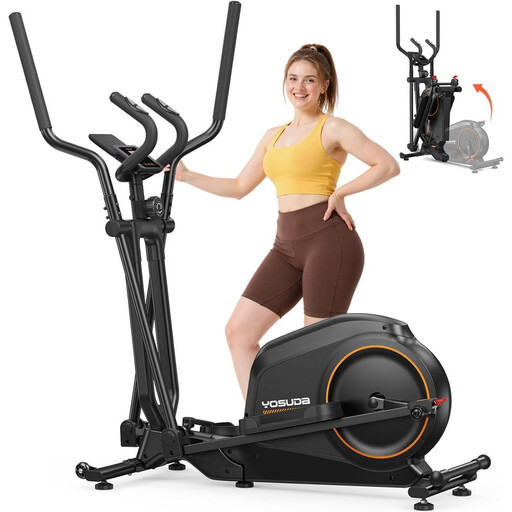
Why This Fits Their Persona: This option suits users seeking a more structured cardio machine for a home gym, particularly where storage space and household noise matter.
The listing provides measurable details rather than only broad wording: 16 resistance levels, a 38 cm stride length, a stated noise figure below 20 decibels and a folded footprint of approximately 0.2 m².
LCD display with six data metrics; anti-slip pedals; transport wheels; three-step folding design.
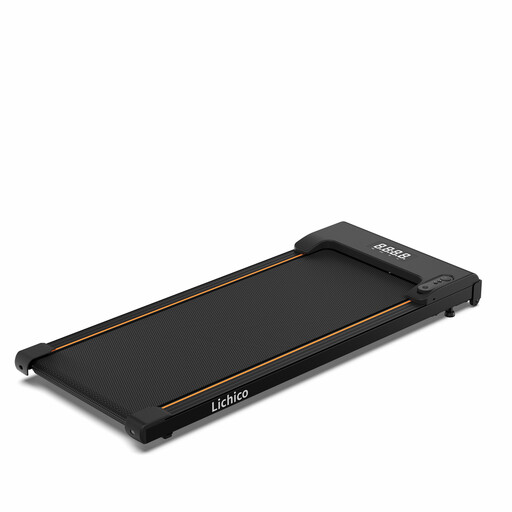
Why This Fits Their Persona: This under-desk walking treadmill is aimed at home-office workers, flat residents and users who want indoor walking without allocating space to a full-size running machine.
Its listed 120 x 50 x 10.5 cm dimensions make the storage requirement clear, while the 130 kg maximum capacity gives buyers a defined limit to check against their needs.
Steel frame and rubber running belt; under-desk format; suitable for walking workouts and daily step routines; belt maintenance guidance provided.
We have compiled a complete, real-time list of products that fully satisfy these strict selection criteria and UK safety regulations.
Before using any machine, assemble it according to the supplied instructions and check that bolts, pedals and moving parts are secure. Place electrical equipment on a stable, level surface and keep cables away from walkways. Children should not operate exercise machines without appropriate adult supervision.
Running costs depend on the motor or resistance system, session length and electricity tariff. A walking treadmill with a motor generally uses more electricity than fabric bands, while a magnetic elliptical has no belt lubrication requirement but still needs periodic inspection. To estimate electricity cost, multiply the appliance’s power in kilowatts by the hours used and your electricity unit rate.
For longer product life, keep treadmill belts clean, follow lubrication guidance and check alignment. Wipe elliptical frames with a soft, damp cloth and periodically tighten fasteners. Store elastic bands away from sharp objects, excessive heat and direct sunlight, and replace them if they show cracking or damage.
Compact options include under-desk treadmills, fabric resistance bands and foldable elliptical machines. Compare both operating and storage dimensions, and check whether transport wheels or a low-profile design will make moving the equipment practical.
A walking treadmill can support regular indoor walking, provided it is used within the stated capacity and according to the manual. Check belt condition, tension, alignment and lubrication requirements. It should stand on a level surface with sufficient clearance around the moving belt.
Electrical cardio machines use more electricity than non-powered equipment such as resistance bands. Actual cost varies by rated power, workout duration and your tariff. Use the product’s wattage to make a rough calculation before purchase, particularly if you plan frequent or extended sessions.