
24/7 Customer Support

Free returns

Same-day & Next-day Delivery

Quality Guaranteed

Unlock Your Welcome Offers: FREE Delivery | Up to 80% OFF | Free 30-day JoyPlus trial
Download the APP
Setting up a personal workout space is a practical way to stay consistent with your fitness goals. However, the market for home gym equipment is crowded, and it is easy to invest in gear that fails to meet expectations. Many promising-looking items can quickly turn into sources of frustration due to poor design or exaggerated marketing claims.
As a Joybuy Product Recommendation Officer, my role is to help you navigate these choices. This guide focuses on the common pitfalls UK buyers face and highlights the key features to look for, ensuring your investment supports your fitness journey for years to come.
Before you add anything to your basket, be aware of these frequent issues that can render equipment ineffective or even unsafe.
To avoid these traps, focus on a few non-negotiable specifications. Analysing these details will help you select durable and effective strength training equipment for your home.
For any free-standing structure like a power tower or pull up bar station, the material and design are paramount. Look for descriptions that specify heavy-duty or high-strength alloy steel. This indicates a thicker gauge of metal that provides better rigidity.
Equally important is the base. A wide, H-shaped or U-shaped footprint provides a much more stable foundation than a simple, narrow base. These designs distribute weight more evenly and resist the swaying motion common during calisthenics exercises.
Versatility is key in a home gym where space is often limited. For a dip station or power tower, check for multiple height adjustment levels. This ensures you can set the equipment to your body's proportions, allowing for a full range of motion and correct posture.
Pay attention to the details of contact points. Are the grips made from high-density foam or durable rubber? Are they positioned ergonomically? For an ab trainer machine, check for thick knee padding and smooth, quiet rollers, as these small features make a significant difference in comfort and consistent use.
Instead of a generic list, we have matched specific products to different user needs and fitness goals. This approach helps you find equipment that genuinely aligns with how you plan to use it.
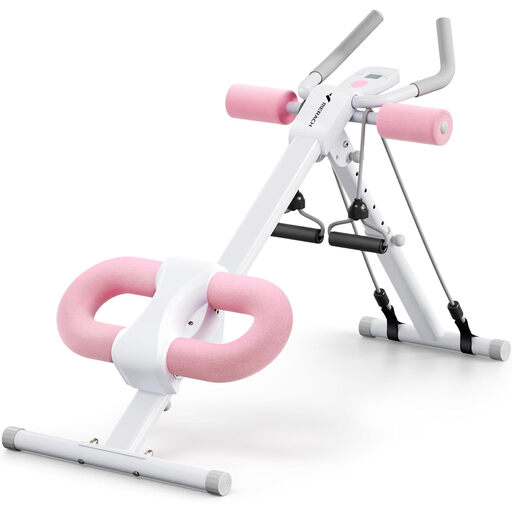
Why This Fits Their Persona: Ideal for someone starting their fitness journey who wants a dedicated tool for core workouts. Its foldable design is perfect for smaller UK homes, and the built-in LCD display helps track progress, which is highly motivating for beginners.
This is a specialised machine, not a flimsy multi-gym. Its structure is designed specifically for abdominal exercises, ensuring stability for its intended purpose and avoiding the "wobble" trap. The adjustable incline directly counters the "one-size-fits-none" issue.
Features adjustable difficulty levels to grow with your fitness level. Its foldable design makes it easy to store away after use, a major plus for space-conscious households.
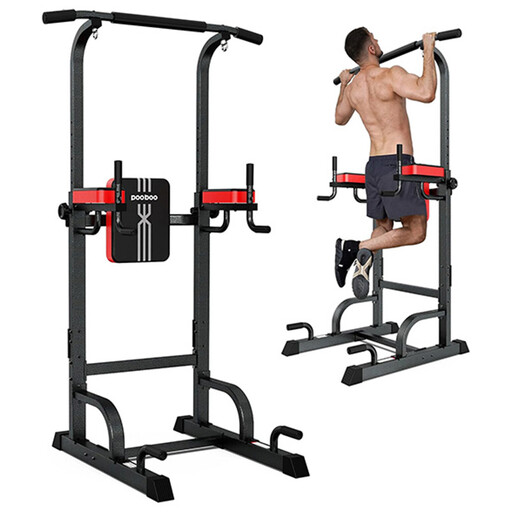
Why This Fits Their Persona: This user is building a home gym centred on bodyweight strength. This power tower provides the essential functions—pull-ups, dips, leg raises—in a solid, no-frills package. It is a reliable workhorse for consistent calisthenics training.
The high-strength alloy steel construction and wide base directly address the stability trap. Its substantial 440-pound (approx. 200 kg) weight capacity provides confidence for dynamic movements, avoiding the "paper capacity" issue. Height adjustability ensures a good fit.
Offers a high weight capacity for its category, making it suitable for weighted calisthenics. The multi-function design consolidates several pieces of equipment into one, saving valuable floor space.
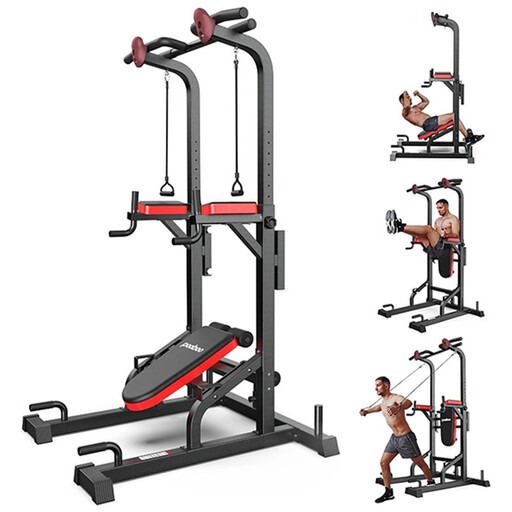
Why This Fits Their Persona: This user wants a complete, all-in-one strength station. The integrated bench allows for exercises like bench presses (with your own weights), while the rock-climbing grips offer an advanced challenge for grip and back strength, going beyond a standard power tower.
The heavy-duty steel frame and very high 480 lbs (approx. 217 kg) weight-bearing capacity provide the robust stability needed for intense training. The multi-functionality is thoughtfully integrated, with the bench adding genuine utility rather than being a flimsy add-on.
This is a true space-saver, combining a power tower and a workout bench into a single footprint. The addition of rock-climbing grips provides a unique training stimulus not found on most competing models.
For those just starting their core training journey, a simple and effective tool like an ab roller wheel can also be a great entry point. The Capelli Sport AB Wheel, for instance, features a wide, non-slip wheel and comfortable foam handles, providing a stable and controlled movement for building abdominal strength.
We have compiled a complete, real-time list of products that fully satisfy these strict selection criteria and UK safety regulations.
As a general rule, you should plan for a floor footprint of at least 1.5 metres by 1.5 metres to allow for safe movement around the equipment. Crucially, check the maximum height of the tower (especially when adjusted) against your ceiling height. Ensure you have at least 30 cm of clearance above the pull-up bar to avoid hitting your head.
Yes, but with caution. For heavy equipment like a power tower, placing it on a carpet can sometimes increase instability. To create a firm and stable base, it is advisable to use a piece of plywood or a high-density rubber equipment mat underneath the frame. This protects your carpet and prevents the feet from sinking in and causing wobbling.
Maintenance is straightforward but important for longevity and safety. On a weekly or bi-weekly basis, wipe down the frame and padding with a dry or slightly damp cloth to remove sweat and dust. Every month, check all nuts and bolts to ensure they remain tight, as they can loosen over time with regular use. This simple check can prevent instability from developing.