
24/7 Customer Support

Free returns

Same-day & Next-day Delivery

Quality Guaranteed

Unlock Your Welcome Offers: FREE Delivery | Up to 80% OFF | Free 30-day JoyPlus trial
Download the APP
Creating a useful workout space at home does not require a room full of machines. A carefully selected combination of a yoga mat, dumbbells and a doorway pull-up bar can support stretching, Pilates, strength training, cardio routines and full-body exercise.
However, home gym equipment is easy to overbuy. Marketing language can make a basic accessory appear highly advanced, while small design details may affect comfort, storage and safety. This guide explains what to check before purchasing, followed by recommendations matched to different home workout needs.
A brightly coloured mat or compact dumbbell set may look suitable online, but its actual size matters. A mat that is too narrow can restrict movement during floor exercises, while a pull-up bar that does not fit your door frame cannot be used safely.
Always check the listed length, width, thickness and adjustable range against your available space before ordering.
A non-slip yoga mat may provide useful grip through its embossed texture or coating, but performance can vary depending on flooring. Dust, moisture and smooth laminate may affect stability. A mat should be placed on a clean, level surface and checked before each session.
A 3 mm yoga mat offers a relatively slim profile, which can be convenient for storage and standing poses. It may provide less cushioning than a thicker Pilates mat, so consider your floor type and the exercises you plan to perform.
Dumbbells are often left beside a sofa or under a desk, but they should be placed gently on a stable surface. Hexagonal ends help prevent rolling, yet they do not remove the risk of damage to flooring or feet if weights are dropped.
For doorway equipment, a no-screw design is convenient, but it still requires a suitable, structurally sound frame. Check the locking mechanism and stability before every use, and stop using the bar if any component becomes damaged.
For yoga, Pilates and floor-based home exercise equipment, check:
If you regularly perform kneeling exercises or Pilates movements on hard flooring, compare cushioning requirements rather than selecting solely on price.
For dumbbells, the stated weight should match your intended exercises. Lighter pairs can suit beginners, mobility routines and higher-repetition movements, while heavier pairs may be more appropriate for exercises where greater resistance is manageable.
Useful specifications include:
A set with several weight options can support gradual progression without requiring multiple separate purchases.
Before buying an adjustable pull-up bar, measure the inside width of the intended doorway. The featured doorway pull-up bar has an adjustable range of 62–91 cm and uses a locking system without screws.
Check the following before use:
A pull-up bar should not be treated as universally compatible. Follow the supplied instructions, avoid exceeding the stated limit and keep children away while it is being used.
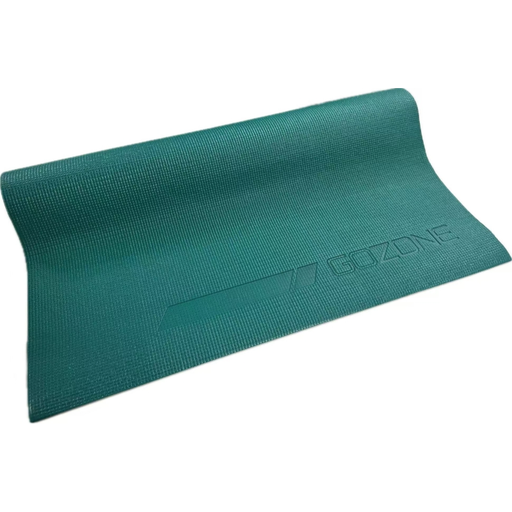
Why This Fits Their Persona: A straightforward starting point for UK residents who need one compact surface for yoga, Pilates, core work and floor exercises at home.
Its listed dimensions and 3 mm thickness make the space requirement clear, avoiding vague sizing descriptions. The embossed PVC surface is also specified rather than relying only on a generic grip claim.
PVC construction; wipes clean; suitable for yoga, Pilates, ab crunches, posture, balance and flexibility exercises.
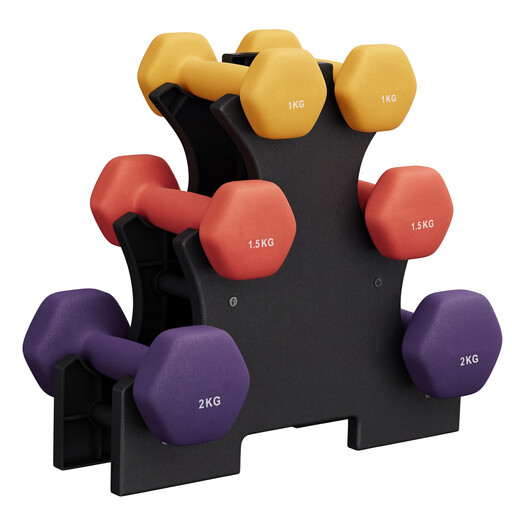
Why This Fits Their Persona: Suitable for users who value a tidy setup and want several resistance choices for changing routines in a limited home space.
The set states each included weight and comes with a stand, reducing uncertainty about storage and progression. Hexagonal ends also help limit rolling between sets.
Includes two 1 kg, two 1.5 kg and two 2 kg dumbbells, plus a PP plastic stand; cast iron with neoprene coating.
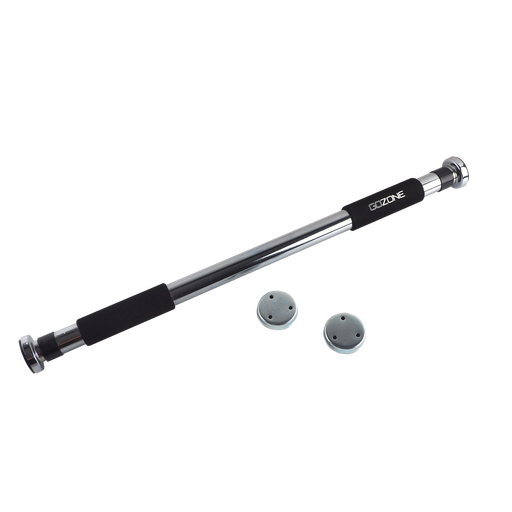
Why This Fits Their Persona: A practical option for users specifically seeking upper-body strength training equipment without drilling into a rented or permanent home.
The adjustable range, no-screw installation and stated load capacity are provided clearly. Buyers can measure their doorway and assess the frame before purchase rather than assuming universal fit.
Adjusts from 62–91 cm; steel, foam and plastic construction; locking design; listed for pull-ups, chin-ups, push-ups, dips and sit-ups.
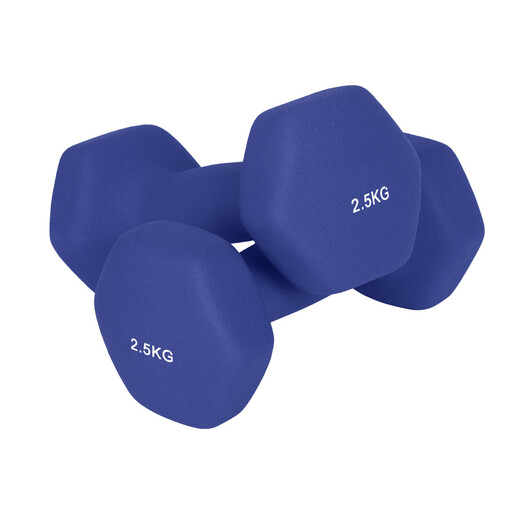
Why This Fits Their Persona: Appropriate for shoppers who want a clearly defined pair of matching weights for repeated strength and cardio sessions.
The listing identifies the net weight as two 2.5 kg dumbbells, gives grip dimensions and notes a possible 3% weight discrepancy. This makes comparison with other sets more practical.
Cast iron core with neoprene coating; hexagonal ends; ergonomic grip; pair supplied at 2.5 kg each.
We have compiled a complete, real-time list of products that fully satisfy these strict selection criteria and UK safety regulations.
Start with equipment that supports several movements. A yoga mat can cover stretching, Pilates and floor exercises, while a light pair of neoprene dumbbells can add resistance to squats, presses and simple cardio routines. Check dimensions, storage space and the weight you can control comfortably.
The required space depends on the activity. A mat needs a clear area slightly larger than its listed dimensions, with enough room to extend your arms and legs. A doorway pull-up bar requires a compatible frame measuring between its specified minimum and maximum widths. Clear nearby furniture before exercising.
Most manual home exercise equipment has no ongoing electricity cost. Running costs may instead relate to storage, cleaning or replacement after wear. Wipe PVC mats and coated dumbbells as appropriate, store weights securely and inspect all equipment regularly. Proper care can help prevent avoidable damage, but no product should be assumed to last indefinitely.