
24/7 Customer Support

Free returns

Same-day & Next-day Delivery

Quality Guaranteed

Unlock Your Welcome Offers: FREE Delivery | Up to 80% OFF | Free 30-day JoyPlus trial
Download the APP
Bringing your fitness routine home is a fantastic way to save time and money, but choosing the right home gym equipment can feel overwhelming. The market is flooded with promises of instant results and revolutionary designs. Unfortunately, many of these claims lead to buyer's remorse, with bulky, unused equipment gathering dust in the corner.
As the Joybuy Product Recommendation Officer, my role is to help you see past the marketing jargon. Before you invest, let's look at the common pitfalls that UK buyers face and how you can sidestep them to find gear that truly fits your space and goals.
The "Fits Anywhere" Illusion: A product might look compact in a polished photo, but the reality is often different. Many manufacturers advertise the folded or stored dimensions, neglecting to mention the much larger operational footprint required for safe use. This is a frequent issue for UK residents in new-builds or flats, where every square foot counts. You need space not just for the machine, but for your own movement around it.
The Flimsy Frame Fallacy: A low price can be tempting, but it often comes at the cost of build quality. Equipment made with thin-gauge steel or low-grade plastic can feel unstable, wobble during use and may not safely support its advertised maximum weight. This isn't just disappointing; it's a genuine safety concern, especially for strength training equipment.
The "One-Size-Fits-All" Dead End: A piece of equipment that doesn't grow with you is a poor investment. Non-adjustable machines or those with very limited resistance levels offer no path for progression. What feels challenging as a beginner will quickly become too easy, rendering the equipment obsolete for your fitness journey.
To ensure your new equipment serves you well for years, focus on these non-negotiable specifications.
This is the most critical factor for anyone buying exercise equipment for small spaces. Always check for two sets of measurements:
Look beyond the surface. For any strength training equipment like a power tower for home or an adjustable weight bench, the frame material is paramount.
To get long-term value, your equipment must adapt to you.
Based on these practical criteria, here are a few options matched to different user needs.
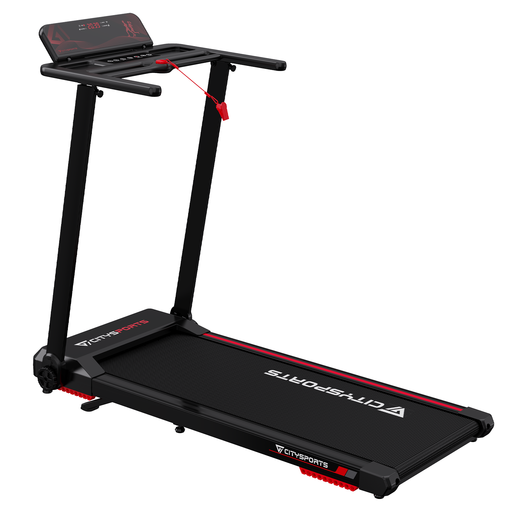
Why This Fits Their Persona: Perfect for those in flats or smaller homes who want a proper running experience without sacrificing living space. It offers jogging and running speeds, plus an incline, but folds down to be stored against a wall or under a sofa.
This folding treadmill directly counters the "Fits Anywhere" illusion by providing a genuinely compact folded profile (10.2 cm height) while still offering a functional running deck and speeds up to 12 km/h.
Features a manual incline setting (0% or 8%) to add intensity, a feature often missing in compact models. The motor operates below 45 dB, making it considerate for flat living.
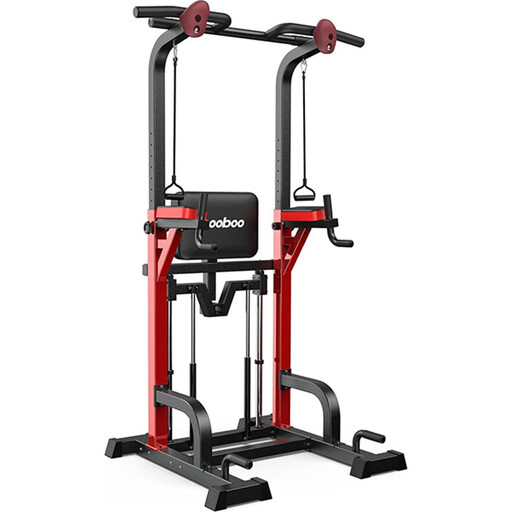
Why This Fits Their Persona: Ideal for someone with a dedicated space like a garage or spare room who wants to build functional, bodyweight strength. It combines multiple exercises (pull-ups, dips, leg raises) into one station, replacing the need for several pieces of equipment.
This unit avoids the "Flimsy Frame Fallacy" by using a high-strength commercial steel frame with a reinforced structure, providing a high weight capacity (up to 480 lbs) for stability during intense workouts.
Its height is adjustable to suit different users, tackling the "One-Size-Fits-All" problem. The multi-function design offers excellent value by consolidating several key bodyweight exercises.
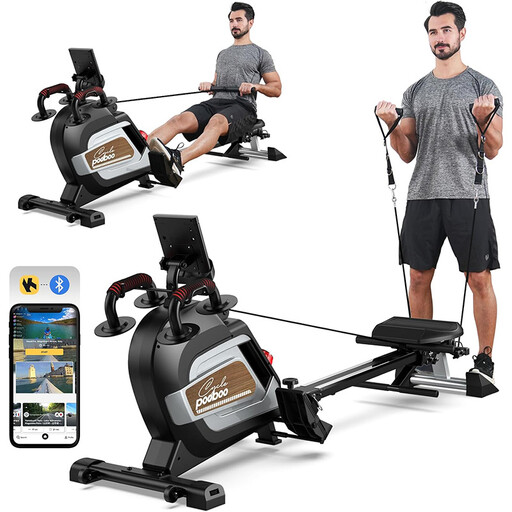
Why This Fits Their Persona: Excellent for anyone seeking a full-body workout that is gentle on the joints. Rowing engages legs, core and upper body simultaneously. This model's foldable design makes it a practical cardio machine for home use, even with limited space.
It avoids the "One-Size-Fits-All" dead end by offering 14 levels of magnetic resistance. This allows users to start gently and progressively increase the intensity, ensuring the machine remains challenging as their fitness improves.
The magnetic resistance system ensures a smooth and quiet motion, ideal for home environments. Its sturdy alloy steel frame supports a high weight capacity of 360 lbs, countering the "Flimsy Frame" concern.
We have compiled a complete, real-time list of products that fully satisfy these strict selection criteria and UK safety regulations.
For heavy items like a power tower or treadmill, it is highly recommended to use protective floor mats. These are typically made from high-density rubber or foam and serve two purposes: they prevent scratches and indentations on wood or laminate flooring, and they help absorb vibrations and reduce noise, which is especially important if you live in a flat or terraced house.
The running cost is generally modest. A typical home treadmill motor uses between 600 and 1500 watts. Based on current UK electricity prices, an hour of use might cost between 20p and 50p. Under-desk walking pads use even less energy. The exact cost will depend on your specific energy tariff, the treadmill's motor efficiency and the speed you use.
A power tower is an excellent foundation for a full upper-body and core workout, covering pull-ups (back and biceps), dips (chest and triceps) and leg raises (abdominals). To achieve a complete full-body routine, you would need to supplement it with exercises for your lower body, such as squats, lunges or deadlifts, which could be done with or without additional weights.