
24/7 Customer Support

Free returns

Same-day & Next-day Delivery

Quality Guaranteed

Unlock Your Welcome Offers: FREE Delivery | Up to 80% OFF | Free 30-day JoyPlus trial
Download the APP
A home gym power tower can combine a pull-up bar, dip station, leg-raise supports and other strength-training functions in one frame. However, choosing the wrong design can leave you with equipment that is difficult to assemble, unstable on uneven flooring or too large for the room.
Before buying, focus on the points that affect everyday use rather than relying on broad marketing language. A practical home gym setup should match your available space, training level and intended exercises.
A stated load capacity is useful, but it does not tell the whole story. Base width, frame shape, rubber feet and correct assembly all affect how a power tower feels during pull-ups and dips. A tall station with a narrow footprint may need more careful positioning than a lower, wider design.
Always place the equipment on a flat, stable surface, follow the assembly instructions and check that bolts and adjustment points are secure before each session.
A power tower may fit the floor area while still being unsuitable for the ceiling height. Remember to allow extra clearance above the pull-up bar, particularly if you use a full range of movement. Measure the room before ordering and compare the assembled dimensions rather than only the package size.
A doorway pull-up bar has a smaller footprint, but it relies on a suitable, strong door frame. It should not be treated as a universal substitute for a freestanding multifunctional fitness station.
Some products combine a bench, resistance bands, climbing-style grips and adjustable supports. These can be useful for full-body home gym equipment, but additional features may also mean more assembly and more parts to maintain.
Decide whether your priority is pull-ups and chin-ups, dips and leg raises or a wider home strength training routine. A simpler pull-up bar may suit occasional upper-body exercise, while a power tower with bench may be more appropriate for varied training.
Look for a clearly stated frame material, such as steel or alloy steel, and check how the base contacts the floor. Powder-coated steel can provide a practical finish for indoor use, while non-slip rubber feet help reduce movement and protect flooring.
Do not rely on the frame material alone. Check the product’s maximum load, base dimensions and whether the station must be anchored or simply positioned on the floor. The total load should include body weight and any added resistance.
An adjustable power tower can accommodate different users and exercise preferences. Check the number of height positions and the adjustment range, then consider whether the lowest setting works for your household.
For pull-ups and chin-ups, measure from the floor to the bar and from the bar to the ceiling. For leg raises and dips, also consider the space in front of and behind the station. A crowded room can limit safe movement even when the frame technically fits.
A doorway pull-up bar needs more than a suitable width. Check the door frame’s strength, trim design and available contact area. The adjustable bar listed below fits openings from 62–91 cm, uses a locking system and requires no screws. Even so, it should be checked for stability before every use and removed if the frame shows movement or damage.
When installing any pull-up bar, follow the supplied directions, stay within the stated load limit and avoid use on unsuitable or weakened frames.
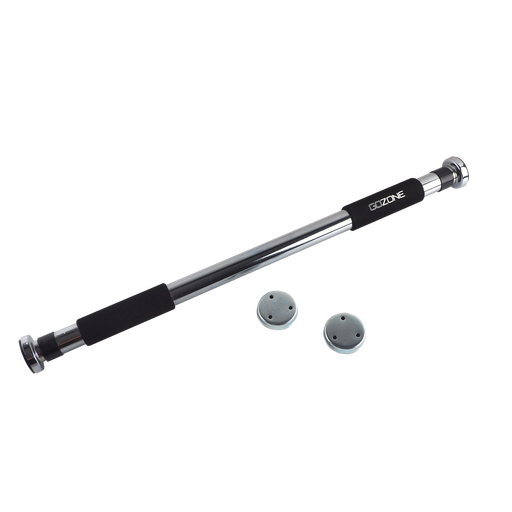
Why This Fits Their Persona: A compact choice for UK residents starting upper-body workouts in a flat, bedroom or home office where floor space is limited.
The adjustable 62–91 cm range makes doorway compatibility easier to check, while the locking design avoids drilling during installation.
Metal, foam and plastic construction; supports pull-ups, chin-ups, push-ups, sit-ups and dips.
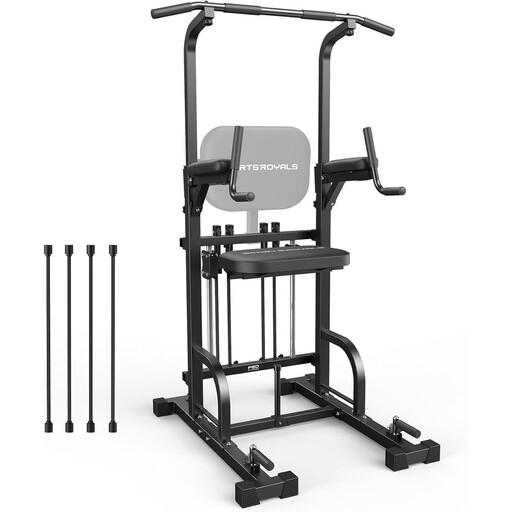
Why This Fits Their Persona: Suits households wanting one freestanding station for regular pull-ups, dips, leg raises and core-focused training.
Its H-shaped base, eight non-slip rubber feet and six-level height adjustment address common concerns about movement and poor fit.
204 kg stated maximum load; supports resistance bands rated from 10–40 kg and includes rotatable push-up handles.
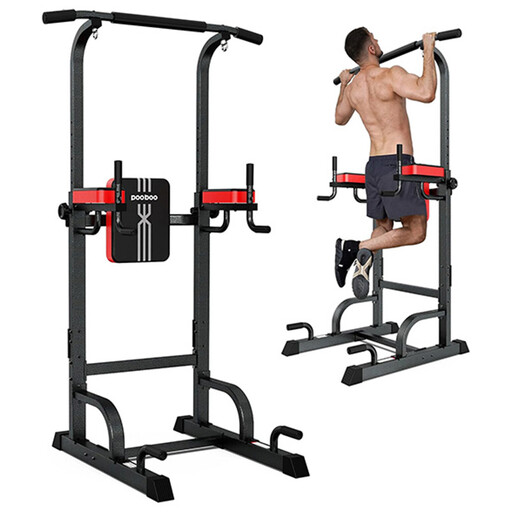
Why This Fits Their Persona: Designed for users seeking a large, adjustable station for repeated strength sessions rather than occasional doorway exercise.
The freestanding alloy-steel frame avoids dependence on a door frame, while adjustable height helps accommodate different training positions.
440-pound stated maximum load; supports pull-ups, dips and other full-body strength exercises.
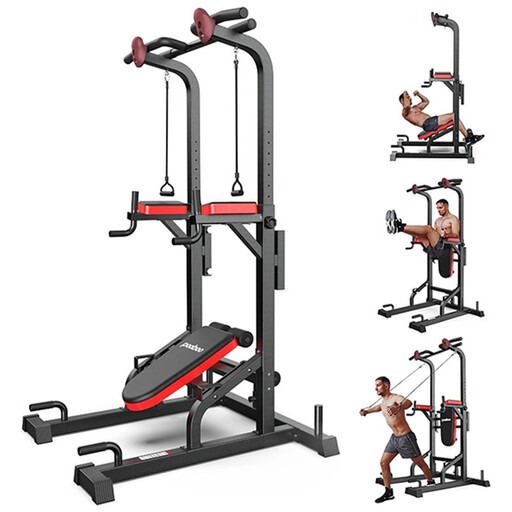
Why This Fits Their Persona: A practical match for users who want a bench alongside a rock-climbing-grip pull-up bar and dip station for varied home training.
Its adjustable height and non-slip structure provide more setup flexibility than a fixed pull-up bar, provided the larger footprint suits the room.
Includes a bench and multifunction design; stated weight-bearing capacity is 480 lb.
We have compiled a complete, real-time list of products that fully satisfy these strict selection criteria and UK safety regulations.
Before using your home gym power tower:
For a doorway pull-up bar, inspect the frame and locking points before every session. Do not exceed the stated load capacity and avoid using it if the door frame is damaged.
It can be, provided the station is adjusted correctly and exercises are performed within your ability. Beginners may start with supported or partial movements, such as assisted pull-ups where the equipment allows, before progressing gradually. A height-adjustable station can make setup more adaptable for different users.
Allow space for the full assembled footprint plus room to move around the handles and bench. You also need sufficient ceiling clearance above the pull-up bar. Measure the intended area carefully, including skirting boards, shelves and nearby furniture.
No. A power tower, dip station and chin-up bar use bodyweight and optional resistance equipment rather than mains electricity. Running costs are therefore generally limited to the purchase, maintenance and any replacement accessories. The equipment still needs periodic checks to keep connections and adjustment points secure.