
24/7 Customer Support

Free returns

Same-day & Next-day Delivery

Quality Guaranteed

Unlock Your Welcome Offers: FREE Delivery | Up to 80% OFF | Free 30-day JoyPlus trial
Download the APP
Creating a home gym can be more convenient than travelling to a commercial facility, but the wrong equipment may quickly become an expensive clothes hanger. The key is to match the equipment to your available space, training style and realistic lifting needs rather than choosing based on impressive-looking marketing claims.
This guide explains the main pitfalls to avoid and compares practical options for pull-ups, dips, bench pressing, leg training and full-body workouts.
A large load figure does not automatically mean an item will feel stable during use. A power tower, squat rack and bench must also have a broad base, secure locking points and suitable floor contact.
Check whether the stated capacity includes the user, weights or both. Also distinguish between dynamic load capacity, which applies during movement, and static load capacity, which applies when the equipment is stationary.
Product dimensions may describe the frame only, not the clearance needed for movement. Pull-ups require overhead space, while bench press equipment needs room to load a barbell safely. Folding equipment can help in a smaller UK flat or spare bedroom, but it still needs a secure storage area when not in use.
Measure:
“Multifunctional” equipment is only useful if its adjustment points are easy to operate and lock firmly. Inspect the number of height or backrest positions, the type of locking mechanism and whether the transition between exercises is practical.
A bench that supports incline, flat and decline positions may be more useful than a fixed model, but only if the backrest and seat remain secure under load.
For home gym workout equipment, a steel frame with a durable coated finish is common. Powder coating can help protect the surface from ordinary wear, but it does not remove the need for indoor storage and regular inspection.
Look for:
If your floor is smooth, a suitable protective mat can reduce movement and help protect flooring. Place all equipment on a flat, level surface and avoid using it if any frame, weld or locking component appears damaged.
The stated maximum should cover your body weight plus the weights used during exercise. For example, a 100 kg user performing a 60 kg bench press places approximately 160 kg of combined load on the equipment, before considering movement forces.
For a power tower, check the capacity for pull-ups, dips and leg raises. For an adjustable weight bench, check whether the listed figure applies to the whole bench or only a particular position. A squat rack and bench combination should clearly explain its dynamic and static limits.
A foldable weight bench can suit users who need to clear a room after training. A leg developer bench may support leg extensions and curls, but it usually requires plates and enough clearance for the lever to move fully.
For regular bench press equipment, also check:
Always follow the supplied instructions and ensure every adjustment is fully locked before loading weights.
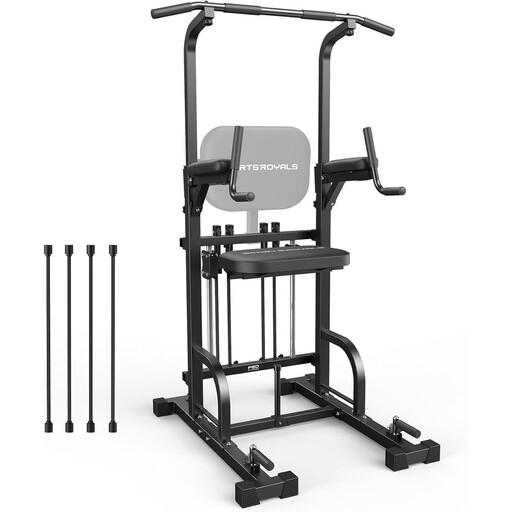
Why This Fits Their Persona: A practical starting point for users wanting several bodyweight exercises without buying separate pull-up and dip equipment. Its adjustable height can help households with different users.
The H-shaped base has eight non-slip rubber feet, while the frame height adjusts across six levels. Users should still assemble it carefully and check all bolts before use.
Supports pull-ups, dips, leg raises and core work; listed maximum load is 204 kg, with adjustable resistance bands rated at 10–40 kg.
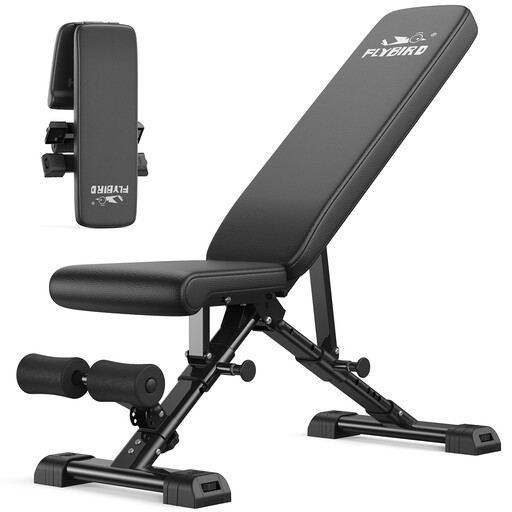
Why This Fits Their Persona: Suitable for users who prioritise an adjustable bench for dumbbell work, bench pressing and varied full-body sessions, particularly where floor space is limited.
The bench uses a quick-adjust system and folds for storage, reducing the risk of buying a large fixed bench that cannot suit a compact room.
Listed load capacity is 363 kg; the frame is made from commercial-grade steel and the product is supplied 80% pre-assembled.
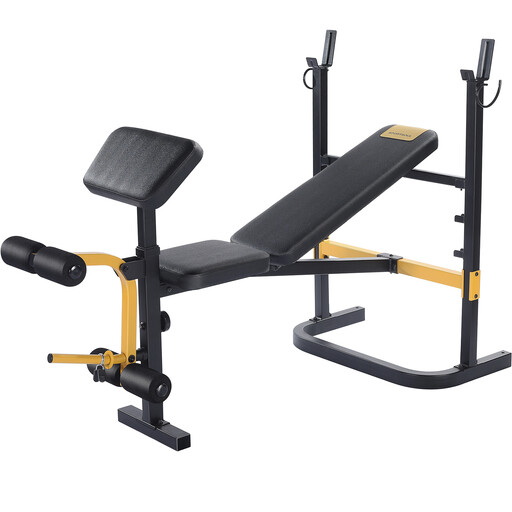
Why This Fits Their Persona: Designed for users building a broader strength routine around barbell work, rack-supported exercises and lower-body training at home.
The rack includes safety hooks, while the bench offers four backrest positions. Confirm that the hooks and adjustment pins are fully engaged before each lift.
Includes leg extension and curl functions, a removable preacher curl pad and a listed dynamic capacity of 186 kg.
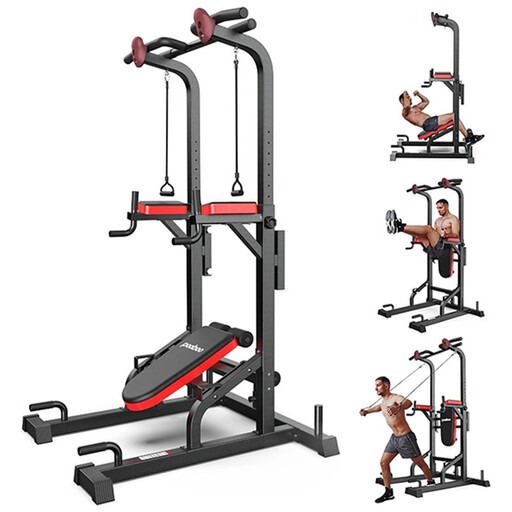
Why This Fits Their Persona: A single station for users who want pull-up, dip and bench-based exercises without purchasing separate home gym strength training equipment.
The design combines a bench, dip station and rock-climbing-grip pull-up bar. Its adjustable height and non-slip structure should still be checked during assembly.
Listed weight-bearing capacity is 480 lb, with an assembled size of approximately 41 x 30 x 99 inches.
We have compiled a complete, real-time list of products that fully satisfy these strict selection criteria and UK safety regulations.
Before your first workout:
Home strength training equipment does not usually consume electricity, so ongoing running costs are low. The main recurring expenses are replacement wear parts, added weight plates and occasional maintenance. Correct assembly and sensible loading can help preserve the equipment, but no frame should be used beyond its stated capacity.
It can be, provided the user selects suitable exercises and progression levels. Assisted pull-ups, controlled dips and resistance bands may make bodyweight training more manageable. Beginners should learn the adjustment controls and avoid exceeding the stated load capacity.
The required space depends on the equipment. A folding bench may need less storage space, while a power tower requires overhead clearance and room around the base. Add movement clearance to the product’s listed dimensions before ordering.
Lifespan depends on construction, frequency of use, loading and maintenance. Regularly check bolts, adjustment mechanisms, padding, rubber feet and frame joints. Stop using any item with loose, bent or damaged components until it has been assessed or repaired according to the manufacturer’s instructions.