
24/7 Customer Support

Free returns

Same-day & Next-day Delivery

Quality Guaranteed

Unlock Your Welcome Offers: FREE Delivery | Up to 80% OFF | Free 30-day JoyPlus trial
Download the APP
Building a home gym can be more convenient than travelling to a commercial facility, but buying the wrong equipment can quickly waste money and floor space. A product may appear versatile in a listing yet prove unsuitable once you check its dimensions, weight capacity or installation requirements.
The most useful approach is to compare how you will train, where the equipment will go and which specifications affect safety and durability. This guide outlines the common buying traps and highlights practical options for different home workout needs.
A maximum load figure is important, but it does not tell you everything. You must consider your body weight, added weights and the force created during movements such as pull-ups, dips or bench presses. A power tower that supports a high stated load may still require a broad, level floor and enough ceiling clearance for safe use.
Treat the published capacity as a limit rather than a target. Never exceed it, and check whether the figure refers to the user alone or includes additional weights.
Product dimensions usually describe the frame, not the complete exercise area. A pull-up bar needs clearance above and around the doorway. A dip station requires room for your elbows and legs, while a foldable weight bench still needs space when unfolded and adjusted.
Measure the intended area before ordering. In UK homes, pay particular attention to low ceilings, narrow door frames, skirting boards and uneven flooring.
A doorway pull-up bar may not require drilling, but the frame and locking mechanism still need to be checked before every session. Similarly, pre-assembled equipment must be inspected for loose bolts, damaged grips and worn rubber feet.
Follow the supplied instructions, place equipment on a stable surface and stop using it if movement, cracking or damage appears.
For full-body strength training equipment, look at the frame material, base design and maximum load together. Alloy steel or steel frames can provide a firm structure, but stability also depends on the footprint, connection points and floor surface.
A power tower designed for pull-ups, dips and similar movements should not rock during use. If you are choosing a dip station for frequent sessions, consider whether the base is wide enough for your movement style and available space.
Adjustability makes equipment more useful for households with different users or varied routines. Check the actual height or width range instead of relying on terms such as “multifunctional”.
An adjustable weight bench should lock securely into each position and support the exercises you intend to perform, such as incline pressing, flat pressing and dumbbell work. For upper-body workout equipment, grip position and handle spacing can also affect comfort and exercise choice.
Before selecting a doorway pull-up bar, measure the usable door-frame width. The pull-up bar listed here adjusts from 62–91 cm, but the frame must also be strong enough for the installation method. No-screw designs are convenient, yet they are not suitable for every doorway.
For push-up bars, a non-slip base is particularly important on smooth floors. Check rubber pads regularly, keep the surface dry and avoid using the equipment on unstable or damaged flooring.
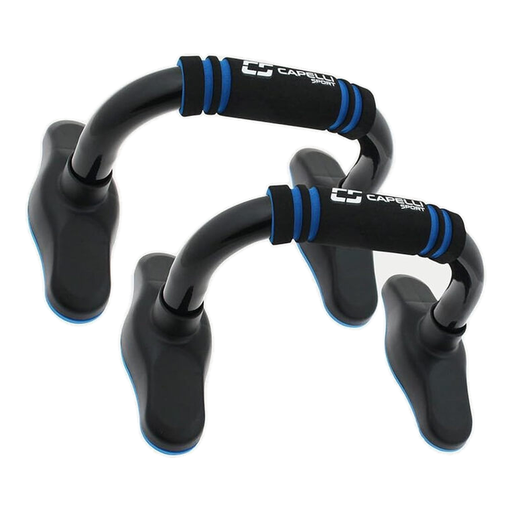
Why This Fits Their Persona: A compact choice for tenants, beginners or anyone starting a home routine without dedicating a room to equipment.
The stainless-steel handles, EVA foam grips and TPR rubber base address concerns about uncomfortable grips and sliding on the floor.
Portable, ready to use without assembly, with a stated 300 lb capacity and counter function.
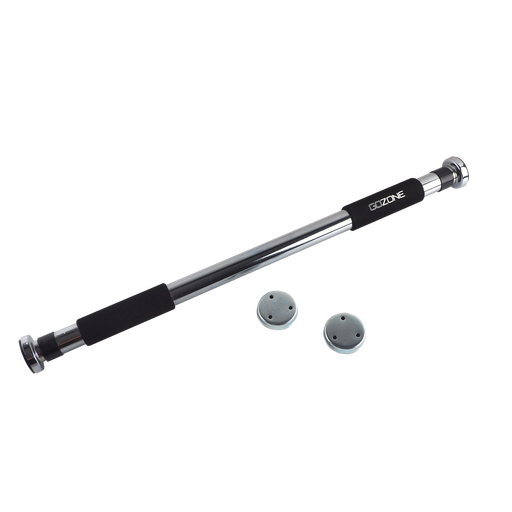
Why This Fits Their Persona: Suitable for UK flats and smaller rooms where permanent gym equipment would be difficult to store.
Its adjustable 62–91 cm range makes measuring the doorway straightforward, while the locking design requires a stability check before use.
No-screw portable installation, foam grip and stated capacity of up to 300 lb.
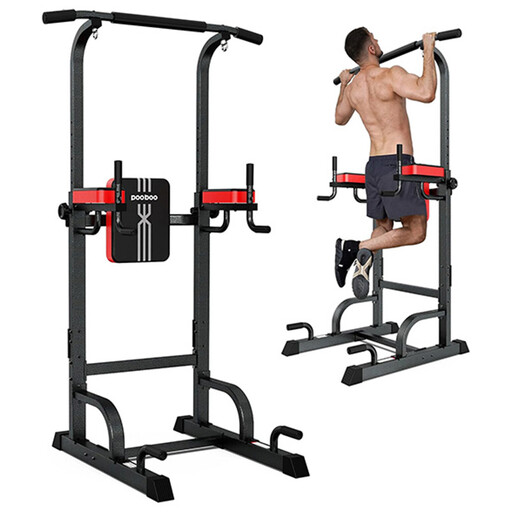
Why This Fits Their Persona: Designed for users who want a fixed station for repeated pull-ups, dips and broader home strength sessions.
The 41.73 × 41.73 × 94 inch footprint and adjustable height help buyers assess space before committing, while the flat-floor warning sets realistic installation expectations.
Alloy-steel construction, adjustable height and a stated maximum capacity of 440 lb.
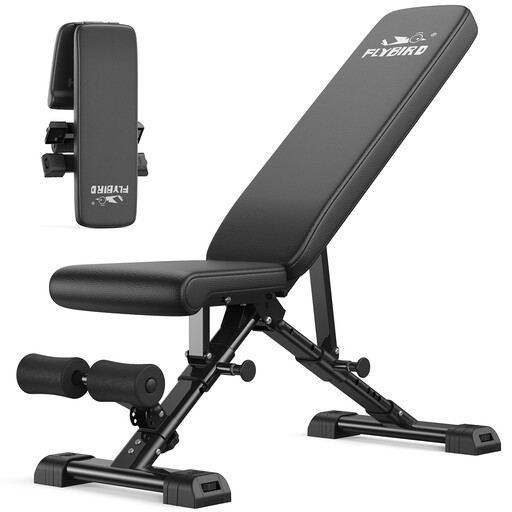
Why This Fits Their Persona: A practical match for experienced lifters seeking adjustable support for dumbbell work, pressing and varied strength routines.
The quick-adjust mechanism and specified 363 kg load capacity provide measurable details to compare, while the locking requirement discourages careless setup.
Multiple adjustment positions, foldable storage design and 80% pre-assembled construction.
A small setup can cover several movement patterns without filling an entire room. Combine a pull-up bar or power tower with push-up bars for pulling and pushing exercises. Add an adjustable bench if you use dumbbells or want incline positions.
Allow recovery time between demanding sessions and build intensity gradually. Equipment cannot replace correct technique, so follow the product instructions and seek suitable professional guidance if you have existing health concerns. Stop exercising if you experience pain or unusual discomfort.
We have compiled a complete, real-time list of products that fully satisfy these strict selection criteria and UK safety regulations.
It can be, provided you measure the complete footprint and ceiling height first. The C966S, for example, is listed at 41.73 × 41.73 × 94 inches, so it requires considerably more space than a doorway pull-up bar or push-up bars. Keep clear space around the equipment and place it on a flat, stable floor.
Lifespan depends on construction, frequency of use, load and maintenance. Regularly tighten bolts, inspect locking mechanisms and rubber feet, and wipe away sweat and moisture. Avoid exceeding the stated capacity, storing equipment in damp conditions or continuing to use damaged parts.
Most strength equipment has no electricity cost. Ongoing expenses may include replacement rubber pads, bench upholstery or additional weights, depending on your setup. The main practical costs are storage space, assembly and maintenance, so compare these factors alongside the purchase price.