
24/7 Customer Support

Free returns

Same-day & Next-day Delivery

Quality Guaranteed

Unlock Your Welcome Offers: FREE Delivery | Up to 80% OFF | Free 30-day JoyPlus trial
Download the APP
Unwanted hair on the legs, underarms, bikini line or face can make regular grooming feel repetitive and inconvenient. Home hair removal devices offer several approaches, but choosing between IPL and an epilator requires more than comparing flash counts, attachments or discounted prices.
The main difference is simple: an epilator mechanically removes hair from the root, while an IPL hair removal device uses light pulses intended to reduce regrowth over time. Neither option suits every skin tone, hair colour, treatment area or comfort preference.
Traditional epilators remove visible hair immediately, but regrowth eventually occurs. IPL is a longer-term hair reduction device, not an instant hair remover. It normally requires repeated sessions and maintenance treatments, and results vary according to hair colour, skin tone, treatment consistency and body area.
Be cautious of promotional claims that imply permanent or identical results for everyone. Check the recommended treatment schedule and compatibility guide before buying.
A cordless epilator may be convenient, but runtime and charging time matter if you remove hair from several areas in one session. A corded model offers continuous power but must be used near a suitable socket.
Similarly, app connectivity can provide useful scheduling and coverage guidance, but it will not make an unsuitable IPL device compatible with your skin or hair. Attachments are only valuable when they cover the areas you actually treat.
IPL devices are not suitable for every combination of skin tone and hair colour. Very light blonde, red, grey or white hair may not respond adequately, while some devices are unsuitable for very dark skin tones. Always read the manufacturer’s compatibility chart.
For IPL, do not treat tattoos, permanent make-up, sunburnt, tanned or irritated skin. A patch test is recommended where instructed. Epilators should not be used on broken, inflamed or sunburnt skin either. Facial models must be designed for facial use; a body epilator is not automatically suitable for the face.
Choose at-home IPL hair removal if your priority is reducing regrowth over a planned programme and your skin and hair combination is compatible. IPL usually involves shaving before treatment rather than waxing or epilating, as the light needs to target pigment in the hair beneath the skin.
Choose an epilator if you want immediate results, prefer not to follow an IPL schedule, or need a laser hair removal alternative that does not rely on light-based compatibility. Epilation can feel more intense, particularly for beginners, although massage caps, gentle modes and wet use may improve comfort.
For IPL, look for a skin tone sensor, adjustable intensity levels and a skin-contact safety feature. These do not remove the need to follow the manual, but they can help prevent unsuitable flashes or accidental operation.
Five intensity levels, such as those listed for selected Philips Lumea models, allow more control across different body areas. App connectivity may help users maintain regular sessions and track coverage. However, app guidance should complement—not replace—the printed safety instructions.
A cordless epilator is useful in a bathroom or while travelling, provided it has enough battery capacity. A wet and dry epilator can be used on dry skin or in the bath or shower, but it must be charged and operated exactly as instructed. Corded models provide uninterrupted power and may be practical for longer sessions at a dressing table.
For full-body hair removal, compare body, sensitive-area, bikini and facial attachments. A washable head simplifies hygiene, while an integrated LED or SmartLight can make short hairs easier to see. Also check the plug specification. Some listed appliances use a UK 2-pin bathroom plug and may require a suitable adaptor for a three-pin socket.
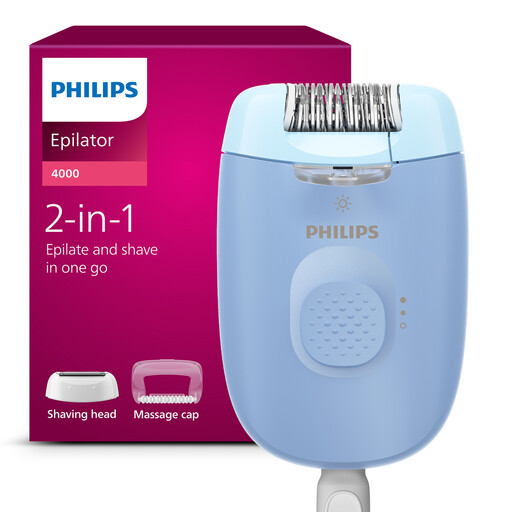
Why This Fits Their Persona: A straightforward choice for someone beginning an epilation routine and wanting continuous mains power without battery maintenance.
The corded design avoids short runtime concerns, while two speed settings offer a gentler starting point.
Integrated LED light, washable head, shaving-head attachment and compact handle.
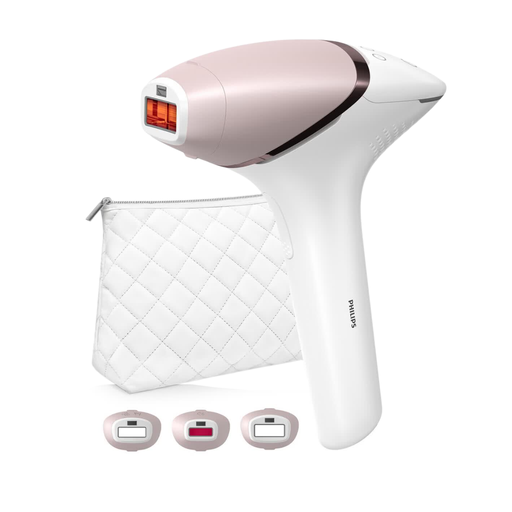
Why This Fits Their Persona: Suitable for shoppers seeking flexible IPL use across larger and precision areas, including users who do not want to remain beside a socket.
Its listed compatibility guidance and SmartSkin sensor help users check suitability before treatment rather than relying on guesswork.
Cordless and corded operation, four curved attachments, five light settings and app connectivity.
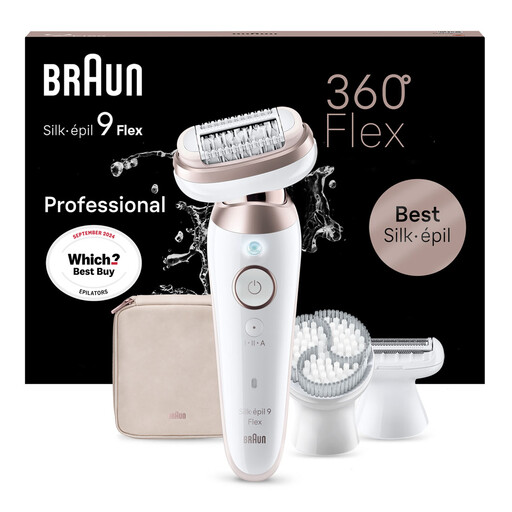
Why This Fits Their Persona: Designed for frequent full-body grooming where wet use, flexible contact and cordless handling are practical priorities.
Wet-and-dry operation and an anti-slip handle address the comfort and control problems of using a basic dry-only model.
Flexible 3D head, 40 tweezers, SmartLight, pressure sensor and up to 50 minutes of cordless use.
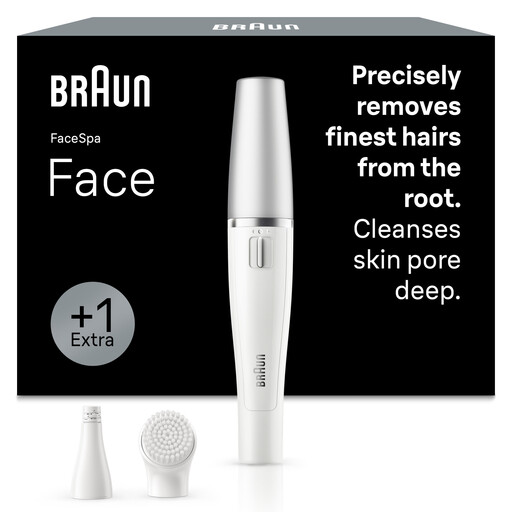
Why This Fits Their Persona: A focused facial epilator for users who need precision around suitable facial areas rather than a full-body appliance.
It is specifically designed for facial grooming, avoiding the mistake of using a larger body epilator on unsuitable areas.
Battery-powered portability, facial epilation and cleansing attachments, and waterproof construction.
We have compiled a complete, real-time list of products that fully satisfy these strict selection criteria and UK safety regulations.
They can be worthwhile when the device matches your treatment area, skin and hair characteristics, and you are prepared to follow the recommended routine. Epilators offer immediate root removal, while IPL may require several sessions before noticeable reduction develops.
Many IPL models are designed with a high or lifetime flash supply and do not require replacement lamps. Check the stated flash capacity, warranty and cleaning requirements before purchase. The device may last for years, but treatment results still depend on correct storage, consistent use and individual compatibility.
Epilators generally have no consumable treatment parts beyond electricity, charging and occasional replacement accessories. IPL models may also have no replacement lamp, although electricity, skincare preparation and possible adaptor costs should be considered. A cordless model may be more convenient, while a corded device avoids battery ageing and charging interruptions.