
24/7 Customer Support

Free returns

Same-day & Next-day Delivery

Quality Guaranteed

Unlock Your Welcome Offers: FREE Delivery | Up to 80% OFF | Free 30-day JoyPlus trial
Download the APP
Taking an active role in managing your health from the comfort of your home has become more accessible than ever. For those managing long-term conditions or for family members caring for loved ones, having reliable tools to track vital signs can provide valuable information and peace of mind. However, the market for home health monitoring devices is vast and choosing the right equipment can feel overwhelming.
This guide is designed to cut through the clutter. As a Joybuy Product Recommendation Officer, my role is to provide clear, practical advice to help you select the right personal health tracker for your specific needs. We will look at key features to consider and highlight some dependable options available in the UK.
Before diving into specific products, here are a few essential factors to consider during your search. Making an informed choice ensures the device you select is both effective and easy to use.
When purchasing any medical equipment for home, its reliability is paramount. In the UK and Europe, look for the CE marking. This indicates that the manufacturer has checked that the product meets EU safety, health and environmental requirements. It is a key indicator of quality and adherence to recognised standards. While home devices provide useful data for tracking trends, they are not a substitute for professional medical diagnosis or consultation.
A device is only useful if you can operate it correctly and read the results easily. Features like large, backlit screens, one-button operation and clear, simple instructions are particularly important. For a blood pressure machine for home use, consider the cuff size and whether it inflates automatically and comfortably. The goal is to make regular monitoring a straightforward, stress-free routine.
Consistent monitoring helps you and your healthcare provider see trends over time. Many modern devices come with built-in memory to store previous readings, often with a date and time stamp. Some can even calculate averages over a set period. This feature is incredibly useful for tracking the effectiveness of lifestyle changes or medication, turning a simple device into a powerful personal health tracker.
Based on features that prioritise reliability and user-friendliness, here are our recommendations for building your home health monitoring toolkit.
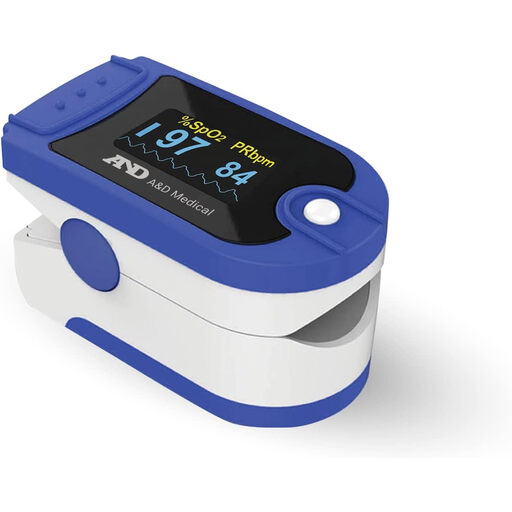
A fingertip pulse oximeter is a non-invasive device that measures your blood oxygen saturation (SpO2) and pulse rate. The A&D Medical UP-200 is a compact and straightforward option.
Why It Stands Out: Its main advantage is simplicity. There are no complex menus or settings; you simply place it on your fingertip and press a button. The results are displayed clearly on its LCD screen within seconds. Its small size makes it ideal for keeping in a drawer or taking with you when travelling.
Pros:
Who is it for?: This SpO2 monitor is suitable for adults who want a quick and easy way to check their oxygen levels and pulse rate for general wellness or fitness tracking.
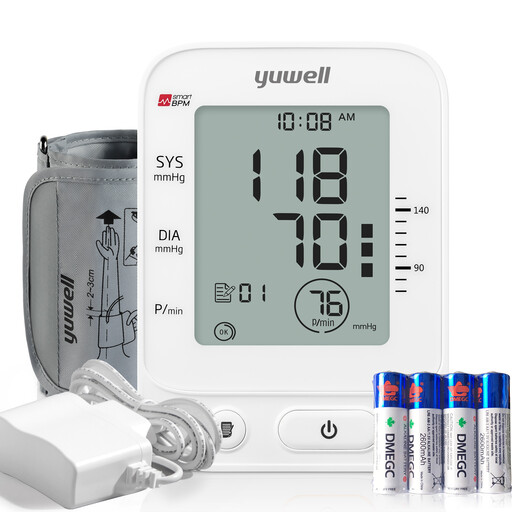
Regularly monitoring blood pressure is crucial for managing hypertension. The yuwell Upper Arm Blood Pressure Monitor (YE660E) is a practical and feature-rich device designed for home use.
Why It Stands Out: This monitor combines user-friendly features with useful health alerts. The large 3.6-inch HD display is exceptionally easy to read, and the device can store up to 99 readings, allowing you to track your blood pressure over time. It also includes an irregular heartbeat detector.
Pros:
Who is it for?: Individuals who need a reliable blood pressure machine for home use to track their measurements daily, especially those advised by a GP to monitor their cardiovascular health.
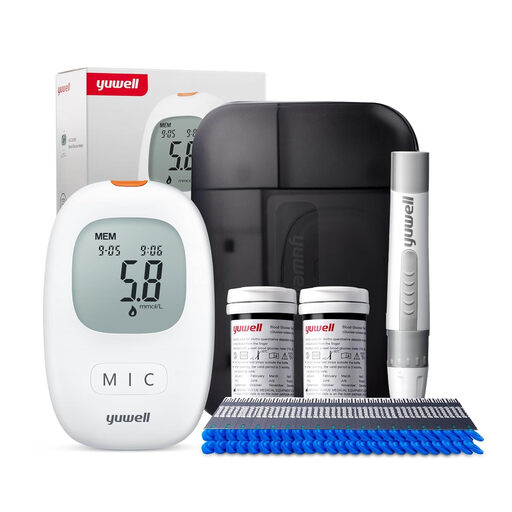
For those managing diabetes, a dependable blood glucose monitor is an essential tool. The yuwell Diabetes Testing Kit (Model 710) provides a complete solution straight out of the box.
Why It Stands Out: This is a full diabetes testing kit, meaning it includes the meter, 50 test strips and 50 lancets. A key feature is its "no coding" technology; the meter automatically recognises the test strips, reducing the chance of user error.
Pros:
Who is it for?: Anyone with diabetes who needs a convenient, all-in-one kit for regular blood sugar monitoring at home or on the go.
These recommendations cover the core needs for many, but your requirements might be different. If you are looking for devices with different features or for other types of monitoring, we have a wider selection available.
Explore our full range of Home Health Monitor options to find the perfect fit for your needs.
Reputable home monitoring devices that carry a CE mark are designed to provide accurate readings for non-clinical use. They are excellent for tracking trends and patterns in your vital signs. However, they should not be used to self-diagnose conditions or replace consultations with your GP or a qualified healthcare professional, who can provide context for your readings.
Some modern blood pressure monitors are equipped with technology to detect an irregular heartbeat (IHB). The yuwell YE660E, for example, includes this feature and will display a symbol if it detects a potential irregularity during a measurement. If you frequently see this indicator, it is important to discuss it with your doctor.
A SpO2 monitor, or pulse oximeter, measures the oxygen saturation level in your blood. It provides a percentage that indicates how well your body is transporting oxygen from the lungs to the rest of your body. It can be a useful tool for individuals with certain respiratory conditions or for those tracking their fitness and acclimatisation to high altitudes. As with all health data, the results should be interpreted in consultation with a healthcare provider.