
24/7 Customer Support

Free returns

Same-day & Next-day Delivery

Quality Guaranteed

Unlock Your Welcome Offers: FREE Delivery | Up to 80% OFF | Free 30-day JoyPlus trial
Download the APP
Choosing mirrors for home décor can seem straightforward until you discover that a stylish design does not always suit the room, mounting method or daily routine. A mirror may look generous in a product photograph yet provide limited viewing space, while a slim frame may lack the stability needed for a busy hallway.
Before buying, look beyond the finish and consider how the mirror will be used, where it will be installed and what practical features justify the price.
A decorative mirror can complement a room beautifully, but style should not come before measurements. A full-length mirror needs enough height for a head-to-toe view, while a wall mirror must fit around furniture, sockets, tiles and door openings.
Check the overall height, width and depth, including the frame and stand. For rented flats or narrow hallways, a freestanding floor mirror with a compact footprint may be more convenient than a wide framed design.
A mirror described as shatterproof may include a safety film on the rear of the glass. This can help hold fragments together if the glass breaks, but it does not make the mirror unbreakable. Secure installation remains essential, especially in homes with children, pets or frequent foot traffic.
Always follow the supplied instructions and use fixings suitable for the wall type. Plasterboard, brick and tiled surfaces may require different approaches.
Not every mirror is designed for continuous exposure to steam. A bathroom vanity mirror with a rust-resistant metal frame may be more suitable for a humid room than a freestanding bedroom mirror. Even then, ventilation and regular drying are sensible precautions.
Avoid spraying cleaner directly onto the glass or frame. Apply it to a microfibre cloth instead and avoid abrasive pads or harsh chemicals that may affect the reflective surface or finish.
Match the mirror to the task:
Also check whether the mirror can be leaned, hung or used freestanding. These options are not interchangeable: a leaning mirror still needs a safe position, while a wall-mounted model requires suitable fixings.
Aluminium alloy frames are lightweight and resist rust, making them practical for bathrooms and other humid spaces. Powder-coated steel can provide a sturdy structure, although the finish should still be protected from abrasive cleaning.
A black framed mirror can define a modern or industrial scheme, whereas white or metallic finishes may blend more easily with lighter interiors. Choose the frame according to the room’s existing fittings rather than relying solely on trend-led imagery.
A magnifying make-up mirror is useful for close grooming, but it should usually complement, rather than replace, a standard-reflection mirror. A 2x magnifying side can help with detailed make-up or skincare routines, while a 1x side provides a more natural overall view.
Look for practical safety details such as rear shatter-resistant film, rounded corners and clear installation guidance. These features reduce potential risks but do not remove the need for careful handling and secure placement.
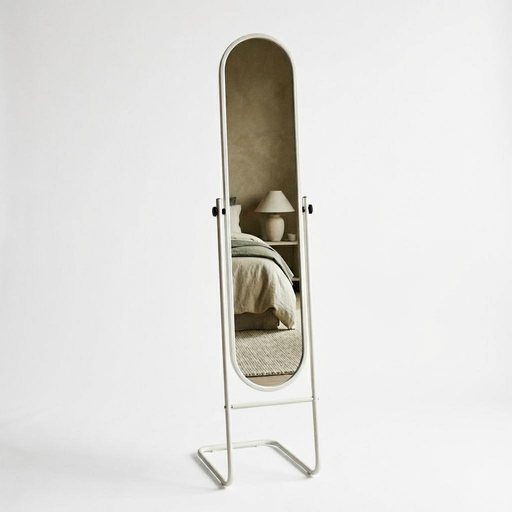
Why This Fits Their Persona: Its 30 cm footprint suits compact bedrooms, studio flats, dressing areas and narrow hallways where floor space is limited.
The listed dimensions make its space requirement clear, while the freestanding format avoids drilling into a rented property.
153 cm height, powder-coated metal frame, 1x reflection and no assembly required.
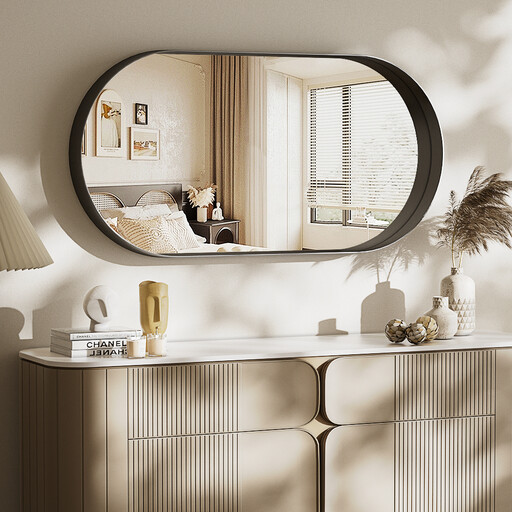
Why This Fits Their Persona: The oval shape and matt black finish suit shoppers creating a coordinated bathroom, bedroom or entrance-hall scheme.
The aluminium alloy frame is listed as rust-resistant and rear shatterproof film provides an added layer of glass-fragment protection.
55 x 75 cm dimensions, vertical or horizontal installation and a lightweight metal frame.

Why This Fits Their Persona: Its taller, wider format works for regular outfit checks in bedrooms, dressing areas, hallways and larger living spaces.
The 161 x 52 cm specification clarifies the usable scale, while included French cleats, a leveller and screws support secure mounting.
Vertical or horizontal mounting, rounded corners, rust-resistant aluminium alloy and rear shatterproof film.
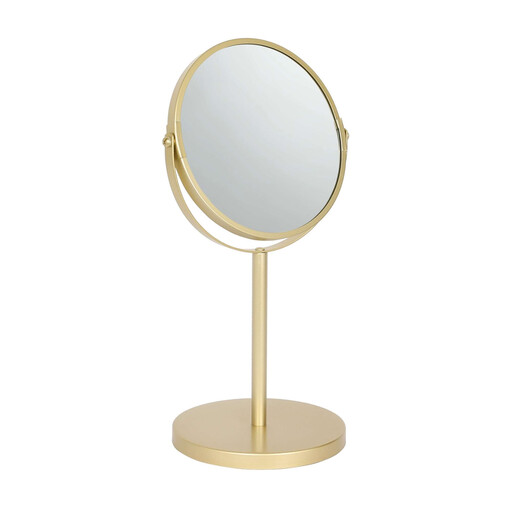
Why This Fits Their Persona: This compact bathroom vanity mirror or dressing-table accessory is designed for make-up application, shaving and close grooming.
The magnification is specified as 2x, rather than relying on vague close-up wording, and the weighted base addresses stability on a vanity.
Dual-sided 1x and 2x reflection, 360° rotation and a 34.5 cm tabletop height.
Before positioning your new mirror:
For more room-specific ideas, browse our range of mirrors for living room, including decorative mirror styles for lounges, dining areas and entrance halls.
We have compiled a complete, real-time list of products that fully satisfy these strict selection criteria and UK safety regulations.
Choose according to the available standing distance and the reflection required. A narrow 153 cm full-length mirror can suit a compact bedroom, while a 161 cm tall model offers a larger viewing area where more wall or floor space is available.
Neither format is automatically safer. A wall mirror must be securely fixed with suitable hardware, while a freestanding mirror needs a stable, level base and a position away from busy walkways. Rear safety film can help retain fragments, but it does not make glass unbreakable.
Check the frame material, mounting instructions and care guidance first. Rust-resistant aluminium alloy is suitable for humid environments, but prolonged steam and poor ventilation can still affect a mirror over time. A bathroom mirror should be dried and cleaned according to the manufacturer’s instructions.