
24/7 Customer Support

Free returns

Same-day & Next-day Delivery

Quality Guaranteed

Unlock Your Welcome Offers: FREE Delivery | Up to 80% OFF | Free 30-day JoyPlus trial
Download the APP
Creating a productive and comfortable workspace at home starts with the right foundation: your desk. Whether you're working full-time from a dedicated room, studying in your bedroom, or fitting a workstation into a snug corner of your living area, the desk you choose can significantly impact your focus and comfort. With so many options available, finding the one that fits your space, budget and working style can feel overwhelming.
As the Joybuy Product Recommendation Officer, my role is to help you navigate these choices. This guide offers practical advice and highlights a few carefully selected options to help you find a functional and stylish home office desk that truly works for you.
Before you start browsing, taking a moment to consider these key points will ensure you select a desk that meets your needs for years to come.
The most important factor is size. Start by measuring the area where you plan to place the desk. Remember to account for chair space and room to walk around it. If you're furnishing a compact area, a small desk might be the ideal solution. For those with a dedicated office or who require multiple monitors and peripherals, a large desk or workstation will be necessary to avoid a cluttered surface. Consider not just the width and depth, but also the height, to ensure it fits comfortably in your room.
Think about how you will use the desk daily. Do you spend long hours typing? An ergonomic desk can make a world of difference. Standard desk height in the UK is around 73 cm, but this isn't a one-size-fits-all solution. A standing desk offers the flexibility to alternate between sitting and standing, which can help with posture and energy levels. Ensure the desktop provides enough space for your computer, keyboard and any other essentials, transforming it from a simple study table into a fully functional PC table.
Your desk is a prominent piece of furniture, so its appearance matters. Styles range from minimalist designs that blend into any decor to bold industrial desk models that make a statement. Look for materials that promise durability. A combination of a strong steel frame and a hard-wearing particleboard or MDF top is a popular choice, offering stability and an easy-to-clean surface that can withstand daily use.
Here are our recommendations for 2026, chosen to suit a variety of spaces and working requirements.
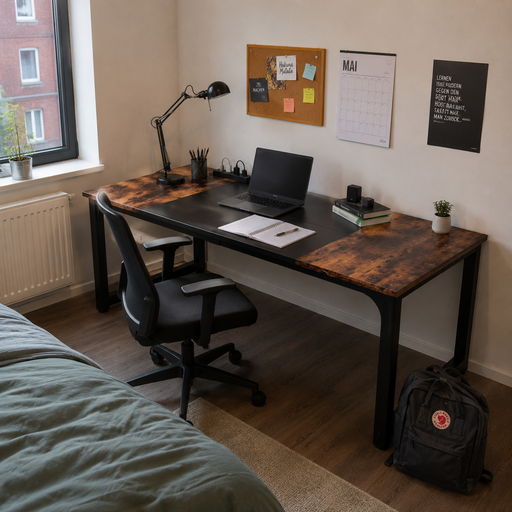
Why It Stands Out: This desk is all about expansive space. Its huge surface and robust build make it an excellent central hub for any serious home office, easily accommodating multiple large monitors, printers and project materials without feeling cramped.
Pros:
Who is it for? This is an ideal choice for professionals, designers or gamers who need a large, sturdy workstation for extensive equipment or collaborative projects.
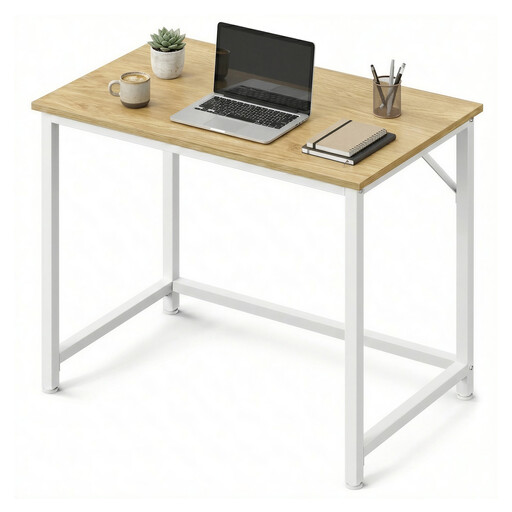
Why It Stands Out: This desk proves that you don't need a lot of space to create a functional work area. Its compact footprint and clean, minimalist design make it a perfect fit for smaller rooms, student accommodation, or multi-purpose living spaces.
Pros:
Who is it for? Perfect for students, remote workers with limited space, or anyone needing a simple and stylish study table for a smaller room.

Why It Stands Out: This electric standing desk brings ergonomic flexibility to your home office. The ability to effortlessly switch between sitting and standing can enhance comfort and focus during long workdays, making it a forward-thinking investment in your well-being.
Pros:
Who is it for? This ergonomic desk is an excellent choice for anyone who spends many hours at their computer and wants to improve their posture and overall comfort while working from home.
A great desk is the centrepiece of your office, but effective storage is what keeps it functional. If you're looking to complete your workspace with practical solutions for files, stationery and other essentials, a dedicated drawer unit can be a perfect companion.
To keep your new setup tidy and organised, explore our range of corner drawers to find the perfect match for your desk.
1. What is a good size for a home office desk? The ideal size depends entirely on your available space and how you work. For simple laptop-based tasks, a small desk around 80-100 cm wide is often sufficient. If you use multiple monitors or need space for paperwork and other equipment, a large desk of 140 cm or wider is recommended. Always measure your room before purchasing.
2. How do I make my computer desk more ergonomic? An ergonomic desk, such as an adjustable height model, is a great start. Beyond that, ensure your monitor is at eye level to prevent neck strain, use a supportive chair and position your keyboard so your wrists are straight. The goal is to maintain a neutral posture, with your feet flat on the floor and your arms resting at a 90-degree angle.
3. Is it difficult to assemble a flat-pack desk? Most modern flat-pack desks are designed for user-friendly assembly. The products we've highlighted come with labelled parts, clear instructions and the necessary tools included. For most people, assembly is a straightforward process that can be completed in under 30 minutes.