
24/7 Customer Support

Free returns

Same-day & Next-day Delivery

Quality Guaranteed

Unlock Your Welcome Offers: FREE Delivery | Up to 80% OFF | Free 30-day JoyPlus trial
Download the APP
With more of us working and studying from home, finding the right desk has become essential. A proper home office desk isn't just a piece of furniture; it's the foundation of a productive and comfortable workspace. However, the sheer number of options can be overwhelming. Whether you're fitting out a small corner in your bedroom or designing a dedicated study, the challenge is finding a desk that balances style, function and size.
This guide is designed to help you navigate the choices. We'll walk through key features to consider and present a few recommendations that cater to different needs and spaces across the UK, from a compact study desk to a fully adjustable ergonomic workstation.
Before you start browsing, a little planning can ensure you find a desk that you'll be happy with for years to come. Here are a few practical points to consider.
The most important factor is size. A desk that's too large can make a room feel cramped, while one that's too small can hinder your productivity. Get out a tape measure and determine the maximum width and depth you can accommodate. Remember to leave at least 80-100 cm of clear space behind the desk for your chair. If you're furnishing a compact area, a small desk for bedroom use, typically around 80-100 cm in width, is often sufficient for a laptop and a few essentials. For setups with multiple monitors or extensive paperwork, a computer desk of 120 cm or more is advisable.
Think about how you will use the desk daily. Are you a student who just needs a simple surface for a laptop and books? A basic study desk will do the job. Are you a remote worker with a full PC setup, multiple screens and peripherals? You'll need a larger surface and perhaps a desk with shelves for organisation. For those spending long hours at their station, an ergonomic office desk, such as a height-adjustable standing desk, can make a significant difference to comfort and well-being by allowing you to alternate between sitting and standing.
A desk's materials determine its durability and aesthetic. Most modern desks combine a particleboard top with a steel frame, offering a good balance of affordability and strength. Look for a robust frame that minimises wobble, especially if you have heavy equipment. Features like adjustable feet are also a practical addition, as they ensure the desk remains stable even on slightly uneven floors.
Based on common requirements for functionality, style and durability, here are our recommendations for 2026.

Why It Stands Out: This desk is an excellent solution for anyone working with limited space. Its 80 cm width provides enough room for a laptop, a monitor and note-taking without dominating the room. The greige and black colour scheme offers a modern, industrial-lite appeal that blends well with various interior styles.
Pros:
Who is it for? This is a great choice for students, flat dwellers or anyone needing a functional and stylish small desk for bedroom or living area use.
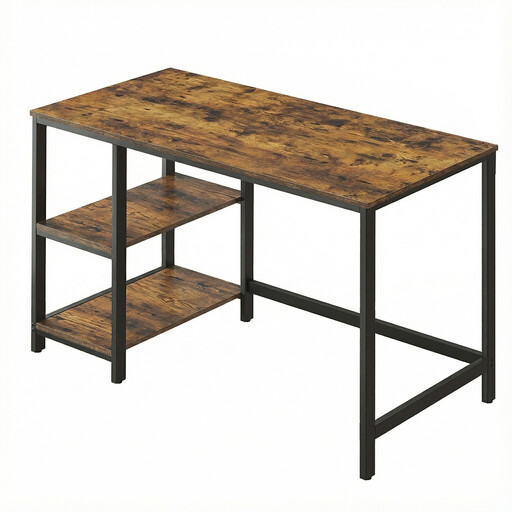
Why It Stands Out: This desk offers a significant step up in workspace and organisation. The generous 120 x 60 cm surface can comfortably accommodate two monitors, a keyboard and other accessories. Its key feature is the two-tier shelving unit, which can be installed on either the left or right side to suit your room layout.
Pros:
Who is it for? Ideal for remote professionals, gamers or students who need a substantial computer desk with integrated, customisable storage to keep their workspace tidy.
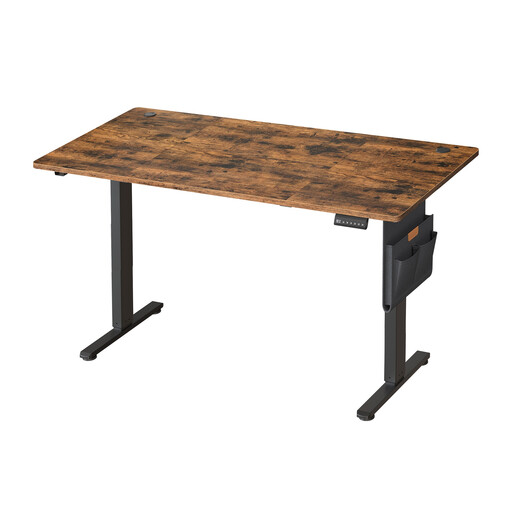
Why It Stands Out: For those prioritising comfort and a modern workflow, this electric standing desk is a superb investment. It allows you to effortlessly switch between sitting and standing with a quiet motor that adjusts the height from 72 cm to 120 cm. The four memory presets let you save your preferred heights for quick, one-touch adjustments.
Pros:
Who is it for? This ergonomic office desk is perfect for professionals who spend most of their day at their desk and want to create a healthier, more dynamic work environment.
If your needs lean more towards a specific aesthetic, such as for a dedicated gaming setup, the options above might not be the perfect fit. For those seeking a more specialised style, you might want to explore our curated collection of [black and red gaming desk] options for a bolder look.
1. What is a good size for a home office desk? This depends entirely on your room and how you plan to use it. A compact desk around 80-100 cm wide is generally sufficient for a laptop and single monitor. If you use multiple monitors or need space for documents and other hardware, we recommend a desk that is at least 120-140 cm wide. Always measure your space first and ensure you leave enough room for your chair.
2. How can I make my home office desk more ergonomic? An ergonomic office desk that is height-adjustable is an excellent starting point. Beyond that, ensure your monitor is at eye level to avoid neck strain. Your chair should provide good lumbar support and your keyboard and mouse should be positioned so that your wrists remain straight and your elbows are bent at a comfortable 90-degree angle.
3. Are desks with shelves a better choice? A desk with shelves can be a highly practical choice, especially for smaller rooms where you need to maximise vertical storage. It helps keep your main work surface clear of clutter, which can improve focus. When choosing, consider if the shelves are customisable, as you may want to remove one to make room for a PC tower or other large items.