
24/7 Customer Support

Free returns

Same-day & Next-day Delivery

Quality Guaranteed

Unlock Your Welcome Offers: FREE Delivery | Up to 80% OFF | Free 30-day JoyPlus trial
Download the APP
As working from home becomes a permanent fixture for many in the UK, the ad-hoc setup on the dining table is no longer a sustainable solution. Creating a dedicated, comfortable and productive workspace is essential, and it all starts with the right foundation: a quality home office desk.
But with so many options available, choosing the right one can feel overwhelming. Do you need an expansive surface or a compact desk for a small bedroom? Is a height-adjustable model a worthwhile investment? This guide is designed to help you navigate these questions, offering practical advice to help you select a work from home desk that fits your space, budget and working style.
Before diving into specific models, consider these key factors to narrow down your search and ensure you find a desk that truly meets your needs.
The most important first step is to measure the area where your desk will go. UK homes are often short on space, so precision is key. Use a tape measure to determine the maximum width, depth and height available. Remember to account for clearance around the desk for your chair and for opening any drawers or cupboards. A compact desk might be the only option for a corner in the living room or a small bedroom, so knowing your exact dimensions is crucial.
Your desk should support a healthy posture. A standard desk height is around 73-75 cm, but this isn't ideal for everyone. If you spend long hours at your computer, a height adjustable desk is an excellent consideration. These models, also known as a sit stand desk, allow you to alternate between sitting and standing, which can improve focus and reduce the discomfort associated with a sedentary workday.
A cluttered desk can lead to a cluttered mind. Think about what you need to keep within arm's reach. Do you have a printer, files and stationery that need a home? A study desk with storage, such as one with built-in shelves or drawers, can help keep your work surface clear and organised. If you prefer a minimalist look, a simple computer desk paired with separate storage units could be a better fit.
Here are a few recommendations that cater to different needs, from compact living to ergonomic excellence.

Why It Stands Out: This desk is a masterclass in simplicity and efficiency. Its clean lines and minimalist black finish allow it to blend into almost any decor, making it a versatile choice for various rooms. The steel frame provides a solid base for daily tasks.
Pros:
Who is it for?

Why It Stands Out: This electric standing desk brings ergonomic flexibility to your home office. The quiet motor allows for smooth transitions between sitting and standing, while the memory function lets you save up to four preferred heights for one-touch adjustments.
Pros:
Who is it for?
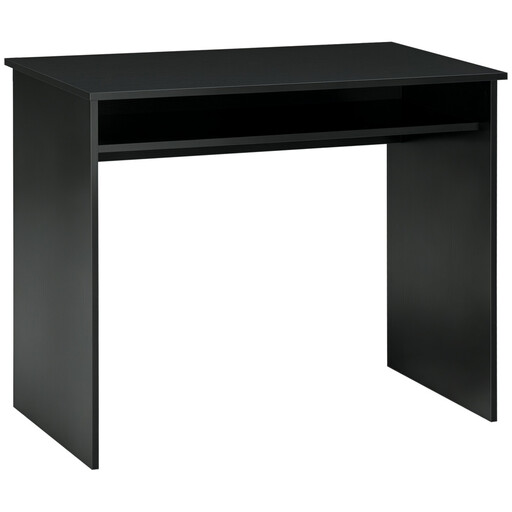
Why It Stands Out: This desk cleverly combines a compact design with practical storage. The built-in under-table shelf provides easy-to-reach space for books, documents or a keyboard when not in use, making it a highly efficient piece of furniture.
Pros:
Who is it for?
A great desk is the centrepiece of your office, but other tools can elevate your productivity even further. For brainstorming, planning projects or simply jotting down reminders, a whiteboard is an invaluable asset.
To complete your productive setup, consider exploring our range of Office Whiteboards for visual planning and organisation.
Start by measuring your available space. Then, consider your daily tasks to determine the functionality you need—do you require a large surface, adjustable height or built-in storage? Finally, choose a style and material that complements your home's decor and fits your budget.
For many people, yes. A height adjustable desk encourages you to change posture throughout the day, which can help reduce the back pain and fatigue associated with prolonged sitting. If you spend more than a few hours at your desk each day, the ability to switch between sitting and standing can be a significant benefit for both comfort and focus.
A good starting point for a primary work from home desk is around 120 cm in width and 60 cm in depth. This provides enough space for a monitor, keyboard and some writing area. However, if you are in a smaller room, a compact desk around 80-100 cm wide can still be very effective, especially if you primarily use a laptop.