
24/7 Customer Support

Free returns

Same-day & Next-day Delivery

Quality Guaranteed

Unlock Your Welcome Offers: FREE Delivery | Up to 80% OFF | Free 30-day JoyPlus trial
Download the APP
Setting up a productive and comfortable workspace at home has become a priority for many of us across the UK. Whether you are working remotely, studying for exams or creating the ultimate gaming setup, the right home office desk is the foundation of it all. But with so many options, finding the one that fits your space, budget and daily needs can feel overwhelming.
This guide is designed to cut through the clutter. As a Joybuy Product Recommendation Officer, my role is to provide clear, practical advice to help you make an informed choice. We will explore key factors to consider and highlight a few recommended options that cater to different requirements, from a compact study desk for a bedroom corner to a large office desk for a dedicated workspace.
Before you start browsing, a little planning can ensure you find a desk that you will be happy with for years to come. Here are a few key considerations.
The most important step is to measure the area where your desk will go. Use a tape measure to determine the maximum width and depth you can accommodate. Remember to account for chair space, legroom and clearance for opening drawers or doors. If you are working in a smaller flat or a multi-purpose room, a small computer desk might be the most practical solution. Conversely, if you use multiple monitors or need space for physical documents, a large office desk will be essential for an organised workflow.
Think about how you use your desk. A traditional, fixed-height computer desk is a straightforward and often more affordable choice. However, if you spend many hours at your screen, an electric standing desk could be a valuable addition to your setup. These models allow you to easily change your posture throughout the day. An adjustable height desk can help you find the perfect ergonomic position whether you are sitting or standing, which many people find enhances their comfort and focus.
Your desk is a significant piece of furniture, so its appearance matters. A modern desk with clean lines and a neutral colour palette can blend seamlessly into contemporary interiors. Consider the materials as well. A combination of particleboard and a steel frame offers a good balance of style, durability and value. Always check the product’s maximum weight capacity to ensure it can safely support your computer, monitors and any other equipment you plan to use.
Based on common user needs and popular features, here are three distinct options to consider for your home workspace.
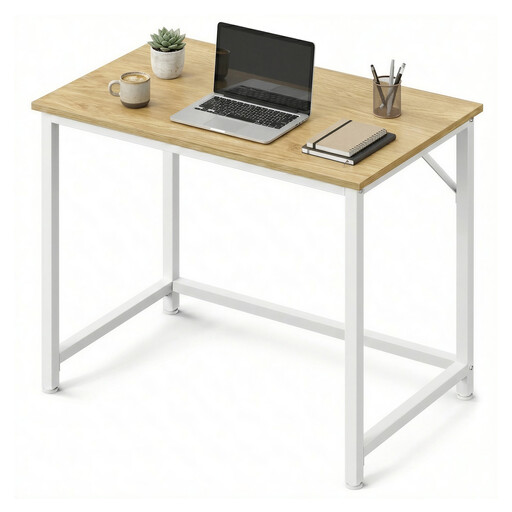
Why It Stands Out: This desk’s strength lies in its simplicity and efficiency. Its compact 80 x 50 cm surface is perfectly suited for tight spaces, making it an excellent choice for bedrooms, student accommodation or small flats where a dedicated office isn't possible.
Pros:
Who is it for?: This is a great option for students, remote workers with a simple laptop setup or anyone needing a functional and stylish small computer desk for light to moderate daily use.

Why It Stands Out: This electric standing desk brings ergonomic flexibility to your home office. With a quiet motor and memory height settings, it allows you to effortlessly transition between sitting and standing, promoting better posture and comfort during long work sessions.
Pros:
Who is it for?: Professionals working from home full-time, students who spend long hours studying and anyone looking to invest in a more ergonomic and dynamic workspace.
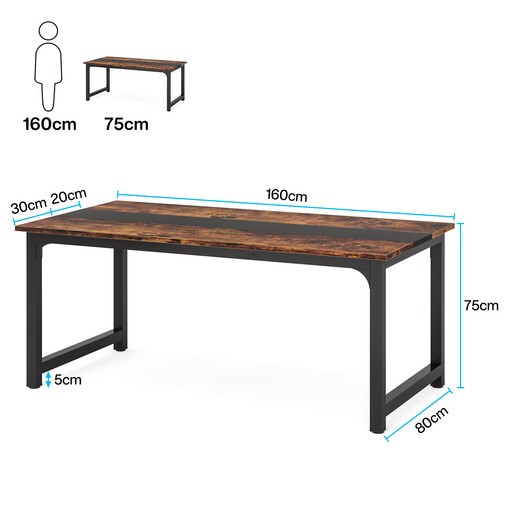
Why It Stands Out: For those who need maximum space, this large office desk delivers. Its expansive 160 x 80 cm surface can comfortably accommodate multiple monitors, a printer and other peripherals, making it an ideal command centre for demanding work or gaming.
Pros:
Who is it for?: This desk is well-suited for power users such as programmers, designers and avid gamers who require a robust and spacious gaming desk or workstation.
If these selections are not quite what you are looking for, there are many other styles and sizes available. From specialised workstations to different colour finishes, you can find a desk that perfectly matches your specific needs.
Explore our full range of studio desks to see more.
Start by measuring your available floor space. A good rule of thumb is to leave at least 90 cm of space behind the desk for your chair. For depth, a minimum of 50-60 cm is recommended to keep your monitor at a comfortable viewing distance. For width, consider what you will place on it—a simple laptop setup may only need 80-100 cm, while a dual-monitor setup will likely require 120 cm or more.
Many users find that an adjustable height desk is a worthwhile addition. The ability to alternate between sitting and standing can help reduce the discomfort associated with a sedentary posture. It encourages movement and allows you to find the most comfortable position for different tasks. While it is a personal preference, it is a feature that many remote workers now consider essential for their well-being.
A desk depth of 60 cm to 80 cm is generally considered ideal for computer use. This provides enough space to place your monitor at a comfortable and healthy viewing distance (roughly an arm's length away) while still leaving room for a keyboard, mouse and other items without feeling cramped. For larger monitors or multi-monitor setups, a deeper desk of 80 cm is often preferred.