
24/7 Customer Support

Free returns

Same-day & Next-day Delivery

Quality Guaranteed

Unlock Your Welcome Offers: FREE Delivery | Up to 80% OFF | Free 30-day JoyPlus trial
Download the APP
Creating a productive and comfortable workspace at home starts with a single, crucial piece of furniture: the desk. It’s the foundation of your daily routine, whether you're working remotely, studying for exams or managing household admin. But with so many options available, finding the right one can feel overwhelming.
This guide is designed to help you navigate the choices. We'll outline what to look for in a quality home office desk and share a few of our top recommendations that balance style, function and value.
Before you start browsing, considering a few key factors will help you narrow down the options and find a desk that truly fits your needs.
The most important step is to measure the area where your desk will go. Note the available width, depth and height, and remember to account for chair space and room to walk around. A compact computer desk for home is ideal for a small bedroom or alcove, while a dedicated study might accommodate a larger, more expansive surface. Think about what you'll place on it—a single laptop, or multiple monitors and paperwork? This will determine the surface area you require.
A tidy desk can lead to a tidy mind. A modern desk with storage is essential for keeping your workspace organised and free of clutter. Consider what you need to store. A study desk with drawers is perfect for tucking away stationery, notebooks and cables. Models with built-in shelves or cupboards offer space for files, books or even a printer, helping you maintain a clean and efficient work environment.
Your desk should complement your home's existing decor. A classic wooden writing desk can add a sense of warmth and tradition to a room. For a more contemporary look, designs that mix materials like wood-effect finishes and metal frames offer a clean, industrial aesthetic. Consider the colour and finish—a light oak or white can make a space feel brighter, while a darker walnut or rustic brown adds a sophisticated touch.
Here are a few standout options that cater to different needs and styles, selected for their design, functionality and construction.
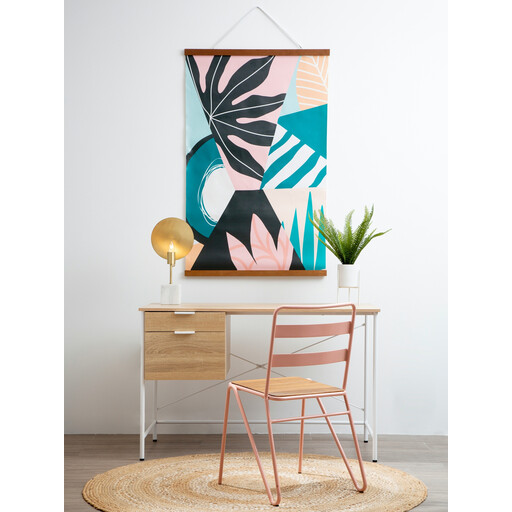
Why It Stands Out: The Bradury desk strikes an excellent balance between minimalist design and practical function. Its soft industrial style, achieved by combining a clean white and oak-effect finish with a powder-coated metal frame, is versatile enough for many modern interiors. The crossbar design at the back not only adds a visual detail but also enhances the desk's stability.
Pros:
Who is it for? This desk is a great fit for anyone seeking a stylish and functional workspace with light storage. It's particularly well-suited for home offices, studies or even as a feature piece in a living area.

Why It Stands Out: This Homcom desk is a clever solution for smaller spaces. Its two-tier design features a main desktop plus a raised rear shelf, allowing you to maximise vertical storage without taking up a large footprint. The rustic brown finish and simple metal frame give it a clean, modern look that blends easily into various room styles.
Pros:
Who is it for? This is an excellent choice for students, remote workers in flats or shared houses, or anyone needing a compact and organised workstation.
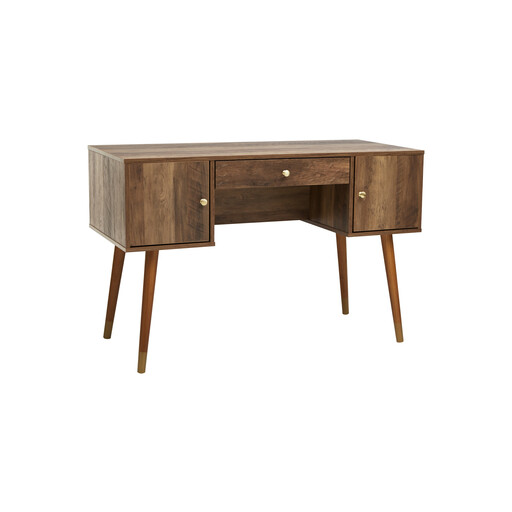
Why It Stands Out: For those who require serious storage, the Frida desk delivers. It combines a spacious work surface with a substantial storage unit, featuring one drawer and two doors. The design, with its high-gloss wood-effect finish and angular wooden legs, brings a touch of mid-century charm to any modern workspace.
Pros:
Who is it for? This desk is perfect for professionals working from home who need to keep files, equipment and supplies organised and hidden away. It serves as both a functional desk and a stylish storage cabinet.
If these specific models aren't quite what you're looking for, don't worry. Every workspace is unique and the right desk is out there. Whether you need a simple surface for occasional use or a different configuration altogether, you can explore our wider collection of reading tables and other desk styles to find your perfect match.
1. What is a good size for a home office desk? A comfortable desk depth is typically between 50-70 cm, which gives you enough room for a laptop or monitor while leaving space for a keyboard and notebook. A width of 100-120 cm is usually sufficient for a single-monitor setup, but if you use multiple screens, consider a width of 140 cm or more. Always measure your available space first.
2. How can I keep my desk organised? The most effective way is to choose a desk with built-in storage, such as a study desk with drawers or shelves. This helps you assign a home for everything. For items that need to stay on the desktop, use organisers like pen pots, file holders and trays to keep clutter to a minimum.
3. What is the difference between a writing desk and a computer desk? Traditionally, a wooden writing desk is a simpler, more elegant piece with a flat surface and often includes a few small drawers for stationery. A computer desk for home is typically designed with more functional considerations, such as greater depth for monitors, grommets for cable management and a sturdier build to support electronic equipment. However, many modern designs now blend these features, offering both style and practicality.