What matters when choosing
Start with the room’s measured humidity, then decide which operating approach and upkeep routine fit your workspace.
Ultrasonic humidifier
Consider it: If adjustable mist, tank capacity and desk-side convenience are your priorities.
Allow for: Cleaning and water-use instructions, plus a way to monitor humidity so mist output does not run unchecked.
Evaporative humidifier
Consider it: If you prefer moisture added through evaporation and find a model whose controls and stated coverage suit the office.
Allow for: Filter or wick care and replacement; check the schedule for the exact model.
Purifier-humidifier
Consider it: If you separately want air filtration as well as humidification.
Allow for: Filter care and model-specific cleaning; filtration does not replace fresh-air ventilation.
| Concern |
What to check |
Who this matters to |
| Dry-air comfort |
Measure relative humidity before buying; compare the model’s stated room coverage with the office. |
If heated air feels dry during screen-heavy work, I want to address the room conditions without treating a humidifier as a cure for eye symptoms. Around 36% of consumers put dry-air comfort first. |
| Quiet work and refills |
Compare stated noise levels at usable settings, tank size and the conditions attached to runtime claims. |
During calls, I need an appliance that will not distract me or demand frequent attention. For around 29% of consumers, uninterrupted work is the primary concern. |
| Humidity and upkeep |
Check for a humidistat or use a separate hygrometer; review cleaning steps and any compatible filters or wicks. |
I would rather keep moisture under control and know what regular care involves than run a humidifier continuously. Around 21% of consumers chiefly prioritise control and upkeep. |
| Space and air treatment |
Check coverage against room size and ventilation; consider filtration only if you also need that function. |
My office is larger, or I have a separate reason to want air filtration, so a desk-focused unit may not meet my needs. Larger-space or combined-air-treatment needs come first for around 14% of consumers. |
Joybuy humidifiers
These humidifiers offer different tank sizes and controls for adding moisture to a home office. Compare each listing’s stated features with your room and work routine; check humidity separately if you need measured control.
 No image available
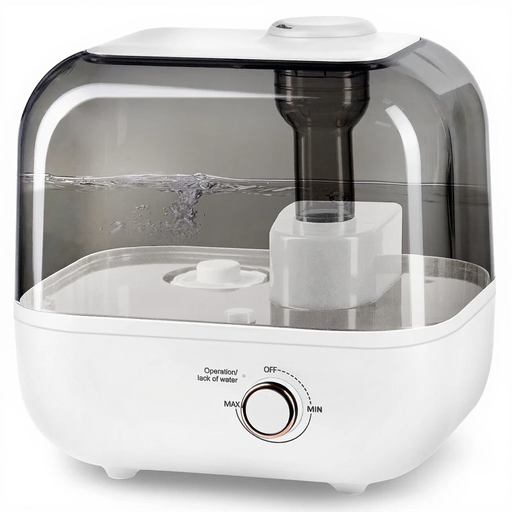
Bear 5L Top-Fill Humidifier, White
Consider this model if tank access and a stated low noise level matter near your desk.
The product name specifies a 5 L tank, 35-hour runtime, 28 dB operation and an adjustable 360° nozzle. Check the runtime conditions, room coverage and humidity-control options against your setup.
View on Joybuy
 No image available
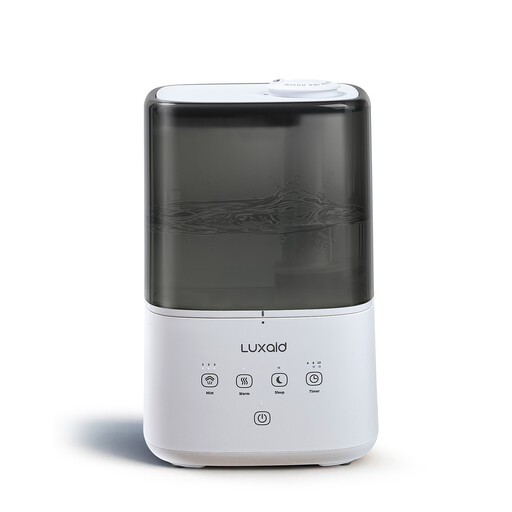
Luxaid 4.5L Cool and Warm Mist Humidifier
Consider this model if selectable cool or warm mist and a timer suit your work routine.
The product name specifies a 4.5 L top-fill tank, 4-, 8- and 12-hour timer options, a stated 20 dB sleep mode and coverage up to 505 ft². Check whether its coverage and humidity-control options suit your office.
View on Joybuy
 No image available
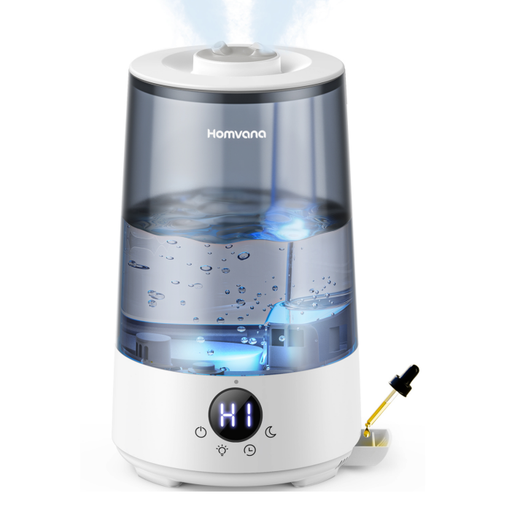
Homvana H101 3.6L Humidifier, Grey
Consider this top-fill model if its stated noise level is relevant to a desk-side setup.
The product name specifies a 3.6 L tank, 16 dB operation, a 360° cool-mist outlet and a seven-colour night light. Confirm the refill interval for the exact variant before relying on a runtime claim.
View on Joybuy
 No image available
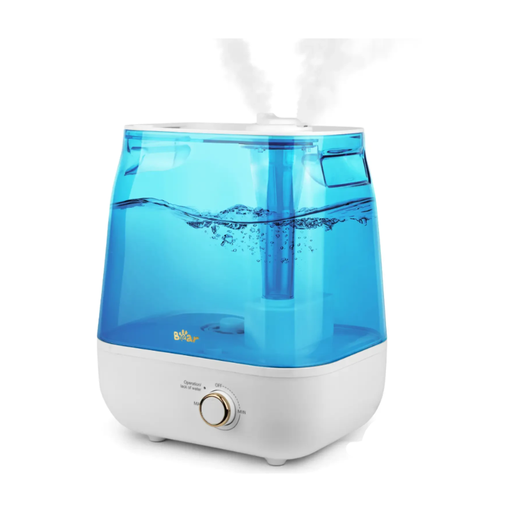
Bear 6L Top-Fill Humidifier
Consider this model if you want a larger tank and adjustable mist output for routine office use.
The product name specifies a 6 L tank, 28 dB operation, a 360° nozzle and automatic shut-off. Check room coverage and the expected refill interval for the setting you plan to use.
View on Joybuy
Common questions
Do I need a humidifier if my eyes feel dry while I work?
Not necessarily: check whether the room air is dry and consider screen habits too. The NHS lists long screen sessions and heated or air-conditioned environments among dry-eye factors, and includes preventing air from getting dry among self-care measures. Speak to an optician or GP if symptoms persist, and seek urgent help for painful redness or changes to your vision.
What humidity should I aim for in a heated office?
Use a hygrometer rather than running a humidifier at maximum output. Dorset Council describes around 40–55% relative humidity as normally comfortable in an occupied home and warns that levels regularly above 60% increase condensation and mould risk. That is household guidance, not a setting guaranteed to suit every room.
Can a humidifier replace ventilation?
No. A humidifier adds moisture but does not bring fresh air into the office. The Health and Safety Executive advises using windows, doors, vents or suitable mechanical systems to improve ventilation; investigate existing damp or condensation before adding moisture.
What upkeep should I check for an evaporative model?
Check the exact filter or wick part number, replacement schedule and cleaning instructions. Philips says the filters covered by its humidifier support guidance should usually be replaced when alerted, normally around every three months; that schedule should not be assumed for every evaporative model.
What electrical-safety details should I check before buying?
For a humidifier intended for use in Great Britain, check that the seller is identifiable and the listing shows appropriate markings, manufacturer details, instructions and warnings. GOV.UK advises checking these product details; if a particular model concerns you, consult its product safety alerts and recalls service.


