Regular reading-list printer
If you often print multi-page A4 lists, automatic two-sided printing, paper capacity and your choice of ink system can affect how often you need to reload or replenish the printer.


For frequent multi-page A4 reading lists, look for automatic duplex printing, then choose an ink system that suits how often you print. A compact cartridge printer can suit occasional use and a small desk; a refillable tank is worth considering for repeated printing, while a higher-capacity multifunction printer makes more sense if scanning, copying or handling document batches is also part of your routine.
If you often print multi-page A4 lists, automatic two-sided printing, paper capacity and your choice of ink system can affect how often you need to reload or replenish the printer.
If you print lists infrequently from a laptop or phone, check the printer’s dimensions and device compatibility before paying for capacity you may rarely use.
If reading lists sit alongside multi-page scanning or copying, an automatic document feeder and a larger paper supply may be more useful than a basic all-in-one printer.
Decide whether the printer is mainly for occasional lists, repeated printing or a broader document workflow. Then check the paper and device requirements that apply to your setup.
Choose when: You print lists occasionally and want to keep the printer’s footprint modest.
Trade-off: Cartridge replacement matters more as your printing volume grows.
Choose when: You expect repeated multi-page printing and will make use of the included ink supply.
Trade-off: A larger stated ink yield does not, by itself, establish your eventual running cost.
Choose when: Reading lists are only part of regular scanning, copying or batch document work.
Trade-off: Extra document-handling features may see little use if you only print occasional lists.
| Concern | What to check | Who this matters to |
|---|---|---|
| Ink and refills | Compare compatible cartridges or bottles and their stated yield conditions against how many pages you expect to print. | If I print lists repeatedly, I want to plan for ink replenishment without frequent interruptions. Around 39% of consumers put ink and refill planning first. |
| Desk space and occasional use | Check dimensions with trays in use and whether automatic duplex covers your intended paper. | When I print only now and then, I would rather leave room on my desk than make capacity my main priority. For around 23% of consumers, space and occasional use come first. |
| Document handling | Decide whether you need an automatic document feeder for batch scanning or copying, then check paper capacity. | If I also scan or copy several sheets at a time, handling those documents matters beyond printing the list itself. That is the primary concern for around 23% of consumers. |
| Device setup | Confirm support for your devices, home network and preferred printing connection. | I may send a list from a phone as well as a computer, so I need a connection that works with both. Around 15% of consumers prioritise device setup. |
Automatic two-sided printing can have media restrictions. Canon specifies A4/LTR plain paper for automatic duplex on the PIXMA TS6550i; that does not establish support for other paper types.
Check the exact model’s duplex paper-size and media specifications against the sheets you intend to use.
A cartridge printer may suit occasional lists, whereas a refillable tank’s larger stated ink supply becomes more relevant with repeated printing. Manufacturer yield figures depend on their test conditions.
Compare compatible consumables and their yield bases with your expected monthly pages before choosing between the two routes.
An automatic document feeder helps with scanning or copying batches, but it is not needed to print a reading list stored on your computer.
If lists are your main task, compare duplex printing and paper handling before making an ADF a requirement.
EcoTank models offer a refillable-ink route for repeated home-office printing.
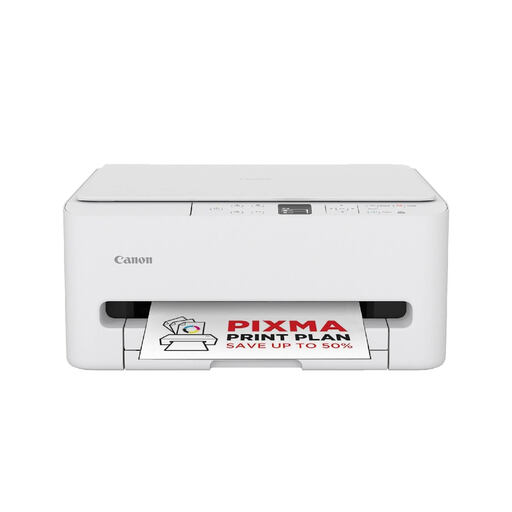
The PIXMA TS6550i illustrates the compact cartridge route for occasional lists and mobile printing.
Smart Tank models provide another refillable-ink route for a home office.
The MFC-J4540DW represents a document-handling route when reading lists are one of several office tasks.
These choices cover a compact cartridge model for occasional lists and a model to consider for a broader home-office document workflow. For either printer, check that its paper and connection options suit your setup.
 No image available
Consider this model if reading lists are part of more regular home-office document work. Before choosing it, confirm A4 plain-paper duplex support and the document-handling and ink options you need.
 No image available
For occasional reading lists where desk space matters, this compact cartridge model is worth considering.
Canon specifies a 100-sheet cassette and automatic duplex printing on A4/LTR plain paper. Check compatible cartridges if you expect to print frequently.
Automatic duplex is useful if you regularly print multi-page lists and do not want to turn sheets by hand. Check the paper restriction on the exact model: Canon specifies A4/LTR plain paper for automatic duplex on the PIXMA TS6550i.
Consider a refillable tank when you print lists often enough to make its included ink supply useful. Epson states that an ET-2950 bottle set can print up to 8,500 black pages under its conditions, but compare compatible consumables and your own page coverage rather than treating a stated yield as your expected running cost.
An automatic document feeder is not needed to print a digital reading list. It becomes useful if you also scan or copy several paper sheets at once; Brother specifies a 20-sheet feeder on the MFC-J4540DW.
Check that the printer’s mobile-printing method works with your phone and home network. For example, Canon lists mobile printing for the PIXMA TS6550i, while Epson lists wireless connectivity and its Smart Panel app for the ET-2950; the available setup options still need to match your device.
Check your local authority’s or retailer’s current electrical recycling options before disposing of it. GOV.UK identifies the UK Waste Electrical and Electronic Equipment Regulations 2013, as amended, as the framework underpinning recovery, reuse and recycling of electrical equipment.