Shared-space cue writers
If you write near other people or take calls at the same desk, the sound of frequent typing may matter as much as how the keys feel.


For writing sound-effect cues in a shared home office, start with a low-profile or quiet-switch keyboard if typing noise is your main concern; prioritise programmable keys if repeated labels and editing commands take more of your time. For long sessions, consider the whole workstation rather than relying on keyboard shape alone, and check the exact UK layout, switch variant and software compatibility before buying.
If you write near other people or take calls at the same desk, the sound of frequent typing may matter as much as how the keys feel.
If you repeatedly enter cue labels, formatting or editing commands, remappable keys and macros may be useful—provided they work with your software and you are willing to configure them.
If you type for sustained periods, consider keyboard shape and position alongside the rest of your desk setup and your own comfort requirements. The Health and Safety Executive advises considering the whole workstation.
Decide which part of cue writing causes the most friction, then check the exact keyboard variant against that priority.
| Concern | What to check | Who this matters to |
|---|---|---|
| Repeated cues and commands | Check remapping or macro support and whether the configuration software works with your operating system and cue-writing application. | If I enter the same labels and editing commands throughout a session, I want fewer repeated keystrokes. Around 31% of consumers put shortcut efficiency first. |
| Typing disturbance | Check the selected switch variant; a mechanical product family can include options with different sounds. | When I share a room or take calls, I need typing that does not distract the people nearby. For around 25% of consumers, reducing that disturbance is the primary concern. |
| Long-session comfort | Check keyboard height and footprint against your desk and mouse position, and assess the wider workstation if discomfort is an issue. | During extended writing sessions, I need a setup I can use comfortably, not just an ergonomic label on a keyboard. Sustained-session comfort comes first for around 25% of consumers. |
| UK layout and compatibility | Confirm the exact key legends and physical layout, then check the connection method and operating-system support. | If I use UK punctuation frequently or move between devices, unfamiliar keys or an incompatible connection can interrupt my work. Around 19% of consumers prioritise avoiding that mismatch. |
Switch choice changes sound and feel. Logitech lists Tactile Quiet, Clicky and Linear versions of MX Mechanical, while Razer describes quiet features for the specific Pro Type Ultra model.
Check the switch in the variant you are buying rather than relying on the product-family name; check the applicable return terms if sound is decisive for your space.
A non-UK physical layout or unfamiliar legends can make repeated punctuation entry less familiar, even when the model name matches the keyboard you wanted.
Check that the selected variant specifies English UK QWERTY or UK-ISO where you need it, and inspect its pictured keys.
A split or arched keyboard changes hand position, but desk, chair, display, mouse position and work activity also affect workstation fit. The Health and Safety Executive advises assessing the whole workstation.
Review the complete setup rather than buying on an ergonomic claim alone; seek an appropriate workstation assessment where it applies.
Remapping depends on the particular keyboard, its configuration software and the commands available in your application.
List the cue actions you want to shorten, then check software compatibility and how those actions can be assigned before buying.
Low-profile productivity keyboards and low-profile mechanical variants for familiar office layouts and configurable workflows.
UK-ISO mechanical models for writers who want programmable layouts and more hardware customisation.
Productivity-oriented mechanical and split keyboards with different approaches to typing feel and controls.
These keyboards offer different starting points for a cue-writing desk: a split layout, compact mechanical formats, a full-size mechanical format and a keyboard-and-mouse bundle. Compare the stated layout and configuration with your main priority; a product name alone cannot settle how quiet or comfortable it will be for you.
 Image unavailable
Consider the split layout if keyboard shape is a priority for long cue-writing sessions, while checking how it fits your whole workstation.
 Image unavailable
This compact option may suit a desk where space for the mouse matters, but check the exact keys and typing sound for your shared workspace.
 Image unavailable
Consider this full-size format if numeric entry matters alongside cue text, but weigh the stated US layout against your punctuation habits.
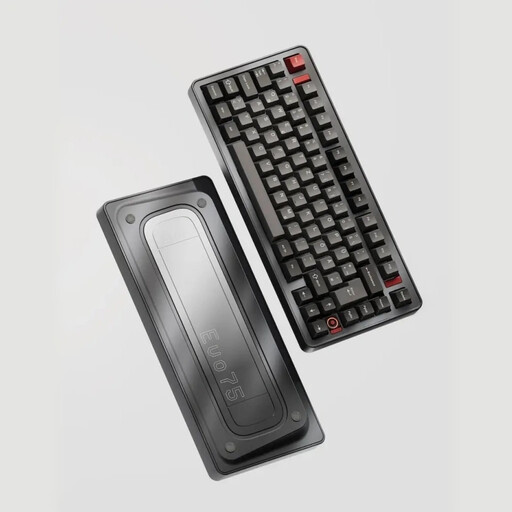 Image unavailable
This compact mechanical format is worth considering for a shortcut-focused desk if you can accommodate its US layout.
 Image unavailable
This keyboard-and-mouse bundle may suit a fixed home-office desk if you want both devices, but its stated US layout may affect familiar UK punctuation entry.
Choose a low-profile or quiet-switch option when disturbing others is your main concern; choose a mechanical format when its feel or customisation matters more. Mechanical keyboards do not all sound alike: Logitech, for example, lists Tactile Quiet, Clicky and Linear MX Mechanical variants, so check the switch in the exact configuration.
A number pad is useful to consider if you frequently enter numeric references or timestamps; a compact format may suit you better if desk width and mouse placement matter more. Check the layout of the exact model rather than assuming every variant in a keyboard family has the same keys.
Choose a shape and height that fit your workstation, not just a keyboard labelled ergonomic. The Health and Safety Executive advises considering equipment, furniture, work conditions, the work being done and individual requirements when assessing a display-screen workstation.
For workers who use display-screen equipment daily for continuous periods of an hour or more as part of normal work, the Health and Safety Executive says the UK Display Screen Equipment Regulations apply and employers must assess the workstation, including for home working. That duty concerns the workstation and identified risks; it does not require every private purchaser to choose a particular keyboard.
Check that the exact variant specifies English UK QWERTY or UK-ISO if that is the layout you need. Inspect the pictured physical keys and legends, then check operating-system support and any supplied keycaps if you work across devices.