Fixed-desk document workers
If you spend most workdays reading documents, handling messages or keeping several windows visible, consider the usable screen area alongside the space the monitor and its stand will take on your desk.


For regular document and communications work at one home desk, start with a desktop monitor that fits your space and connects to your laptop. Choose a portable second screen when it needs to travel with you, or a cable or adapter when you already have a suitable display. Whichever route you take, check video output, cable compatibility and any laptop-charging requirement before buying.
If you spend most workdays reading documents, handling messages or keeping several windows visible, consider the usable screen area alongside the space the monitor and its stand will take on your desk.
If you want one USB-C connection for your display and laptop power, check the laptop port, monitor power-delivery rating and cable. A USB-C connector alone does not establish that the whole combination will work.
If you move between home and temporary workspaces, a portable display may be easier to take along than a fixed monitor. Its smaller screen area and connection requirements remain part of the choice.
Choose it when: Most of your work happens at one desk and you want a permanent screen for documents and multiple windows.
Allow for: Desk space, stand position and a separate laptop charger if the monitor’s power delivery does not meet your laptop’s needs.
Choose it when: The second screen needs to move between workspaces with your laptop.
Allow for: Less screen area than a typical desktop display and model-specific video and power requirements. Lenovo specifies DP1.2 Alt Mode and PD2.0 support for the ThinkVision M14.
Choose it when: An existing monitor suits your desk but its input does not match your laptop’s output.
Allow for: An extra compatibility check: an adapter cannot give a laptop video-output capability its port does not have.
| Concern | What to check | Who this matters to |
|---|---|---|
| Document workspace | Compare screen size and native resolution with the available desk space. | If documents and several work windows are my daily priority, I want enough usable screen area without crowding the desk. Around 31% of consumers put document workspace first. |
| Placement and adjustment | Check the supplied stand’s adjustments and footprint; check mounting compatibility if you plan to use an arm. | On a shallow or shared desk, I need to position the display where I can use it comfortably. Desk placement is the main concern for around 25% of consumers. |
| Laptop connection and charging | Confirm video-output support, the required cable and whether monitor power delivery meets your laptop’s charging needs. | I want to connect my laptop without discovering that video or charging needs another component. Around 25% of consumers prioritise connection and charging compatibility. |
| Portability | Check carrying size, stand arrangement and the laptop’s supported video and power connections. | When my workspace changes, I need the second screen to travel and set up with my laptop. Portability comes first for around 19% of consumers. |
A matching connector shape is not enough: Microsoft notes that USB-C cables do not all support the same features, while portable displays can require specific video and power modes.
Compare the laptop port with the monitor’s stated requirements and check the cable needed for the functions you intend to use.
A different cable, adapter or separate laptop charger may be needed if the planned connection cannot perform every required function.
Manufacturer specifications differ: LG lists up to 15W power delivery for the 27U631A-B, while BenQ lists 65W for the GW2790QT. Neither figure establishes compatibility with every laptop.
Compare the exact monitor’s rating with your laptop manufacturer’s charging guidance before planning a one-cable desk setup.
A portable screen makes a different space-versus-mobility trade-off from a fixed monitor. For example, Lenovo’s ThinkVision M14 is a 14-inch FHD portable display, while LG’s 27U631A-B is a 27-inch QHD desktop model.
If the display will stay at one desk, compare fixed-monitor dimensions and placement first. If it must travel, check the portable model’s size, stand and laptop compatibility.
Dell UK lists fixed-desk USB-C hub monitors, including the 27-inch FHD P2726HE and 34.1-inch WQHD P3425WE.
LG UK lists the fixed-desk 27U631A-B with a 27-inch QHD (2560 × 1440) display and USB-C connection.
BenQ lists the GW2790QT as a 27-inch QHD USB-C monitor with a USB hub and an adjustable stand.
Lenovo’s ThinkVision range includes both fixed-desk docking displays and portable screens such as the 14-inch FHD M14.
These choices include fixed-desk monitors in several sizes and a ZenScreen model for a workspace where the display may need repositioning. Decide which setup fits your desk and laptop rather than treating every USB-C or screen-size option as interchangeable.
 No image available
Consider this model if your work display needs to move between positions in a changing workspace.
The product name identifies an IPS display and USB-C connection. Check your laptop’s USB-C video and charging capabilities, and confirm the monitor’s weight if you intend to carry it regularly.
 No image available
Consider this fixed-desk model when a 22-inch screen fits the space you have set aside for work.
It is identified as a Full HD monitor. Check your laptop’s video output and the cable required for the connection you plan to use.
 No image available
Consider this fixed-desk screen if a 24-inch format suits your document-work space.
The product name specifies FHD resolution. Check its stand positioning and the video connection needed for your laptop.
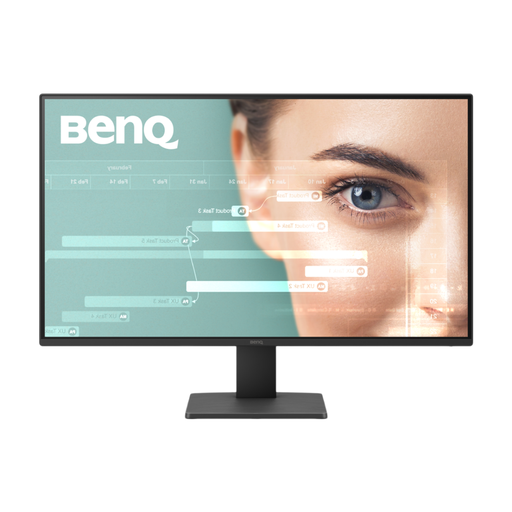 No image available
Consider this fixed-desk display if you have room for a 27-inch screen.
Its product name specifies IPS, Full HD and 100Hz. Check the stand position and whether your laptop and cable support the connection you intend to use.
 No image available
Consider this fixed-desk option if your workspace can accommodate a 31.5-inch display.
The product name specifies 4K UHD, IPS and USB-C. Before planning to charge a laptop through the monitor, check its power-delivery rating against the laptop’s requirements.
No: the laptop port, monitor and cable must support the functions you want. LG specifies up to 15W power delivery for its 27U631A-B, while BenQ specifies 65W for the GW2790QT, so compare the exact monitor’s rating with your laptop’s charging needs.
Yes, if the laptop and monitor support the required video and power modes. Lenovo specifies that its ThinkVision M14 requires a compatible notebook USB-C port supporting DP1.2 Alt Mode and PD2.0; check your laptop’s specification before relying on a one-cable setup.
Check the display setting and cable connection first. Microsoft also advises checking docks, dongles and adapters for conflicts; trying another suitable cable or video output can help narrow down the cause.