What matters when choosing?
For document work, decide whether you need only an extra screen or also want the monitor connection to handle charging and desk peripherals. Then check that the display fits both your computer and your working space.
HDMI or DisplayPort monitor
Choose when: You need an extra screen and have a matching, supported video output on the computer.
Trade-off: The laptop may still need its own charger, and mismatched ports may call for an adapter.
USB-C monitor
Choose when: A compatible laptop can send video over USB-C and the monitor’s documented charging output suits its power needs.
Trade-off: As Microsoft Support notes, a USB-C port or cable does not necessarily support every display function.
Docking monitor or dock
Choose when: The desk also needs connected peripherals, wired networking or additional display connections.
Trade-off: Extra outputs cannot override the computer’s supported external-display count; check delivered charging power too.
| Concern |
What to check |
Who this matters to |
| Document workspace |
Measure the desk and compare screen size, native resolution and stand adjustment with the space available. |
When documents and browser windows crowd my laptop screen, I want room to keep them in view. Around 42% of consumers put usable document space first. |
| Computer connection |
Match the computer’s supported video output to the monitor input, including any required adapter and the supported number of displays. |
If I regularly connect and disconnect my laptop, I need the intended screen arrangement to work with its ports and display limits. Connection compatibility comes first for around 33% of consumers. |
| One-cable desk setup |
For USB-C, confirm video and cable support, delivered charging power and the peripheral ports you intend to use. |
At a regular laptop desk, I would rather connect the display and needed peripherals without managing several separate leads. Roughly 25% of consumers make that desk connection their primary concern. |
Joybuy monitors for document work
These models offer external-screen choices for document-focused home desks, including conventional monitors and models labelled for USB-C connection. Check the exact inputs, computer compatibility and physical setup for any model you are considering.
 No image available
ASUS ZenScreen MB249C IPS USB-C Monitor
Consider this IPS model if a USB-C-labelled external screen fits your home-work setup.
Confirm that your laptop and cable support the intended USB-C video connection. If charging or a particular mounting arrangement matters, check the supplied version’s details before buying.
View on Joybuy
 No image available
Lenovo L32p-30 31.5-inch 4K UHD IPS USB-C Monitor
Consider the 31.5-inch display if your document-work desk has room for it and your computer supports the intended 4K UHD output.
Its name specifies IPS and USB-C. Confirm the USB-C video connection and any laptop-charging requirement against the exact monitor and computer specifications.
View on Joybuy
 No image available
AOC Q32V4 31.5-inch IPS Monitor
Consider this 31.5-inch model for a document-work desk with sufficient space for a larger screen.
Confirm its native resolution before choosing: the product title uses both “2K” and “Ultra HD”. Check its inputs, stand positioning and your computer’s supported output as well.
View on Joybuy
 No image available
KOORUI E2412F 24-inch FHD Business Monitor
Consider this 24-inch FHD model when choosing an external screen for everyday documents in a home workspace.
Match its inputs to your computer and check whether the supplied stand’s adjustment suits your desk and seating position.
View on Joybuy
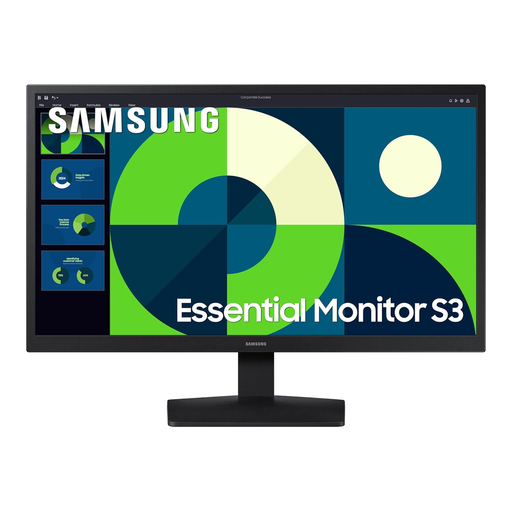 No image available
Samsung Essential S3 S31D (LS24D310EAUXXU) Monitor
Consider this external-monitor model if its screen and connections fit your document-work desk.
Check the exact inputs against your computer and confirm that the supplied stand can be positioned suitably in your workspace.
View on Joybuy
Common questions
When is an external monitor worth adding to a laptop desk?
Consider one when the laptop screen feels too restrictive for the documents, browser windows or apps you use together. Check that the monitor fits the desk and that the laptop supports the intended external display before choosing a size.
Will any USB-C laptop port work with a USB-C monitor?
No: the laptop port must support the intended video output. Microsoft Support advises checking the computer’s USB-C video capability, and the cable also needs to support the functions you plan to use.
Can one USB-C cable run a monitor and charge my laptop?
It can when the laptop, monitor and cable support the required video and power functions. Confirm the monitor’s delivered power against the laptop’s charging requirement rather than relying on a maximum wattage alone.
Will a dock or splitter give me two independent external screens?
Not automatically. Microsoft Support notes that the computer’s display hardware can limit the number of external screens and that a splitter duplicates a signal rather than creating independent displays. Check the computer model’s display support before selecting a dock.
Does a larger monitor settle the home-workstation setup?
No: screen size is only one part of the setup. The Health and Safety Executive’s home-working guidance considers equipment, furniture, working conditions and the work being done, so position the display within the wider workstation arrangement.


