Desk-based stereo listener
If playlists usually play while you work at one computer, two speakers with room between them and a suitable computer connection may matter more than portability.


Choose a powered desktop stereo pair if the speakers will stay beside your computer and you have room to position two cabinets. A larger portable Bluetooth speaker suits listeners who want to move their music between rooms, while a compact portable model makes more sense when desk space and easy storage take priority. A single portable enclosure does not replace the separated left-right placement of a desktop pair.
If playlists usually play while you work at one computer, two speakers with room between them and a suitable computer connection may matter more than portability.
If you want to use the speaker at your desk and carry it elsewhere, a larger rechargeable Bluetooth model offers a different compromise from a permanent desktop pair. Check its bass controls and whether one enclosure meets your listening needs.
If work equipment takes most of the desk, a compact speaker that you can pick up and store may be more useful than a fixed two-cabinet layout.
Decide whether the speaker will live at your desk or move around the home, then check the space, connections and listening position that choice requires.
Choose it when: You can leave two speakers beside the computer and want separated left and right channels.
Allow for: Desk space, power and cabling, plus room to adjust speaker positions.
Choose it when: You want a rechargeable speaker for dance playlists that can move beyond the office.
Allow for: A single enclosure unless you add a compatible speaker for stereo pairing.
Choose it when: Easy storage and a small desk footprint are your main priorities.
Allow for: One compact enclosure rather than a spaced desktop stereo layout.
| Concern | What to check | Who this matters to |
|---|---|---|
| Dance-track bass | Look for adjustable bass settings; if considering a fixed pair, check whether it has a subwoofer output for a possible later addition. | If bass weight is what makes a dance playlist satisfying at your usual listening level, that need will lead the choice. Around 30% of consumers would put it first. |
| Stereo and computer connection | Check desk space for two speakers and confirm that the inputs suit your computer. Cambridge Audio notes that placement can involve a compromise between bass balance and stereo image. | When music plays mainly while you work at one desk, separated channels and a straightforward computer connection may take precedence; roughly 30% of consumers would make this their primary concern. |
| Desk space and portability | Compare cabinet dimensions with the space you can spare, and decide whether the speaker will regularly be put away or moved. | If your desk needs to be cleared for work, a speaker that is easy to move or store can matter most. About 20% of consumers would prioritise that flexibility. |
| Room placement | Consider the listening position and nearby walls before choosing a larger speaker or placing two cabinets. | In a shared home, you may care more about a workable listening position at a comfortable volume than maximum output; around 20% of consumers would put placement and control first. |
One enclosure cannot occupy the two positions of a desktop pair. JBL says stereo pairing for the Charge 6 requires two Charge 6 speakers.
Choose between one-box convenience and separated placement before buying; check the exact pairing requirements if you want to add another portable speaker.
The Charge 6 stereo-pair setup requires a second compatible speaker.
JBL distinguishes the Charge 6 standard playtime claim from extra time available with Playtime Boost. Your settings and use can affect the time between charges.
Compare the standard and boosted figures separately, and leave a charging margin if you listen for long work sessions.
Cambridge Audio notes that a position favouring bass may not give the same stereo image. A pair squeezed into the only available spaces may leave little scope to adjust either.
Measure the desk and identify possible left and right positions before committing to a two-speaker system.
Audioengine describes the A2+ Gen 3 on a US-direct page; its product features do not establish the terms offered by a particular UK seller.
Before ordering a desktop system, confirm the supplied plug, warranty provider and returns process with the seller you intend to use.
The Charge 6 is JBL’s rechargeable, portable option for listeners who want to take a speaker beyond the home-office desk.
The ULT FIELD 1 is a compact portable option with a carrying strap and an ULT bass mode.
The A2+ Gen 3 is a desktop system sold as a pair, with USB-C, Bluetooth and analogue connection options.
These choices cover portable and tabletop speakers as well as a desktop-speaker option for home-office listening. Check each product’s connections, space requirements and stereo arrangement against the format you want.
 No image available
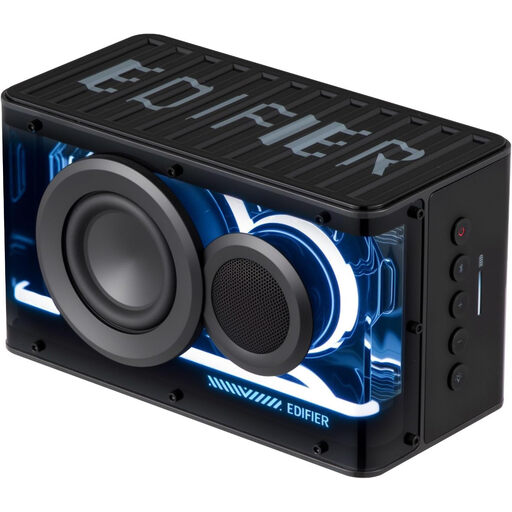
Consider this portable desktop speaker if you want Bluetooth playback without leaving a pair of cabinets on your desk.
The product title states 15 hours of playtime and Bluetooth 6.0. Check that a second QD25 is compatible if you intend to use the stated wireless stereo-pairing feature.
 No image available
Consider the M60 for a desk where a computer connection matters alongside Bluetooth playback.
The product title lists USB-C and AUX inputs and 66W RMS output. Confirm the exact speaker arrangement and power requirements with the seller before planning your desk layout.
 No image available
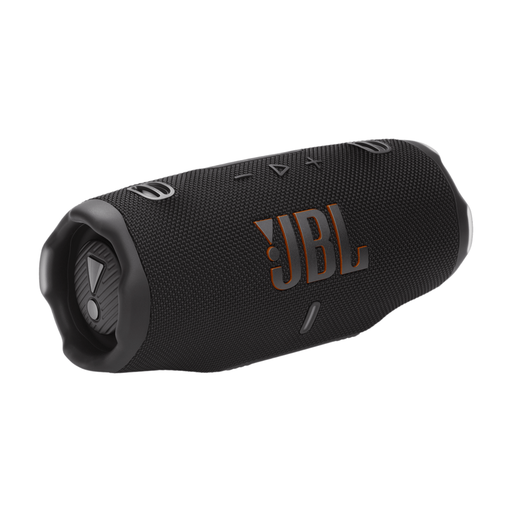
Consider the Charge 6 if you want one portable speaker for your office and other rooms.
JBL describes stereo pairing through Auracast with a second Charge 6. Confirm the applicable standard and Playtime Boost battery figures before relying on an advertised runtime.
 No image available
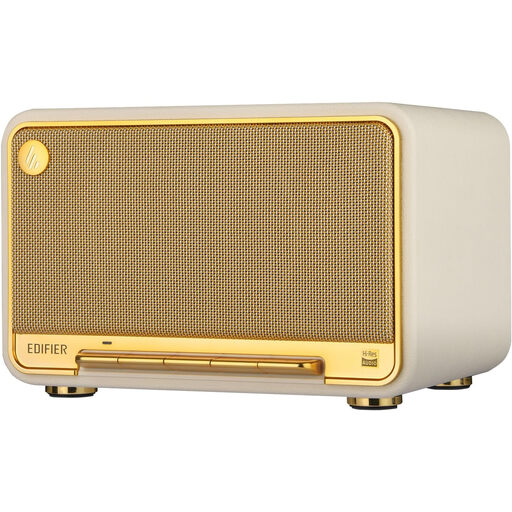
Consider this tabletop format if you want several connection options without setting out a conventional two-cabinet pair.
The product title lists a 2.1 acoustic architecture, 11 hours of playtime, Bluetooth 5.3, AirPlay 2, USB-C and AUX. Confirm its dimensions and channel arrangement if desk fit or separated stereo playback is decisive.
 No image available
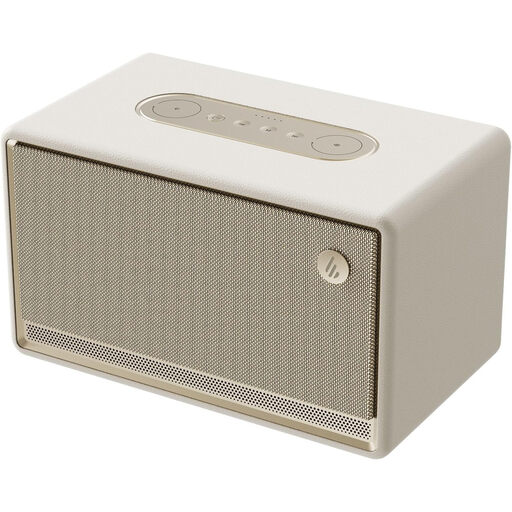
Consider the ES300 if you prefer a tabletop speaker that can also be moved from its usual office position.
The product title states Bluetooth 5.3 and 12 hours of playtime. Check its dimensions before allocating desk space, and confirm the channel arrangement if separated left-right playback matters.
Choose a desktop pair if music will mostly play beside your computer and you can position two speakers. Choose a portable speaker if moving it around the home and using battery power matter more than a permanent left-right layout.
JBL says two Charge 6 speakers can be stereo-paired through Auracast. Check the pairing requirements for the exact models you plan to buy; do not assume that any two Bluetooth speakers will work together.
Start with the two speakers and your listening position forming a triangle, then adjust them to suit the room. Cambridge Audio notes that the position giving the strongest bass may not give the clearest stereo image.
No. GOV.UK says CE marking continues to be recognised alongside or instead of UKCA marking for covered products placed on the Great Britain market, subject to the applicable requirements; neither marking describes a speaker’s sound or battery performance. Northern Ireland has different placing-on-market processes.
Check local electrical recycling arrangements and any take-back option offered by your retailer rather than putting the speaker in general waste. GOV.UK describes the waste electrical and electronic equipment framework as supporting recovery, reuse and recycling.