
24/7 Customer Support

Free returns

Same-day & Next-day Delivery

Quality Guaranteed

Unlock Your Welcome Offers: FREE Delivery | Up to 80% OFF | Free 30-day JoyPlus trial
Download the APP
Keeping an eye on your home, whether you're at work, on holiday or just in another room, offers valuable peace of mind. But with so many options on the market, choosing the right home security camera can feel overwhelming. Do you need an outdoor model? What's the difference between 2.4GHz and 5GHz WiFi? And what about storage?
This guide is designed to cut through the clutter. As the Joybuy Product Recommendation Officer, my role is to help you understand the key features that matter for UK homes. We'll explore what to look for and highlight a few practical options, so you can find a solution that fits your property and your budget.
Before adding a camera to your basket, it’s worth considering a few technical points. Thinking about these factors will help you narrow down the choices to what you actually need.
The first decision is where the camera will be placed. An outdoor security camera must be built to withstand the unpredictable British weather. Look for an IP (Ingress Protection) rating. A rating of IP66, for example, means the device is protected against powerful water jets and is dust-tight, making it suitable for mounting on an exterior wall. Indoor cameras don't require this level of weatherproofing, but they often have features tailored for interior spaces, such as a more compact design or specific functions for use as a pet camera or nanny cam.
Most modern DIY security cameras are WiFi security camera models, connecting wirelessly to your home network. Some support only the 2.4GHz band, which has a longer range, while others are dual-band, also supporting the 5GHz band for faster speeds and less interference. A 5G security camera connection can be more stable if the camera is close to your router.
For storage, you have two main options:
24/7 recording camera setup without monthly fees. You own the storage and the data.Beyond the basics, several features can significantly enhance your security setup:
security camera with colour night vision uses ambient light or small built-in spotlights to capture footage in full colour, which can be crucial for identifying details like clothing or car colour.security camera with app, allowing you to pan horizontally and tilt vertically to see a much wider area.two-way audio security camera has a built-in microphone and speaker. This lets you listen in and speak through the camera, whether you're telling a delivery driver where to leave a parcel or deterring an unwanted visitor.Based on features that offer practical solutions for UK residents, here are some standout options to consider.
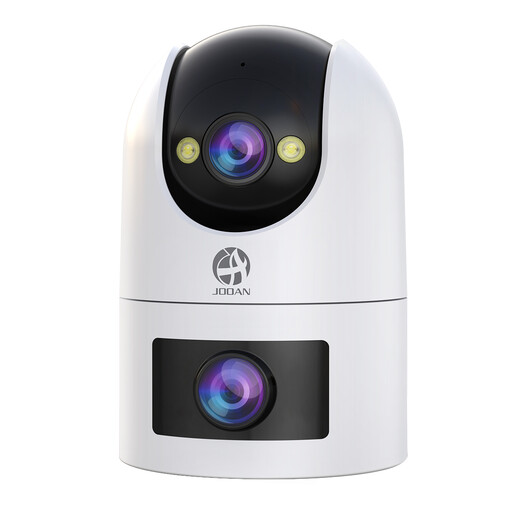

indoor security camera packed with useful features. Its PTZ capabilities allow you to scan an entire room (355° horizontal and 90° vertical) from your phone. The auto-tracking function is particularly useful, as the camera can automatically follow a moving person or pet, keeping them in the frame.pet camera or nanny cam.While a home security camera provides essential visual evidence, some situations call for different types of monitoring. For tasks like recording personal notes, lectures or meetings where video isn't necessary, a dedicated device can be more suitable. If you're exploring options for clear voice capture, you might find our selection of audio recorders helpful.
Not necessarily. Many cameras, including the ones featured here, offer local storage via a microSD card slot. This allows you to record and store footage without any ongoing fees. Subscriptions are typically for optional cloud storage, which provides an off-site backup of your videos for an added layer of security.
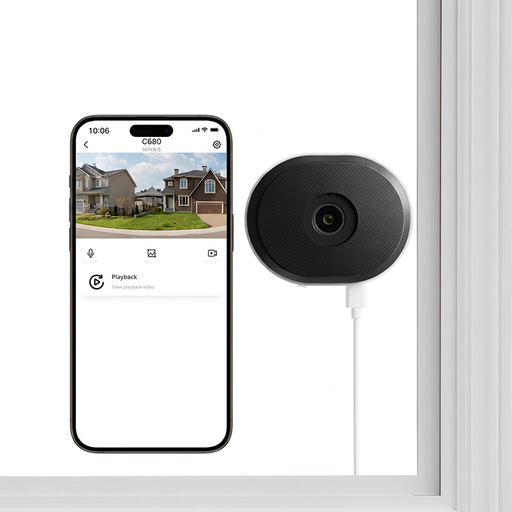
Most standard cameras cannot. Their infrared (IR) LEDs, which are used for night vision, reflect off the glass and create a bright, washed-out image. To monitor through a window effectively at night, you need a camera specifically designed for it, like the ZOSI C680, which uses anti-glare technology and a specialised lens to capture a clear picture without using IR lights.
Data usage depends on several factors: the video resolution (2K uses more than 1080p), the frame rate and whether it records continuously or only when motion is detected. When connected to your home WiFi, it won't use your mobile data allowance. You only use mobile data when you are away from home and stream live video or watch recorded clips on your smartphone app. For most users with a standard broadband plan, a few security cameras will not cause any data issues.