
24/7 Customer Support

Free returns

Same-day & Next-day Delivery

Quality Guaranteed

Unlock Your Welcome Offers: FREE Delivery | Up to 80% OFF | Free 30-day JoyPlus trial
Download the APP
Choosing home security cameras is not simply a question of buying the highest resolution. A camera may record sharp footage but still disappoint if it loses its Wi-Fi connection, requires an expensive subscription or cannot withstand the British weather. The right choice depends on where it will be installed, what you need to monitor and how much ongoing cost you are prepared to accept.
This guide explains the important specifications, highlights common buying traps and matches selected cameras to different UK households.
A wireless security camera normally refers to the network connection, not the power supply. Many Wi-Fi security cameras still require a mains adaptor and a cable. Battery-powered models avoid a permanent power cable but require charging and may use recording schedules to preserve battery life.
Before ordering, check whether the camera is:
A 2.4GHz connection generally travels further through walls, while 5GHz can offer higher bandwidth over a shorter range. A weak connection can cause delayed live viewing or missed notifications regardless of the camera’s advertised resolution.
Some cameras provide local recording through a microSD card, while others make cloud recording a paid service. “No subscription” may only apply to selected features, such as AI person detection, rather than cloud video storage.
Check:
A local storage security camera can reduce recurring costs but the card is usually sold separately and may eventually need replacing.
Standard infrared night vision usually produces monochrome footage. Colour night vision may depend on ambient light or a built-in spotlight. Performance also varies according to distance, glare, rain and the position of nearby lighting.
For an outdoor security camera, look for a stated night vision range and decide whether black-and-white footage is sufficient. For a nursery or hallway, infrared night vision can be less intrusive than a bright spotlight.
An indoor security camera is not designed for rain, condensation or freezing conditions. For outdoor installation, check the IP rating. IP66-rated cameras are protected against dust and powerful water jets but they should not be submerged. The power connection and adaptor still need to be kept dry, even when the camera housing is weather resistant.
Position an outdoor camera to cover your own entrance, garden, driveway or business premises. Avoid pointing it towards neighbours’ windows, private areas or more public space than necessary.
Resolution affects how much detail is captured but field of view is equally important. A fixed camera may provide a sharper view of one doorway, while a 360° PTZ camera can pan and tilt across a room or courtyard.
Consider:
PTZ movement does not guarantee that every direction is recorded simultaneously. If continuous coverage matters, a dual-lens or multi-camera arrangement may be more suitable.
Basic motion detection can react to shadows, branches, headlights and passing animals. AI person detection or person-and-vehicle detection may help narrow alerts but settings still need adjustment. Activity zones and sensitivity controls are particularly useful beside pavements or busy roads.
A two-way audio camera can be useful for speaking to family members, delivery drivers or pets. Check whether the audio is full duplex, push-to-talk or affected by background noise. For babies, a dedicated baby monitor with a parent unit may be more convenient than relying entirely on a mobile app.
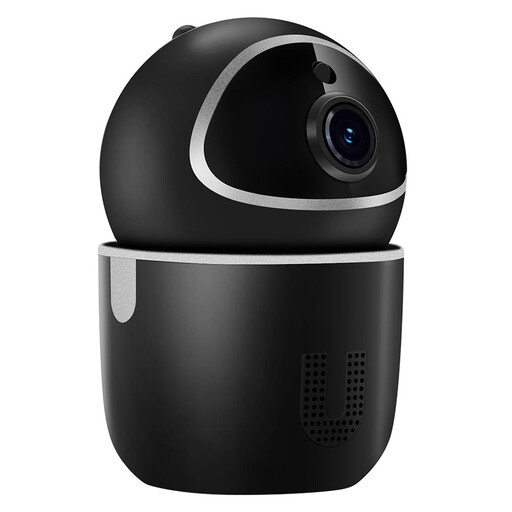
Why This Fits Their Persona: A practical indoor option for tenants, pet owners or small rooms, with plug-in setup and phone alerts without outdoor installation work.
Its stated 1080p resolution, 360° rotation and plug-and-play format make the coverage and installation requirements clear.
Two-way audio, motion detection, night vision and 360° coverage for indoor monitoring.
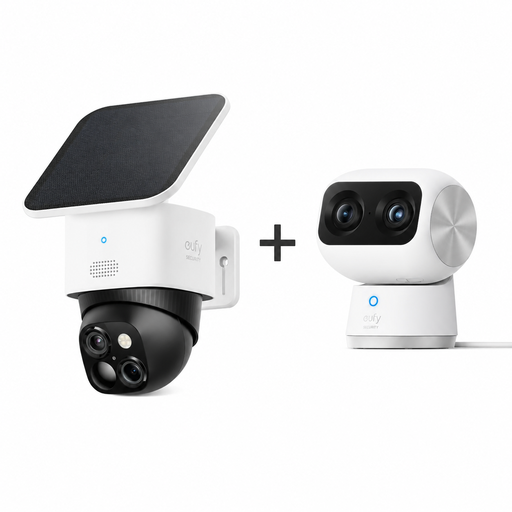
Why This Fits Their Persona: Suitable for households wanting a combined indoor and outdoor setup, including pet monitoring, garden coverage and detailed views of larger areas.
The kit separates indoor and outdoor monitoring, while the outdoor unit is described as solar-powered and wire-free. Confirm sunlight exposure and storage terms before purchase.
Up to 4K UHD indoor video, 3K outdoor video, dual-camera views, 355° movement and 8× hybrid zoom.
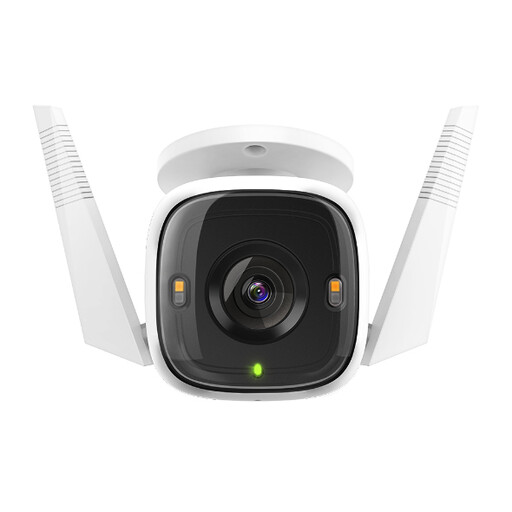
Why This Fits Their Persona: A useful choice for monitoring a driveway, garden or entrance where detail, flexible connectivity and weather resistance are priorities.
It supports local microSD recording up to 256GB as well as optional cloud storage, helping buyers choose a storage method rather than assuming one is mandatory.
2K QHD video, IP66 rating, Starlight colour night vision, Ethernet and dual-band Wi-Fi, plus person and vehicle detection.
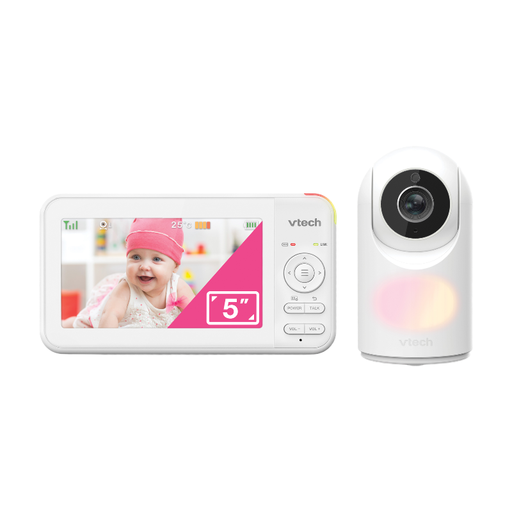
Why This Fits Their Persona: Designed specifically for nursery monitoring, with a dedicated parent unit so viewing does not depend entirely on a smartphone or home broadband connection.
It is a dedicated baby monitor rather than a general CCTV camera, with secure digital connection, infrared night vision and a parent display.
5-inch colour LCD, remote pan and tilt, 2× zoom, temperature sensor and two-way talk.
A camera can support awareness of activity but it should not replace responsible supervision of children, vulnerable people or animals.
We have compiled a complete, real-time list of products that fully satisfy these strict selection criteria and UK safety regulations.
Wi-Fi is needed for most app-connected cameras and remote viewing. Some CCTV camera systems record to a local recorder without Wi-Fi, while dedicated baby monitors such as the VTech VM5467 use a separate parent unit. Check the product’s connection requirements before installation.
Mains-powered cameras add a small amount to household electricity use. The larger ongoing cost may be cloud storage. A camera supporting local microSD recording can reduce or avoid a monthly storage charge, although cards are not always included and may need replacement over time.