
24/7 Customer Support

Free returns

Same-day & Next-day Delivery

Quality Guaranteed

Unlock Your Welcome Offers: FREE Delivery | Up to 80% OFF | Free 30-day JoyPlus trial
Download the APP
Choosing home storage cabinets can seem straightforward until a unit arrives too wide for the alcove, too shallow for your belongings or difficult to secure safely. UK homes often need furniture that works around compact bathrooms, narrow hallways, rented accommodation and changing family needs.
Three common buying traps are worth avoiding:
A practical purchase starts with the room, the items to be stored and the manufacturer’s stated limitations—not simply the colour or promotional wording.
Measure the intended area in centimetres, including:
For a bathroom storage cabinet, check whether the base accommodates your basin and pedestal. An under sink cabinet measuring approximately 30 x 70 x 64 cm may suit many washbasin arrangements, but pipe positions still vary. For narrow areas, a narrow storage cupboard measuring 30 cm wide can provide vertical capacity without taking much floor space.
MDF and particleboard are commonly used for affordable bedroom storage furniture, drawer chests and bathroom units. They can offer a consistent finish and manageable weight, but they are not automatically waterproof. Wipe spills promptly and avoid placing non-water-resistant cabinets where they will receive frequent splashes.
PP plastic is a useful alternative for lightweight small footprint storage. It is easy to wipe clean and can suit kitchens, bathrooms, student rooms and utility areas. However, plastic storage units are generally intended for indoor household use rather than heavy industrial loads. Always check the stated shelf capacity before storing books, cookware or cleaning products.
Do not judge capacity by appearance alone. A product may state separate limits for:
For example, one under sink unit specifies a maximum static capacity of 36.2 kg, while a fabric dresser lists 4.5 kg per drawer and 45.4 kg for the tabletop. These figures are practical boundaries, not suggestions to exceed.
Tall and wide furniture can tip if loaded unevenly or pulled by children. Use the included anti-tip kit, or follow the manufacturer’s wall-fixing recommendation, particularly for a tall bathroom cabinet, six-drawer chest or freestanding storage organiser.
The right format depends on your room and routine. Drawers are convenient for folded clothes and smaller items; cupboards hide larger or less attractive belongings; wheels help when a unit needs to move; adjustable shelves accommodate bottles and changing household supplies.
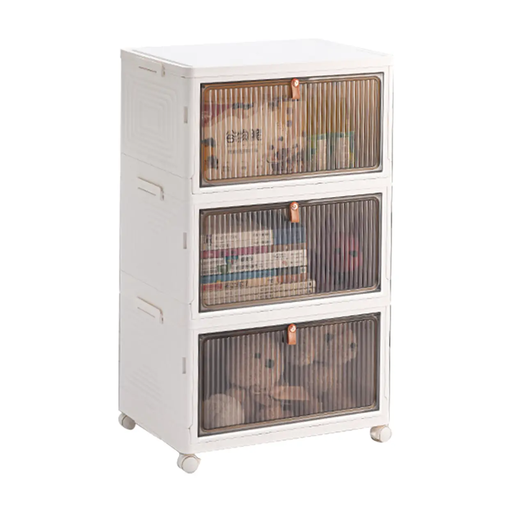
Why This Fits Their Persona: A practical choice for students, renters and first homes where flexible storage is needed without committing to bulky furniture.
The tool-free interlocking assembly avoids complicated setup, while the smooth PP surface can be wiped with a soft damp cloth. It still requires a flat, stable position and should not be overloaded.
Three tiers, lightweight PP construction and a compact format suit toiletries, snacks, books and office supplies.
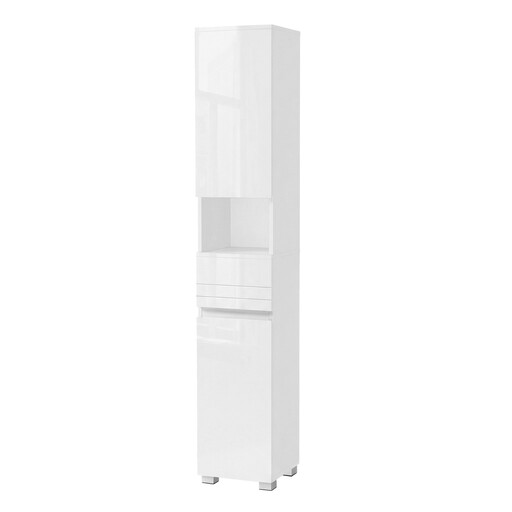
Why This Fits Their Persona: Suits buyers who want a coordinated white storage furniture look and several storage types in one vertical unit.
Its adjustable shelves and reversible doors allow more control than fixed compartments. The included anti-tip kit addresses stability, while the unit should be kept away from frequent splashing.
At 30 x 30 x 170 cm, it uses vertical space and combines cupboards, shelves and drawers across six compartments.
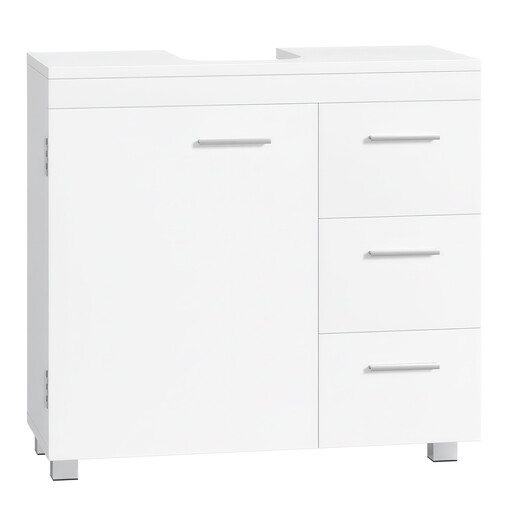
Why This Fits Their Persona: Designed for households that need dedicated bathroom organisation around a washbasin, including space for towels, toiletries and taller bottles.
The adjustable shelf avoids a one-size-fits-all interior, and the product states an 80 lb (36.2 kg) maximum static load. Wall fixing with the included anti-tip kit is required for safety.
Three drawers, two door compartments and compatibility with many pedestal or non-pedestal washbasins provide structured bathroom storage.
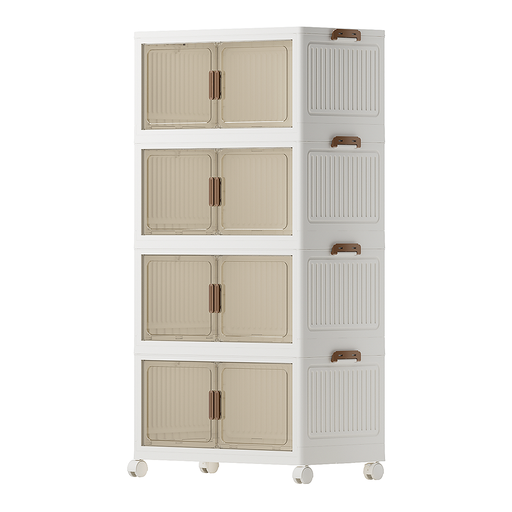
Why This Fits Their Persona: Useful in flats, dormitories and home offices where storage may need to move between rooms or fold away when not required.
The foldable format avoids permanent installation, but the magnetic closures must be fully engaged before loading. It should remain on a flat, stable surface and away from heat.
Four compartments, no-tool setup, nylon wheels and a 55 cm width support flexible small footprint storage.
We have compiled a complete, real-time list of products that fully satisfy these strict selection criteria and UK safety regulations.
A four-drawer chest of drawers is suitable for folded clothing, accessories and nursery items where horizontal access is convenient. A six-drawer chest offers more compartments but usually needs a wider wall and careful anti-tip installation. For living rooms or hallways, a mobile storage cabinet can be moved for cleaning or rearranging, although wheels do not replace stability checks.
Compare drawer dimensions, runner design, top load limits and assembly requirements. Flat-packed furniture should be assembled on a level surface, with every fixing tightened as instructed.
It depends on the format. Some PP units use snap-together or magnetic assembly without tools, while MDF and particleboard furniture normally arrives flat-packed with illustrated instructions. Allow clear floor space, check all parts before starting and do not use a cabinet until doors, drawers and fixings operate correctly.
Lifespan varies with construction, loading and room conditions. Keeping MDF and particleboard away from standing water, avoiding overloaded drawers and tightening loose fixings can help preserve everyday performance. Plastic units are easier to wipe clean but should still be protected from heat and excessive weight.
Standard freestanding cabinets, drawer chests and bathroom cupboards do not require electricity. A storage cabinet with wheels also has no running cost, although moving it regularly may require checking wheel fixings and floor stability. Always keep electrical appliances and cables separate from areas exposed to water.