
24/7 Customer Support

Free returns

Same-day & Next-day Delivery

Quality Guaranteed

Unlock Your Welcome Offers: FREE Delivery | Up to 80% OFF | Free 30-day JoyPlus trial
Download the APP
Clutter often starts with one small problem: toiletries gathering around the basin, clothes spilling from a wardrobe or paperwork taking over the dining table. The right home storage cabinets can restore order, but choosing by appearance alone can lead to wasted money and frustrating compromises.
A narrow cabinet may look suitable online but block a doorway or fail to fit around skirting boards. A lightweight plastic unit may be convenient, yet unsuitable for heavy books. Even a seemingly spacious chest of drawers can have smaller internal compartments than expected.
Before buying, watch for these common pitfalls:
Measure width, depth and height, then check whether doors, drawers or wheels have enough room to operate. For a bathroom storage cabinet, measure around the basin, pedestal and pipework rather than assuming that an “under-sink” design will fit every installation.
For example, the Ochama under-sink cabinet measures approximately 30 x 70 x 64 cm. Its adjustable shelf, three drawers and two compartments offer flexible organisation, but the cabinet still needs suitable clearance beneath the washbasin. Check the product dimensions against your plumbing arrangement before ordering.
For a tall bathroom cabinet, also measure ceiling height and the width of the route from the entrance to the intended room. Tall, narrow furniture can save floor space, but it may be awkward to position in a tight hallway.
MDF and particleboard can provide a conventional furniture appearance, but prolonged exposure to splashes or high humidity may cause swelling or surface damage. A cabinet intended for a bathroom should be positioned away from frequent water contact unless its instructions state otherwise.
PP plastic storage cabinets are usually easier to wipe clean and can suit bathrooms, kitchens, student accommodation and utility areas. However, they are generally intended for everyday household storage rather than industrial loads. Avoid placing heavy appliances or densely packed books on shelves unless the stated capacity allows it.
Fabric drawers are useful for clothing, accessories and lightweight belongings. They can reduce visual clutter without adding much weight, making a fabric dresser practical for bedrooms, rented accommodation and temporary living spaces. For heavier items, a metal-frame chest of drawers or rigid cupboard may offer a more suitable structure.
Look for the maximum static load for the whole unit, each shelf, drawer and tabletop. These figures are not interchangeable. The Ochama x SONGMICS chest of drawers, for instance, lists a maximum load of 3 kg per drawer, alongside separate limits for the tabletop and the complete unit.
An anti-tip storage unit should be secured to the wall using the supplied kit where instructed, particularly in homes with children or pets. UK product safety guidance commonly places responsibility on users to follow assembly and anchoring instructions. Use appropriate fixings for your wall type and do not rely on an anti-tip strap to compensate for overloading or an uneven floor.
For mobile furniture, test that the wheels lock or that the cabinet remains stable when loaded. A wheeled storage unit is helpful when you regularly move supplies between rooms, but mobility should not take priority over balance.
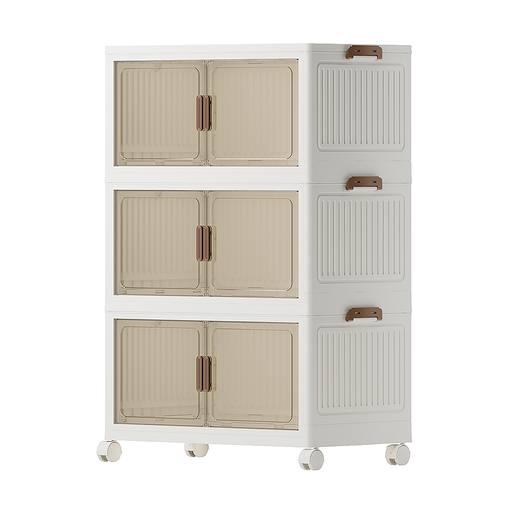
Why This Fits Their Persona: A compact option for students, renters and small flats needing flexible storage for toiletries, snacks, books or office supplies.
The dimensions and three-tier layout are clearly stated, while the tool-free interlocking design avoids the need for separate tools during assembly.
PP plastic construction, smooth wipe-clean surfaces and a compact mobile format.
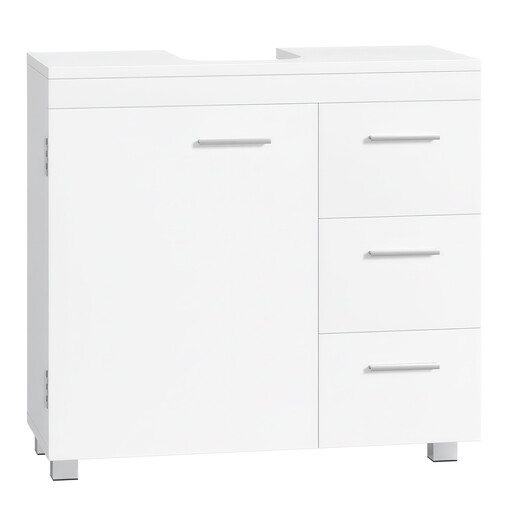
Why This Fits Their Persona: Suits homeowners who want a structured bathroom upgrade with concealed storage and a furniture-style finish.
It provides a stated 80 lb (36.2 kg) maximum static capacity, an adjustable shelf and an anti-tip kit, helping buyers assess practical use rather than relying on appearance.
Three drawers, two cupboards and a design intended for washbasins with or without pedestals.
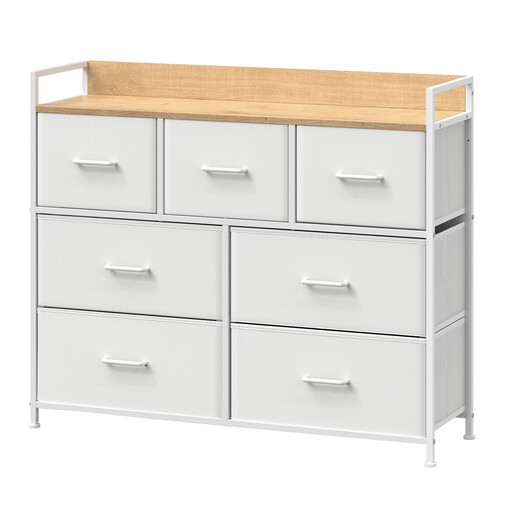
Why This Fits Their Persona: A practical choice for families or bedrooms requiring multiple drawers for clothes, accessories and everyday essentials.
Individual drawer capacity is specified at 3 kg, making it easier to distribute belongings safely instead of overloading one compartment.
Seven fabric drawers, adjustable feet, a metal frame and an anti-tip kit.
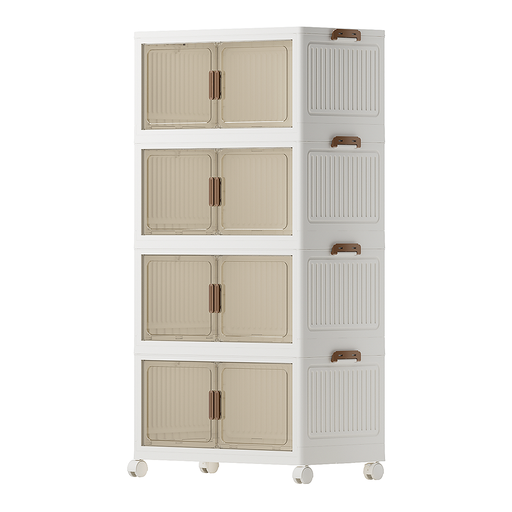
Why This Fits Their Persona: Useful for renters, home-office users and small-flat residents who need movable storage without permanent installation.
The foldable format avoids committing to a bulky permanent unit, while magnetic closures must be engaged fully before loading.
Four compartments, nylon wheels, 45 cm width and tool-free setup.
We have compiled a complete, real-time list of products that fully satisfy these strict selection criteria and UK safety regulations.
Not every unit has the same fixing requirement, but cabinets supplied with an anti-tip kit should be secured according to the instructions. Tall or top-heavy furniture is particularly important to anchor. Choose fixings suitable for plasterboard, masonry or the specific wall construction in your home.
It can be suitable for toiletries, cleaning products and small household items, particularly when the surface is easy to wipe clean. Check the product’s indoor-use guidance, keep it away from direct heat and avoid exceeding the shelf capacity. For a basin area, confirm that the dimensions and plumbing clearance are appropriate.
The answer depends on what you are storing. A chest of drawers or fabric dresser suits folded clothing, while modular storage shelves can hold books and display items. A foldable storage cabinet or wheeled storage unit may be more suitable where floor space changes regularly or the furniture must be moved between rooms.