
24/7 Customer Support

Free returns

Same-day & Next-day Delivery

Quality Guaranteed

Unlock Your Welcome Offers: FREE Delivery | Up to 80% OFF | Free 30-day JoyPlus trial
Download the APP
A home treadmill can make regular walking or running easier, but the wrong model may quickly become an expensive clothes rail. UK shoppers often focus on headline motor power or a low price while overlooking the running surface, storage requirements and the difference between a walking pad treadmill and a full running machine.
Before choosing, watch for these common buying traps:
For walking, a shorter belt may be adequate, but users with a longer stride or those planning to jog should consider the available running surface carefully. A narrow belt can also feel restrictive, particularly at higher speeds.
An under-desk treadmill is normally designed for walking rather than running. For example, the Lichico under-desk model measures 120 cm by 50 cm by 10.5 cm, making it easier to position beneath a standing desk or store in a smaller room. Its maximum stated capacity is 130 kg.
A folding treadmill may provide a more suitable compromise for mixed use. The CITYSPORTS PRO WP9 measures 123.2 cm by 61 cm by 10.2 cm and has a foldable design, which may help flat residents reclaim floor space after exercise.
Always measure doorways, storage cupboards and the intended workout area. A treadmill that fits the room but cannot be moved into it is not a practical purchase.
Match the speed range to your actual plans:
An electric treadmill gives consistent powered belt movement, while a walking pad treadmill may prioritise a slim profile and simple controls. Do not assume that every model marketed for home fitness is suitable for sustained running.
Check the maximum user weight as well as your own weight. A stated limit is not a recommendation to operate at the edge of the specification; allowing a sensible margin can support more comfortable everyday use.
A treadmill with incline can add variety without increasing speed, but check whether the incline is manual or automatic. The CITYSPORTS PRO WP9 has two manual settings: 0% and 8%. By contrast, the YOSUDA folding treadmill lists an automatic incline up to 18%, allowing adjustments from the controls.
Cushioning systems vary considerably. Look for clearly described belt layers, cushioning plates or suspension components rather than vague references to comfort. The YOSUDA model lists a four-way cushioning system, including a 15 mm cushioning plate.
For flats and shared housing, a quiet treadmill may be more suitable, but noise depends on the motor, belt, floor, user weight and running style. CITYSPORTS states operation below 45 dB for the WP9; treat this as a product specification rather than a guarantee of silence in every room. A rubber mat and stable, level flooring can also help reduce vibration.
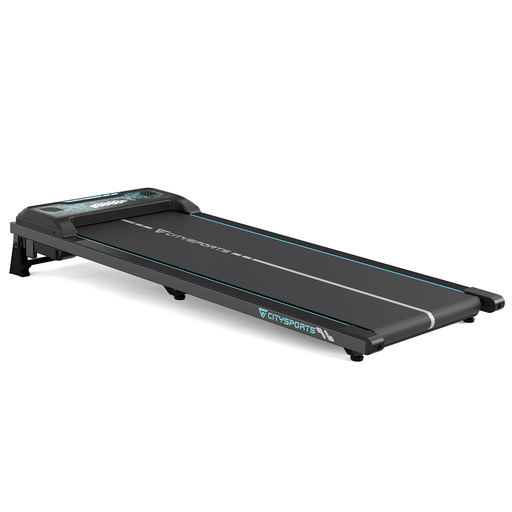
Why This Fits Their Persona: A straightforward option for beginners, home-office workers and walkers who want light daily movement without assembling a full running machine.
Its 1–6 km/h range makes its intended walking use clear, avoiding confusion between an under-desk model and a running treadmill.
Remote control, LED activity display, transport wheels and no assembly requirement are listed features.
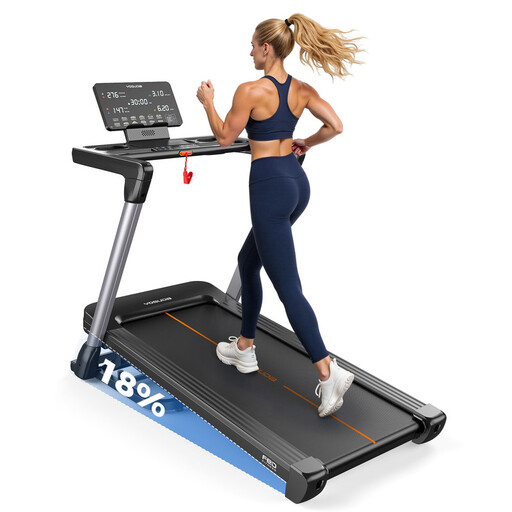
Why This Fits Their Persona: Suitable for users wanting a fuller treadmill for home fitness, more incline control and a higher stated load capacity.
The product information specifies automatic incline, cushioning components, frame construction and maximum capacity rather than relying only on a motor headline.
Automatic incline up to 18%, 172 kg stated capacity, folding frame and Bluetooth app compatibility.
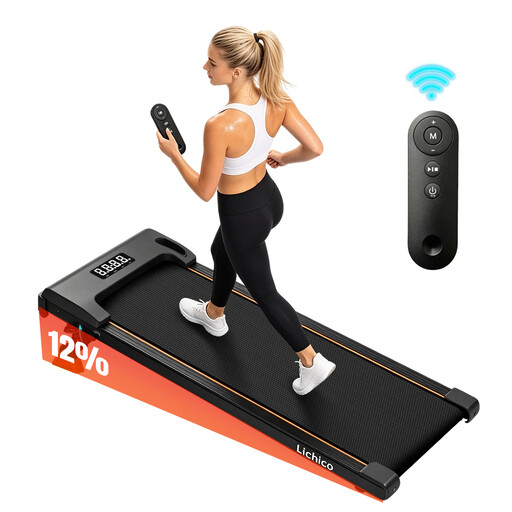
Why This Fits Their Persona: Designed for users who need a compact walking pad with incline capability and a stated 130 kg capacity for home exercise.
The 9% incline and 130 kg capacity are clearly stated, making it easier to compare against models offering only flat walking.
Under-desk format, remote control, 9% incline and 130 kg maximum user capacity.
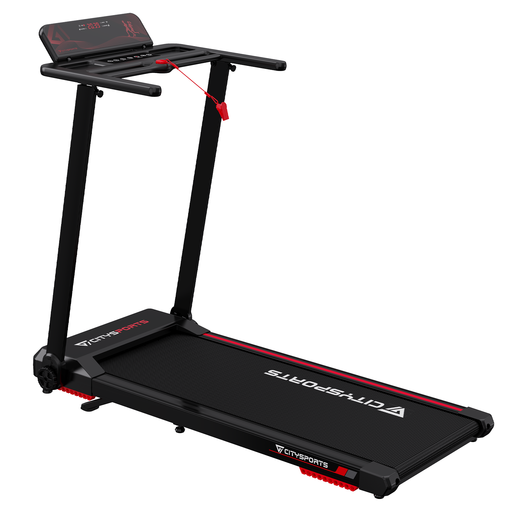
Why This Fits Their Persona: Its folding structure, 1–12 km/h speed range and two incline positions suit flats or home gyms where walking and jogging need to share limited space.
Its manual 0% or 8% incline is specified clearly, while the stated 26.5 kg net weight helps set realistic expectations for moving and storage.
1–12 km/h speed range, foldable design, 120 kg stated capacity, LED tracking and listed operation below 45 dB.
We have compiled a complete, real-time list of products that fully satisfy these strict selection criteria and UK safety regulations.
Running cost depends on the treadmill’s electrical rating, workout duration and your energy tariff. A simple calculation is: power in kilowatts × hours used × your electricity unit rate. The stated wattage is not always the same as continuous consumption, so use it as an estimate rather than a precise bill forecast.
An under-desk treadmill is designed for walking at lower speeds, but suitability depends on your desk height, balance, footwear and work activity. Keep the workstation stable, avoid distractions that affect your awareness and follow the product’s operating instructions. Models with a remote control can make speed adjustments more convenient.
Lifespan varies according to construction, frequency of use, user weight, maintenance and storage conditions. Regularly cleaning the belt, checking alignment and applying lubricant when instructed can help preserve operation. For frequent running, prioritise a suitable running surface, stable frame and appropriate motor specification rather than choosing solely on price.