
24/7 Customer Support

Free returns

Same-day & Next-day Delivery

Quality Guaranteed
Download the APP
Categories
As a Joybuy Product Recommendation Officer, my role is to help you navigate the market and make informed choices. Many of us in the UK are looking for ways to improve the taste of our tap water, reduce our reliance on single-use plastic bottles or simply gain more peace of mind about what we're drinking. With so many options available, finding the right home water filter system can feel overwhelming.
This guide is designed to simplify your search. We will walk through the key considerations for choosing a system, highlight a few standout models for different needs and provide practical advice to help you find a solution that fits your home and lifestyle.
Before looking at specific products, it’s helpful to understand the main factors that will influence your decision. Considering these points will ensure you select a system that you'll be happy with long-term.
Water filters for home use generally fall into three popular categories, each with its own set of benefits:
Different filters target different substances. Understanding the technology helps you match a product to your specific concerns.
Consider the lifespan of the filter cartridges and their replacement cost. A system with a low initial price might have higher long-term costs if the filters need frequent replacement. Look for the filter's capacity, usually measured in litres or months, to estimate your annual running costs.
Based on their features, user-friendliness and intended purpose, here are a few recommended models to consider for your home.
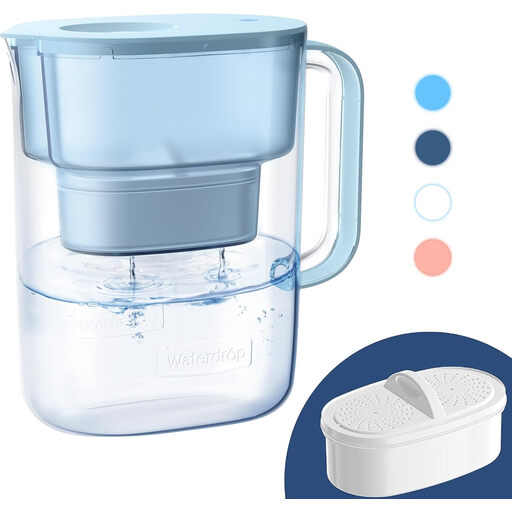
Why It Stands Out: This jug combines a generous capacity with a long-lasting filter, making it a practical and economical choice for daily use. It focuses on improving taste while retaining beneficial minerals.
This water filter pitcher is an excellent starting point for anyone new to home water filtration. Its multi-stage filter uses activated carbon and ion-exchange resin to tackle common concerns. It is NSF 42 certified for the reduction of chlorine, taste and odour, and NSF 372 certified for lead-free materials, offering reliable performance. The filter lasts for up to 757 litres, which is significantly longer than many standard jug filters, reducing waste and replacement frequency.
Pros:
Who is it for? Individuals, couples or small families looking for a simple, affordable and effective way to improve the taste of their drinking water without any installation.
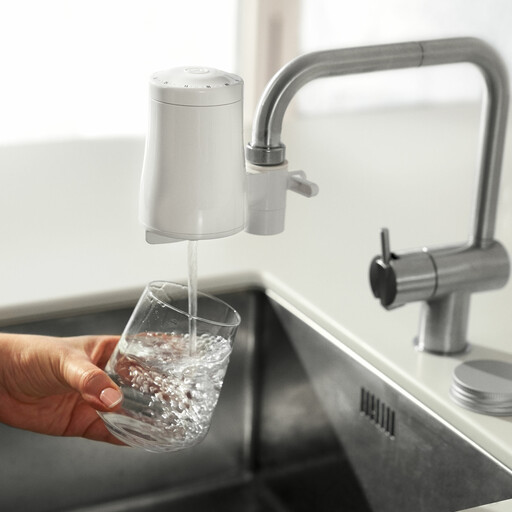
Why It Stands Out: The EcoPro offers the convenience of filtered water directly from the tap, with a strong focus on sustainability through its biodegradable filter cartridges.
As a tap water filter, the Tappwater EcoPro is designed for ease and efficiency. It screws onto most standard kitchen taps in seconds, with no tools required. Its 5-stage nanotechnology filtration system, featuring a coconut-shell activated carbon block, is designed to reduce over 100 substances, including chlorine, limescale, lead and microplastics. A simple switch allows you to move between filtered and unfiltered water, helping to prolong the filter's life.
Pros:
Who is it for? Eco-conscious households, renters and anyone who wants the convenience of on-demand filtered water without sacrificing counter space.
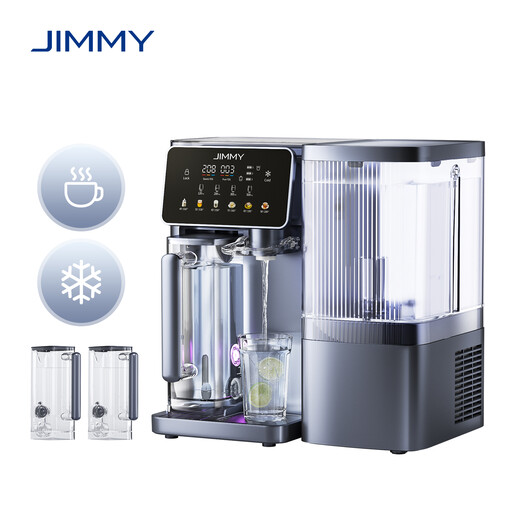
Why It Stands Out: This is an all-in-one purification and dispensing station, offering advanced filtration and the convenience of instant hot, cold and ambient water.
The JIMMY R9 Pro is more than just a filter; it's a complete water purifier for home use. This countertop water filter requires no plumbing, using a 5.5L tank that you fill manually. Its advanced 7-stage reverse osmosis system is paired with UV sterilisation to remove a vast spectrum of contaminants for exceptionally pure water. The standout feature is its function as an instant hot and cold water dispenser, providing water at various preset temperatures at the touch of a button—perfect for tea, coffee or a chilled drink.
Pros:
Who is it for? Families, home office workers or anyone seeking the highest level of water purification combined with the ultimate convenience of an all-in-one beverage station.
If the models above aren't quite what you're looking for or if you're interested in exploring other types like under-sink systems, there are many other solutions available.
Explore our full range of kitchen water filtration products to find the perfect match for your home.
1. Is a home water filter system really necessary in the UK? UK tap water is among the safest in the world and is subject to rigorous testing. However, many people use a drinking water filter to improve its taste and odour, which can be affected by chlorine used for disinfection. Filters can also reduce hardness (limescale) and provide an additional barrier against contaminants like heavy metals from older pipework.
2. What is the difference between a water filter and a water purifier? The terms are often used interchangeably, but there is a technical difference. A water filter is designed to remove sediment, chlorine and other impurities that affect taste and smell. A water purifier for home use, such as a reverse osmosis system, goes a step further by removing a much wider range of contaminants, including microscopic organisms like bacteria and viruses and dissolved solids.
3. How often do I need to change the filter? This depends entirely on the model and your water usage. A water filter pitcher cartridge might last 1-3 months, while a tap water filter cartridge could last 3-4 months. High-capacity systems like the JIMMY R9 Pro have filters that can last for 12-24 months. Always follow the manufacturer's specific recommendations to ensure your system continues to perform effectively.