Desk-based document multitaskers
If you regularly need documents, spreadsheets and work applications in view at a fixed desk, start by assessing display space and how the screen will fit into your workstation.


Choose an external monitor when keeping documents and applications visible is the main problem; consider a dock or hub when you repeatedly connect a display, charger and other devices to the same laptop. Before buying either, check the laptop’s video output and display limits. Add a webcam or headset when video or audio, rather than screen space, is limiting your calls.
If you regularly need documents, spreadsheets and work applications in view at a fixed desk, start by assessing display space and how the screen will fit into your workstation.
If you move between home and another workplace, a repeatable connection for your display, charger and peripherals may matter more than expanding a permanent desk setup.
If calls are the main difficulty, identify whether camera position, video or audio needs attention before adding another screen.
Start with the part of your home-working setup that interrupts your work most, then check whether your laptop, available connections and desk can accommodate the change. A monitor adds display space; a dock organises connections, while call accessories and workstation adjustments address different needs.
| Concern | What to check | Who this matters to |
|---|---|---|
| Visible workspace | Check the laptop’s supported display count and resolution at the intended connection. Microsoft notes that supported resolution and refresh rate can change with the number of displays and how they connect. | When documents and work applications compete for space on one screen, I want to see more of them without constantly switching windows. Around 31% of consumers put visible workspace first. |
| Repeatable connections | Confirm that the laptop port supports the dock’s required video connection and that charging meets the laptop’s needs. Check workplace permission for any required drivers. | Moving between work locations makes reconnecting a display and peripherals a recurring task; I want that setup to be simpler. Around 25% of consumers prioritise repeatable connections. |
| Meeting video and audio | Identify whether the camera or audio is the limiting factor, then check the accessory’s connection and meeting-platform compatibility. | Frequent calls make it more important for me to frame video appropriately or be heard clearly than to gain screen space. Around 25% of consumers place meeting video and audio first. |
| Workstation layout | Allow room to position the screen and input devices, and assess lighting and glare. The Health and Safety Executive advises considering the whole workstation and the work being done. | In a small home work area, I need a screen and input-device arrangement that fits the desk and lets me work comfortably. Around 19% of consumers make workstation layout their primary concern. |
Dell Technologies cautions that not every USB-C port supports video output, so the connector shape alone cannot establish whether a monitor or dock will work.
Check the exact laptop model for the video connection required by your chosen monitor or dock, such as DisplayPort Alt Mode, Thunderbolt or USB4 where applicable.
Microsoft explains that supported external-display resolution and refresh rate depend in part on the host device, connection and number of displays. The dock’s outputs do not override the laptop’s limits.
Confirm the laptop’s supported display modes before choosing the screens, dock and cables for a two-screen arrangement.
A display may have to run at a lower resolution or refresh rate than planned.
A driver-dependent dock can require software deployment controlled by an employer’s IT team. DisplayLink documents separate methods for corporate deployment.
Ask IT whether the specific dock, required driver and peripherals are permitted before ordering them.
Approval or software deployment can delay use of the dock’s driver-dependent functions.
The Health and Safety Executive advises considering the complete display-screen workstation, including equipment, furniture, work conditions and individual requirements. A new screen alone need not resolve awkward positioning or glare.
Check screen placement, laptop height, keyboard and mouse position, lighting and available desk space together.
A reference point for workers considering a USB-C or Thunderbolt dock alongside a desk display and peripherals.
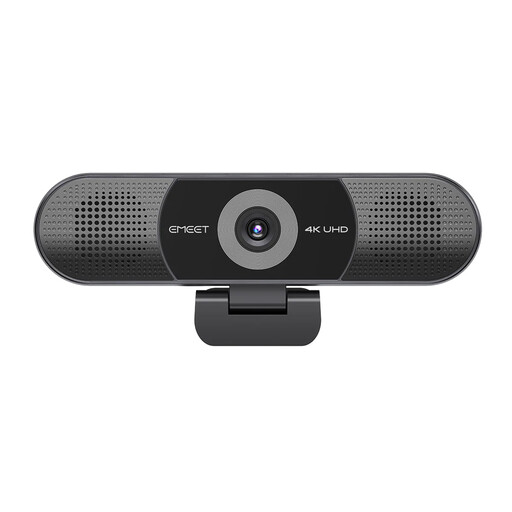
A reference point for standalone webcams when video meetings call for a separate camera.
A reference point for compact USB-C hubs and larger docking formats in portable or desk-based setups.
These choices cover external screens for a fixed workspace, a dock for connecting desk devices and a separate camera for calls. Choose according to the problem you need to solve, then check the intended laptop and workspace before ordering.
 No image available
Consider this external monitor if documents and applications need more visible space at your desk.
Confirm that your laptop supports the intended video connection and check its charging requirements if you plan to connect through USB-C.
 No image available
Consider this dock if reconnecting desk displays and other devices is a recurring part of your workday.
Check the laptop’s display and charging support. Confirm the external power adapter requirements and what comes in the package before ordering.
 No image available
Consider this wide screen for a fixed desk where you want room to arrange several work windows.
Check that your laptop supports the intended display mode and that the desk or mount can accommodate the screen’s size and weight.
 No image available
Consider this external screen if a larger display suits your desk and document-viewing needs.
Check the laptop’s supported output mode and desk fit. The product information specifies the included DisplayPort cable for its maximum 165Hz mode and notes that HDMI may limit refresh rate.
 No image available
Consider a separate camera with integrated audio when calls, rather than display space, are your priority.
Confirm compatibility with your operating system and meeting platform, as well as the mounting and privacy controls you need.
Not automatically. The Health and Safety Executive says display-screen equipment regulations can apply to permanent or long-term home workers and workers who routinely split their time between home and a workplace. The appropriate setup depends on the whole workstation, the work and individual requirements, rather than a blanket monitor rule.
Check the exact laptop model’s video-capable port, supported external displays and charging needs against the dock and your monitors. Dell Technologies cautions that not every USB-C port supports video; if the dock needs DisplayLink software, also ask IT whether it can be deployed on your managed laptop.
The dock’s output specification alone cannot establish that. Microsoft notes that supported resolution and refresh rate depend on factors including the host device, connection and number of displays, so check the complete laptop–dock–screen combination.
Consider screen position, input devices, available desk space and lighting together. The Health and Safety Executive’s workstation guidance covers the equipment, furniture, work conditions and individual requirements, not just the display.
Choose according to whether video or audio is causing the difficulty: a separate webcam addresses camera needs, while a headset addresses how you hear and speak on calls. Add both if both needs apply, and check connection and workplace-device compatibility for each accessory.