
24/7 Customer Support

Free returns

Same-day & Next-day Delivery

Quality Guaranteed

Unlock Your Welcome Offers: FREE Delivery | Up to 80% OFF | Free 30-day JoyPlus trial
Download the APP
A home workout equipment set can make regular exercise more convenient, but buying the wrong combination may lead to wasted money and unused equipment. UK homes often have limited storage, hard flooring and shared spaces, so size, grip and surface stability matter as much as appearance.
Before choosing a set, watch for three common shopping pitfalls:
For beginners, a dumbbell set with stand containing several lighter pairs can support gradual progression without requiring a large collection of individual weights. The JOYFURNOS set includes pairs of 1 kg, 1.5 kg and 2 kg dumbbells, offering three resistance levels for movements such as shoulder raises, biceps curls and light squats.
The dumbbell material also affects handling. Neoprene dumbbells generally have a soft outer coating that can feel more comfortable than bare metal during repeated movements. Look for clearly stated net weight and dimensions rather than relying only on colour or promotional language.
Hex dumbbells have flat sides that help prevent rolling when placed on the floor. This is useful in smaller rooms, although weights should still be positioned away from walkways and stored securely. Follow the manufacturer’s warning to place dumbbells down gently and keep them out of children’s reach.
A standard yoga mat should be long and wide enough for your body during lying, kneeling and standing exercises. The 3 mm yoga mat listed here measures 68 inches by 24 inches, which is approximately 173 cm by 61 cm. That provides a familiar format for yoga, Pilates and general floor work.
For users who want more cushioning, the Capelli Sport exercise mat measures 61 x 183 cm and is 1.2 cm thick. This thicker format may be more suitable for abdominal exercises, stretching and general home fitness where extra padding is preferred.
A Pilates mat, cushioned workout mat or thicker non-slip fitness mat should not be selected by thickness alone. Check whether it can be cleaned easily, whether the surface texture suits bare feet and whether the material may compress under repeated use. PVC mats can be wiped clean, while NBR foam mats should be protected from sharp or abrasive surfaces.
Material information helps you plan maintenance. The 3 mm mat is made from PVC, with an embossed surface and a wipe-clean finish. The Capelli Sport mat uses NBR foam and includes a carrying strap. NBR foam should be cleaned with a damp cloth and mild soap, then allowed to air dry.
For any home gym equipment, inspect seams, coatings, handles and mat surfaces before use. Keep equipment away from radiators, direct heat and sharp objects. UK buyers should also review the product listing for relevant warnings, dimensions, materials and any applicable conformity information rather than assuming that a generic “fitness” label covers every use.
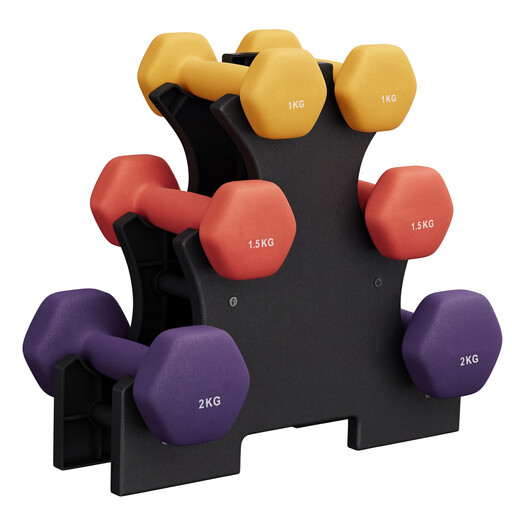
Why This Fits Their Persona: The three weight options support a simple starting routine in a flat, bedroom or home office, while the compact stand provides a dedicated storage point between sessions.
The stand addresses loose-weight storage, while the hexagonal shape helps stop the dumbbells rolling across hard floors.
Includes six cast-iron dumbbells with neoprene coating and a PP plastic stand; weights are supplied as three pairs.
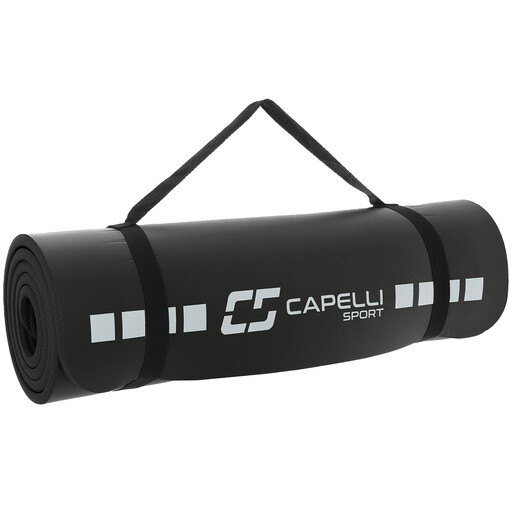
Why This Fits Their Persona: It suits adults who prefer a more padded surface for regular floor routines and want to carry the mat between rooms or to a local gym.
Its stated 1.2 cm thickness makes the cushioning specification clear, while the textured surface provides a defined traction feature to assess.
Made from NBR foam, measuring 61 x 183 cm, with a carrying strap and cleaning instructions.
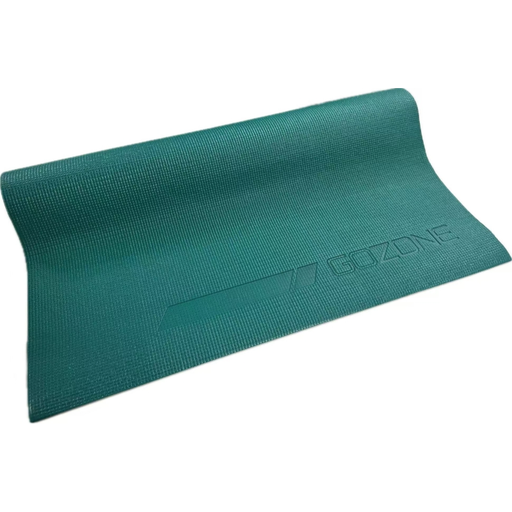
Why This Fits Their Persona: Its slimmer profile is suitable for yoga, Pilates, balance work and users who need a mat that can be rolled away easily in a smaller UK home.
The listed 3 mm thickness makes it easier to distinguish from thicker cushioned mats, helping buyers match padding to their intended exercises.
PVC construction, an embossed surface and dimensions of 68 x 24 inches; designed for yoga, Pilates and floor workouts.
We have compiled a complete, real-time list of products that fully satisfy these strict selection criteria and UK safety regulations.
A balanced starter setup does not need to fill an entire room. Combine equipment according to your training priorities:
There is no need to buy every accessory at once. Starting with a suitable mat and a clearly spaced range of weights can make a home routine easier to maintain and simpler to store.
Yes, provided the weights and exercises match your current ability. A set with 1 kg, 1.5 kg and 2 kg pairs gives beginners several starting points. Begin with controlled movements, use a clear floor area and stop if an exercise causes discomfort.
Lifespan depends on frequency of use, flooring, cleaning and storage. Inspect the mat before each session for splitting, thinning, flaking or loss of grip. Avoid sharp and abrasive surfaces, clean according to the product instructions and replace it when visible wear affects stability.
Most basic home gym equipment has no electricity requirement, so ongoing costs are generally limited to storage and replacement. Dumbbells and mats can be used without powered accessories. If you add electrical equipment separately, check its wattage and expected running time before purchase.