
24/7 Customer Support

Free returns

Same-day & Next-day Delivery

Quality Guaranteed

Unlock Your Welcome Offers: FREE Delivery | Up to 80% OFF | Free 30-day JoyPlus trial
Download the APP
Whether you are putting up shelves, servicing a bicycle, changing a wheel or tackling a small renovation, the right home and car repair tools can save time, frustration and repeat purchases. The challenge is separating useful specifications from impressive-sounding marketing.
A large toolbox is not automatically practical, and a powerful wrench is not suitable for every fastener. This guide explains the key details to check before buying, then matches selected tools to different UK household, garage and workshop needs.
A 450-piece mechanic tool set may sound attractive, but the headline number can include duplicate sockets, small accessories and hardware you rarely use. Check whether the set contains the drive sizes, socket profiles, screwdriver types and hex keys required for your projects.
For general household work, a compact household tool kit with screwdrivers, pliers, a hammer, tape measure, level and utility knife may be more useful than a large automotive-focused case. If you work on cars regularly, look for metric and imperial sockets, extension bars and more than one ratchet size.
A cordless electric wrench can remove wheel fasteners quickly, but it is not a replacement for a calibrated torque wrench when the final tightening value matters. Power tools are designed for speed and removal; torque tools are designed to help apply a specified force.
Similarly, a high tooth-count ratchet wrench helps in tight spaces, but it still needs the correct socket and sufficient access around the fastener.
Tools that are difficult to identify or store can be left in damp sheds, garages or vehicle boots. Moisture, grit and grease may contribute to corrosion or damage over time. A fitted case with labelled or shaped slots is useful, provided the case itself is easy to carry and the tools stay securely in place.
Before purchasing, also check cleaning guidance, battery availability, included accessories and whether replacement bits or sockets are easy to source.
For precision fastening, match the tool’s range to the job rather than choosing the highest available number. A bicycle torque wrench commonly works in a lower range, while automotive applications can require substantially more torque.
A digital torque wrench may display N·m, ft·lb, in·lb and kgf·cm, which is helpful when following manuals using different measurement systems. A model with preset values can reduce repeated setup when switching between common fasteners. Look for a clear display and an alert system that remains noticeable in a noisy or poorly lit garage.
For bicycle maintenance tools, a 2–20 N·m range with smaller increments may suit handlebar, stem, seat-post and other cycle components. Always follow the bicycle or component manufacturer’s specified value.
The most common choices for home and automotive tasks are 1/4-inch, 3/8-inch and 1/2-inch drives:
A socket set with all three drive sizes offers flexibility, but check whether the sockets are metric, imperial or both. For UK vehicles and household hardware, metric coverage is usually important, while imperial sizes can still be useful on older vehicles, machinery and imported equipment.
Heat-treated chrome vanadium steel is common in sockets, spanners and hand tools. Chrome finishes can make tools easier to wipe clean, while a fully enclosed ratchet head may help limit the entry of dust and debris.
For hand comfort, look for non-slip grips, a sensible handle profile and a directional switch that can be operated without moving the tool away from the fastener. With tile nippers, tungsten carbide-tipped jaws and sprung handles are practical features for controlled edge trimming.
For battery-powered tools, check the stated torque, battery capacity, charging method, included battery and intended fastener range. A tool rated at 200 N·m should not be treated as suitable for bolts above that limit.
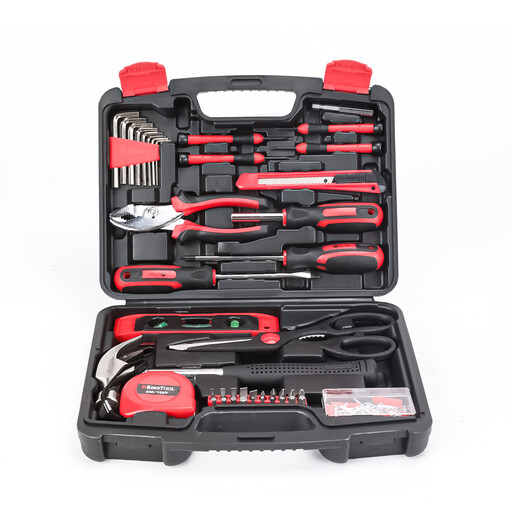
Why This Fits Their Persona: A practical starting point for new homeowners, renters, students and anyone handling furniture assembly, wall hanging and everyday maintenance around a UK home.
The 149-piece configuration includes everyday hand tools, bits, hex keys and hardware in a case with individual storage slots, making the contents easier to check than a loose collection.
Includes a 6-inch level, 3-metre tape measure, pliers, hammer, screwdrivers and a plastic toolbox for organised storage.
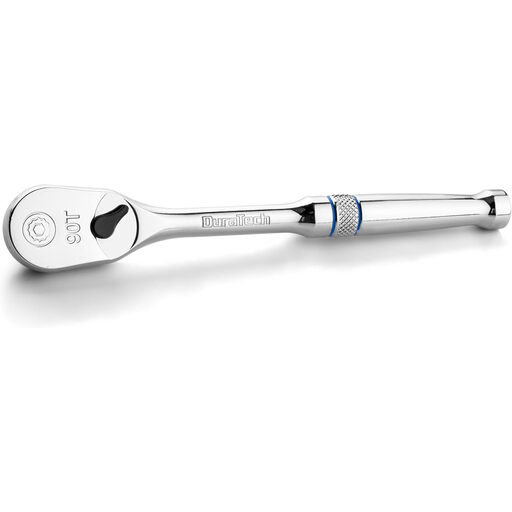
Why This Fits Their Persona: Suitable for regular garage users and DIY enthusiasts who already own sockets and want a refined, access-friendly ratchet for cars and light-duty vehicles.
Its 3/8-inch drive specification is clearly defined, so buyers can match it with compatible sockets rather than assuming every socket will fit.
The 90-tooth mechanism moves in four-degree increments, while the enclosed head is designed to resist dust and debris.
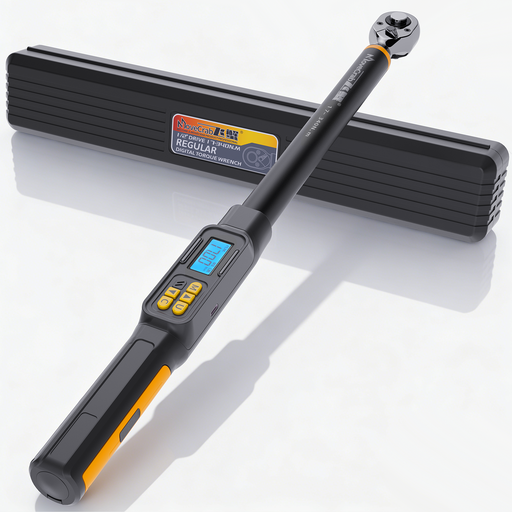
Why This Fits Their Persona: A practical option for vehicle owners, motorcycle users and mechanics who need visible torque readings for automotive or mixed repair work.
The stated 17–340 N·m range, ±2% accuracy specification, preset storage and track or peak modes provide more information than a basic fixed-scale wrench.
Vibration, sound and LED alerts offer three ways to identify the target value; the two-way ratchet head supports clockwise and reverse operation.
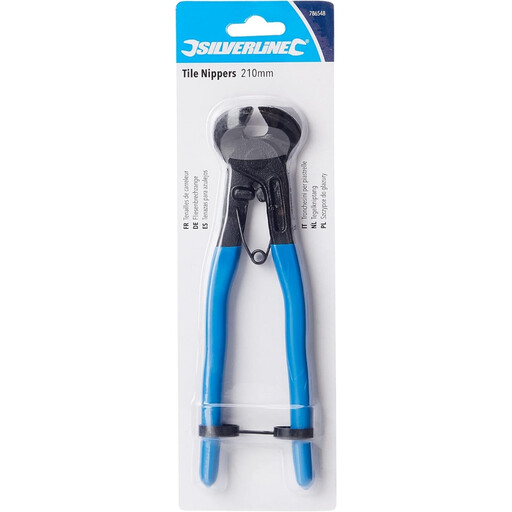
Why This Fits Their Persona: Designed for controlled trimming during splashback, bathroom and detailed tile work where a bulky cutter may not reach the edge accurately.
The compact 210 mm format is intended for small, controlled cuts rather than being presented as a substitute for every tile-cutting method.
Tungsten carbide-tipped jaws and sprung handles are specified for controlled edge work and reduced hand effort.
For mixed home and vehicle maintenance, a socket set with 1/4-inch, 3/8-inch and 1/2-inch drives can provide broader coverage. A 123-piece set may suit occasional repairs, while a 450-piece set is more appropriate when you regularly work on vehicles, machinery or multiple projects.
Cyclists should prioritise a dedicated bicycle torque wrench and the correct hex and Torx bits. For craft, engraving, sanding and small drilling tasks, a rotary tool kit with adjustable speeds and compatible accessories is more controllable than using a full-size drill.
A cordless wrench can complement, rather than replace, hand tools. Use the correct socket, secure the workpiece and consult the vehicle or equipment instructions. For electrical, structural or safety-critical repairs, use appropriate procedures and seek qualified assistance where the work exceeds your experience.
We have compiled a complete, real-time list of products that fully satisfy these strict selection criteria and UK safety regulations.
Start with a household tool kit containing screwdrivers, pliers, a tape measure, level, hammer, utility knife and hex keys. Add a socket set if you assemble furniture, maintain a vehicle or carry out regular garage work.
It can be useful when a manufacturer specifies a precise fastening value, particularly for automotive, motorcycle and bicycle work. Check the torque range, display units, alert method and storage instructions before purchase. Do not use it as a striking tool or exceed its stated limit.
Wipe away grease and moisture after use, keep tools in their fitted case where possible and store battery tools with their batteries maintained according to the instructions. Keep sharp tools, tile nippers and small accessories away from children, and wear suitable eye protection when cutting, drilling or working with debris.